
Paw & Memory Journal · welcoming a new chapter while holding an old story
A New Chapter, With the Old Story Still Here
A familiar photograph, a different view from the window, a story still worth telling: there can be room for what comes next without packing away what came before.
13 July 2026
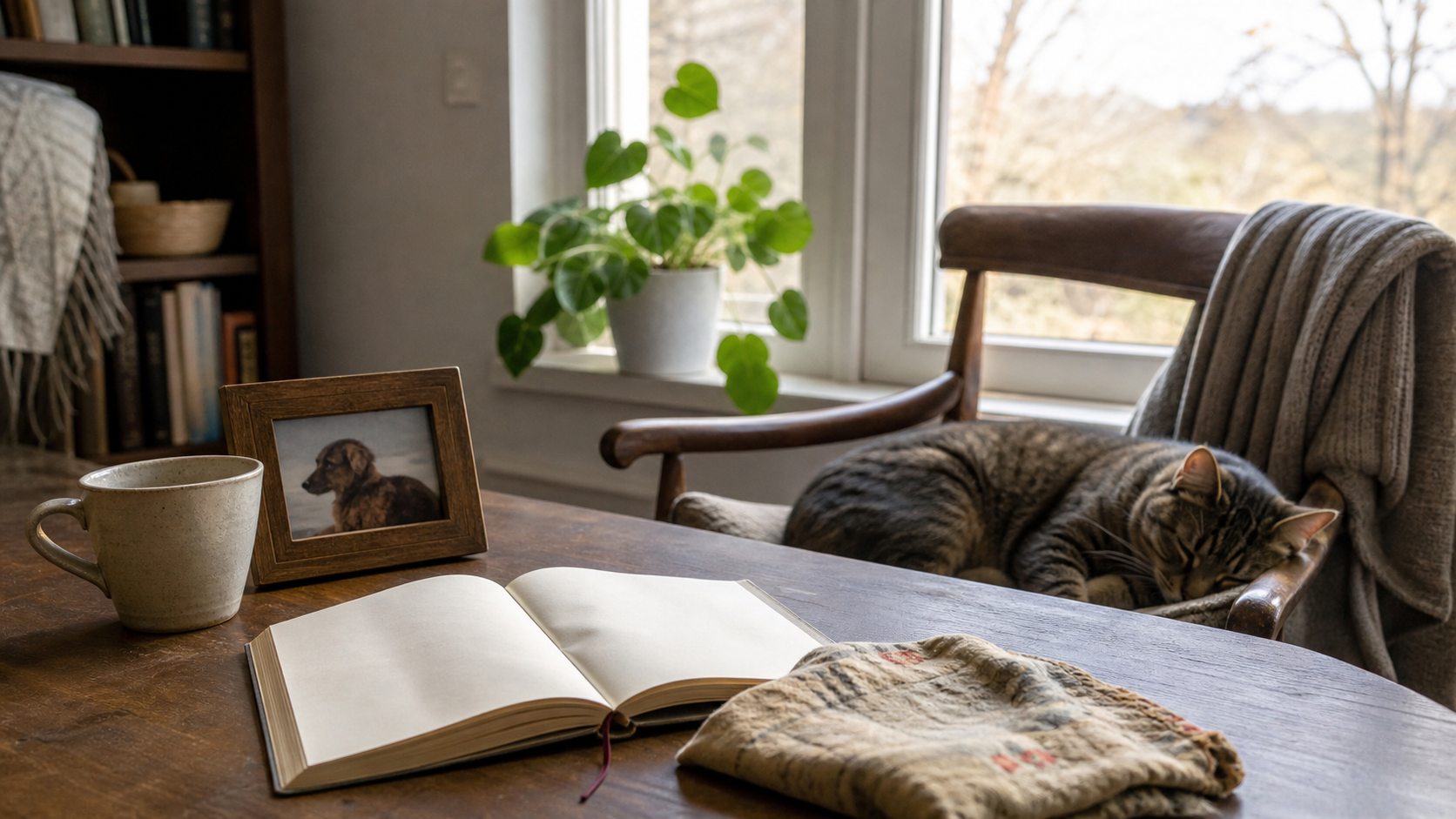
The next chapter does not have to arrive with a clean page. It might begin beside a photograph, a worn keepsake, or a companion who has already claimed the chair. What could be new in your story, and what would you still recognize as yours?
A new chapter might announce itself with something as ordinary as a different view from the kitchen window. There are boxes by the door, a calendar turned to another month, or a companion discovering a patch of afternoon sun. Somewhere nearby, an older story is still present: a photograph on the shelf, a familiar name in conversation, the small detail you remember whenever a cupboard opens. The two stories may feel awkward beside each other at first, like furniture that has not quite found its place. What does the word “new” mean in your household just now, and which part of the old story seems to have come along without needing an invitation? Perhaps the old story belongs to a companion you are remembering.
Perhaps it belongs to the younger version of the animal beside you now, back when the ears seemed too large or the favorite sleeping spot was somewhere else. A photograph can hold one particular afternoon while leaving so much outside the frame: the sound of someone arriving home, the weather beyond the glass, what happened a minute later. You might remember those missing details more clearly than the picture itself. Which photograph carries a whole day for you? What ordinary thing, invisible to anyone else looking at it, makes that moment unmistakably yours? The answer may be less grand than expected, and no less worth telling. Keepsakes have their own place in this overlap. A worn blanket can belong to an earlier household arrangement while sitting quite naturally in the room as it is today.
A tag, a sketch, or a note about a funny moment may carry a story without explaining all of it. There is no neat measure for how much meaning an object holds. The smallest thing might have the longest introduction when someone asks about it. What would you say about one keepsake if you had room for the whole account, including the unremarkable beginning? Perhaps its story starts not with a milestone, but with a rainy Tuesday and someone choosing the same corner of the sofa again. Meanwhile, everyday character keeps providing fresh material. The companion sharing your days may have a particular way of entering a room, watching a visitor, or settling beside a book.
A chair purchased for a human can acquire a surprisingly persuasive animal owner; the receipt rarely settles the matter. These little scenes do not need to compete with older memories. They have their own light, their own timing, their own cast of household objects. Which recent moment would you want to describe exactly as it happened, without making it more impressive? What was on the table? Who was there? Sometimes the detail that belongs in the story is simply the crooked cushion nobody bothered to straighten. Welcoming what comes next can also bring questions about the words we use. “Our first home,” “back then,” and “these days” divide a life into sections, although the actual days are less tidy.
A remembered companion may still appear in family stories about a holiday, a kitchen mishap, or the person who always dropped crumbs. A present companion may be building a quite different collection of household legends. What words feel true when you speak about both? Is there a sentence that allows an earlier chapter to remain particular while giving the current one its own shape? Not every connection needs a comparison. Sometimes two stories share a setting and still sound entirely like themselves. The next chapter does not have to arrive with a clean page. It might begin beside a photograph, with yesterday’s mug still on the table and an old anecdote halfway through being told. There may be things you miss, things you notice for the first time, and things you cannot yet put into a sentence.
A journal can contain that unfinished mixture without turning it into a conclusion. What belongs on the page about this particular day? What would you want a future reader, including yourself, to know about the companion remembered or the companion nearby? An old story and a new one can meet in something small: the window, the chair, the way you still say a name.
A place for their story
Remember a life, one link at a time.
Explore Paw & Memory at the address below, or scan the QR code to open the memorial starting point in your browser.
Explore memorials Scan or visitpawmemory.live/