
Paw & Memory Journal · Health & Medical Care
Older Dogs, Mobility, and the Language of Ageing
A reflection on how arthritis and mobility enter conversations about older dogs, and why broad descriptions of age leave room for individual questions.
2 January 2026
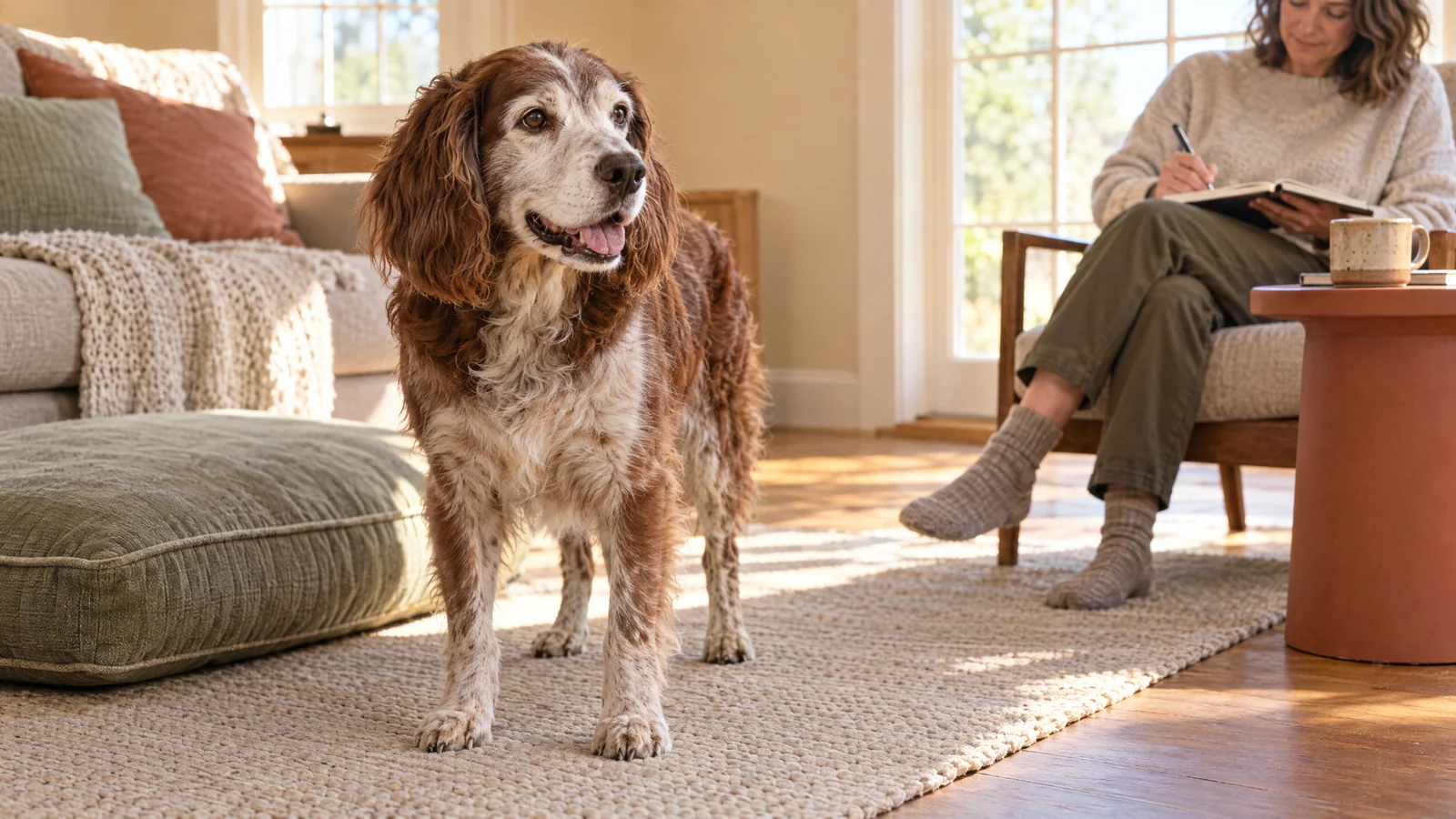
Conversations about older dogs often bring age, mobility, and arthritis into the same frame. General education can make room for these subjects without turning familiar moments into medical conclusions or reducing a dog to a label.
Later life is a meaningful subject in writing about dogs, with room for both affection and careful language. Mobility and arthritis belong within that conversation, but they are not interchangeable with ageing itself. An article about older dogs can name these subjects without presenting a portrait of what every older dog experiences. The distinction leaves space for the animal beyond the topic: a familiar companion whose place in a household is not summed up by an age category or a medical word.
The phrase getting older offers a broad description of time, rather than a complete explanation of everyday life. In public education, that difference matters. Age, movement, and arthritis can appear together in a discussion while remaining separate ideas. A general account does not need to connect a particular movement with a particular cause, or turn an ordinary scene into evidence. Its purpose can be narrower and more thoughtful: to explain the scope of the subject while acknowledging what a public article cannot establish about an individual dog.
Careful writing also leaves room for uncertainty without making uncertainty feel like a puzzle the reader must solve. A collection of familiar household moments is not a basis for a personal medical conclusion. Nor does a broad discussion of arthritis need to become a catalogue of things to watch for. Individual questions belong with a qualified veterinary professional. Within that boundary, an article can remain warm and useful by distinguishing general information from personal interpretation, rather than offering instructions disguised as reassurance.
A reflection on later-life mobility can therefore centre on how we speak about dogs as they age. Affection does not require a promise about the future, and attentiveness does not have to become a task list. There is room for an honest vocabulary that names arthritis neutrally, respects the limits of general education, and keeps the companion in view. The resulting picture is neither a sentimental story nor a medical conclusion, but a thoughtful way of discussing a subject that belongs in conversations about older dogs.
Continue reading
Related articles.

Health & Medical Care · 6 February 2026
FeLV in Cats: The Language of Public Information
A reflection on how FeLV appears in feline-health writing, and the distinction between a general explanation and an individual cat’s story.
Read this article
Health & Medical Care · 4 February 2026
Feline Diabetes and the Language of Understanding
A reflection on how public writing about feline diabetes can make room for context, uncertainty, and the cat beyond the medical subject.
Read this article
Health & Medical Care · 2 February 2026
Cat Hairballs and the Limits of a Familiar Label
Hairballs have a familiar place in conversations about cats. Looking at the language around them offers a quieter way to separate a broad topic from assumptions about an individual animal.
Read this articleA place for their story
Remember a life, one link at a time.
Explore Paw & Memory at the address below, or scan the QR code to open the memorial starting point in your browser.
Explore memorials Scan or visitpawmemory.live/