
Paw & Memory Journal · Lifestyle, Nutrition & Fitness
Dog Calories and the Language of Estimates
Calorie figures on dog-food packaging and online calculators belong to a wider language of measurement. Their neat appearance can obscure the distinction between general information and an individual answer.
11 February 2026

A calorie number can look wonderfully definite. Exploring the language of dog-food labels and calculators reveals a quieter distinction: a measurement, an estimate and an individual answer are not the same thing.
A number on a dog-food package can feel reassuringly concrete. Beside the product description and package size, calorie information brings the language of measurement into an everyday household object. Calories are units of energy, and their appearance on a label gives readers one way to describe food numerically. Yet the simplicity of the printed figure sits alongside a much broader subject: how general information about dogs is presented, interpreted and understood. This is a story about the meaning of estimates, rather than about choosing an amount of food.
Dog calorie calculators also present information in numerical form. Their tidy outputs can make the underlying question seem equally tidy, although an estimate and an individual answer are different kinds of information. General reference material discusses energy needs through categories such as age, life stage, activity, environment and body composition. Those categories explain the breadth of the subject without supplying a conclusion about any particular dog. A calculator belongs to that landscape of general information; the precision of its display is not the same thing as personal knowledge.
The vocabulary surrounding dog calories extends beyond the number on a scale. Body weight, body condition and muscle condition appear as distinct concepts in educational material, while food history describes another part of the discussion. These terms offer a glimpse of how many perspectives can sit behind a short phrase such as calorie needs. They also show why public writing about the subject requires care. Explaining a term is different from interpreting an animal, just as describing a food label is different from turning its contents into a household instruction.
Food also has a place in the affectionate language of life with dogs. Meals and shared moments can carry meanings that no printed number attempts to express. A reflective account can acknowledge that warmth while keeping numerical information in its proper category: a way of describing, not a promise or a personal directive. Individual questions belong with a qualified veterinary professional. For general readers, the enduring distinction is between learning what calorie information means and asking it to say more than a general estimate can say.
Continue reading
Related articles.

Lifestyle, Nutrition & Fitness · 23 March 2026
Cats, Carnivores, and the Language of Food Labels
A reflection on how feline food discussions bring together biological language, packaging terms, and human values, without turning those ideas into a recommendation.
Read this article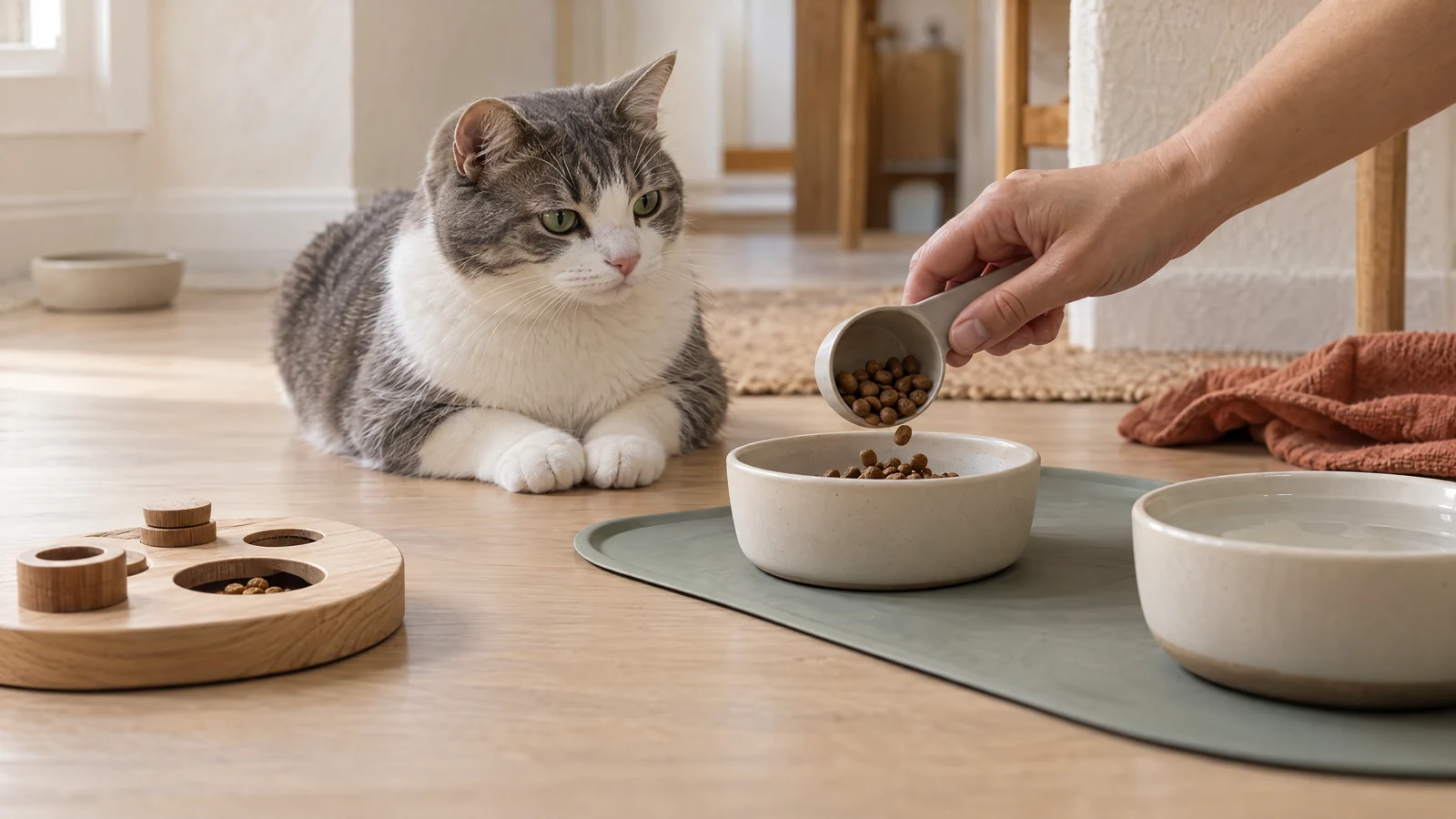
Lifestyle, Nutrition & Fitness · 20 March 2026
The Everyday Language of an Open Cat Bowl
Free-feeding is a familiar term in conversations about cats. Its meaning offers a starting point for reflecting on food bowls, shared homes and the difference between a general description and an individual answer.
Read this article
Lifestyle, Nutrition & Fitness · 18 March 2026
Long-Haired Cats Beyond the Picture-Perfect Coat
Long-haired cat coat care is often presented as a matter of appearance. A broader reading leaves room for individuality, the limits of general information, and a gentler idea of what an everyday coat represents.
Read this articleA place for their story
Remember a life, one link at a time.
Explore Paw & Memory at the address below, or scan the QR code to open the memorial starting point in your browser.
Explore memorials Scan or visitpawmemory.live/