
Paw & Memory Journal · Everyday companionship & place
The House Remembers Them Both
A quiet reflection on two distinct companions, the rooms they share, and the everyday scenes through which a home gathers meaning.
4 August 2025
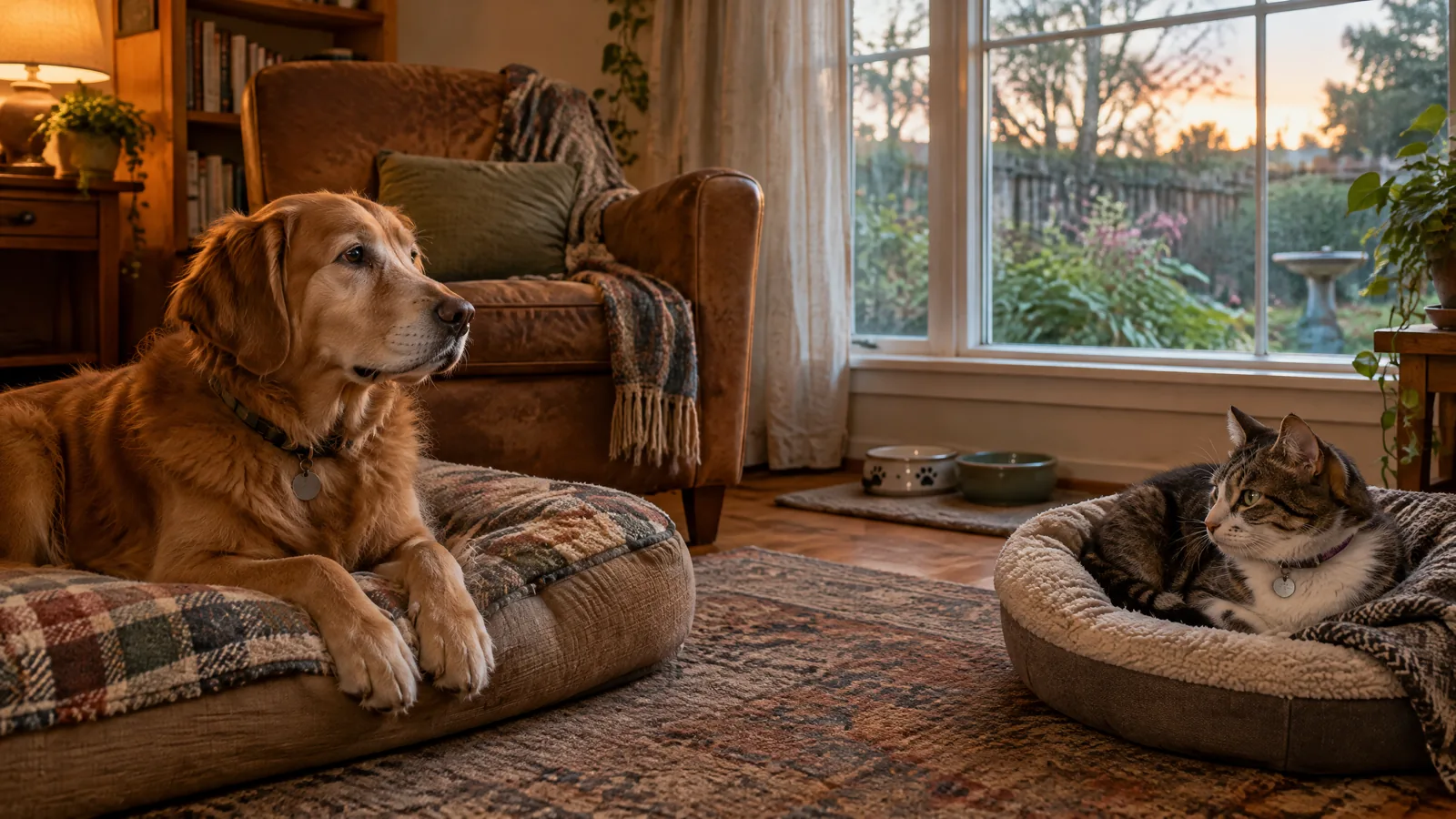
A home’s remembered life may hold more than one animal at once: separate habits, familiar places, and overlapping routines. Looking at those small scenes as a shared archive can honor each companion’s individuality without assuming their relationship is the same in every household.
A home can become familiar through repetition: the light crossing a particular floor, a door opening at a usual hour, the pause beside a window, the sound of footsteps returning. When two companion animals share that home, its everyday life may gather around two distinct sets of habits. One may appear in a remembered scene at the threshold; the other may be associated with a chair, a patch of sun, or the quiet stretch of a walk. These details need not amount to a grand story. Their significance can lie in how they place a person within a particular room, season, and rhythm of life. For many people, an animal is regarded as part of the family, and the ordinary places associated with that animal can become part of how family life is remembered. In a home with two animals, the memory of one does not have to erase the presence of the other.
The idea of a shared archive offers a gentle way to picture this accumulation, without suggesting that a household keeps a formal record or that its members remember events identically. Oral histories preserve recollections by attending to specific voices and everyday experience; archives, too, can make room for details that might otherwise go unrecorded. At home, the equivalent might be a mental collection of small scenes: two silhouettes near a window, a familiar turn in a route, the chair that seemed to belong to one animal while the other preferred the edge of the room. Such images are not evidence of a universal bond or a fixed pattern. They are ways of noticing that a place can hold more than one story, and that the stories may overlap without becoming interchangeable. Even a remembered sound—a gate, a kettle, a floorboard—can belong to the setting around both companions, while each remains recognizable in the mind’s own particular account.
The word “both” matters, but it does not require the same relationship between every pair of animals. Some may seek one another’s company; others may simply share a household while favoring separate spaces and routines. Personalities, preferences, and relationships vary, and an image of togetherness should not be mistaken for a rule about how two animals ought to live or relate. The same restraint helps when remembering a home: a sunny window or a habitual route may have held different meanings for each animal, or may matter most because it was part of the people’s wider daily life. A scene can be tender without requiring a claim about what either animal understood or felt. It can be enough to say that two lives were present in the same place, each with its own particularity, and that the people who shared that place may remember them through different details.
Homes change, and so can the arrangements that shape them. A familiar chair may move, a walk may take another route, or a household may no longer include both companions. Remembering a shared place does not have to settle every question about separation, loss, or belonging. It can instead leave room for complexity: the same doorway might call up different scenes, and one person’s recollection may sit beside another’s without needing to replace it. A modest archive of ordinary life is not a verdict on how a pair related, nor a promise that every memory will feel comforting. It is simply a way of acknowledging how often meaning gathers in small, recurring places. In that imagined collection, the house does not remember in a human sense; rather, its rooms and familiar routes provide a setting for the stories people carry. Two companions can belong to those stories as individuals, with their own spaces and histories, while also sharing the home that held them both.
Continue reading
Related articles.
Everyday companionship & place · 1 August 2025
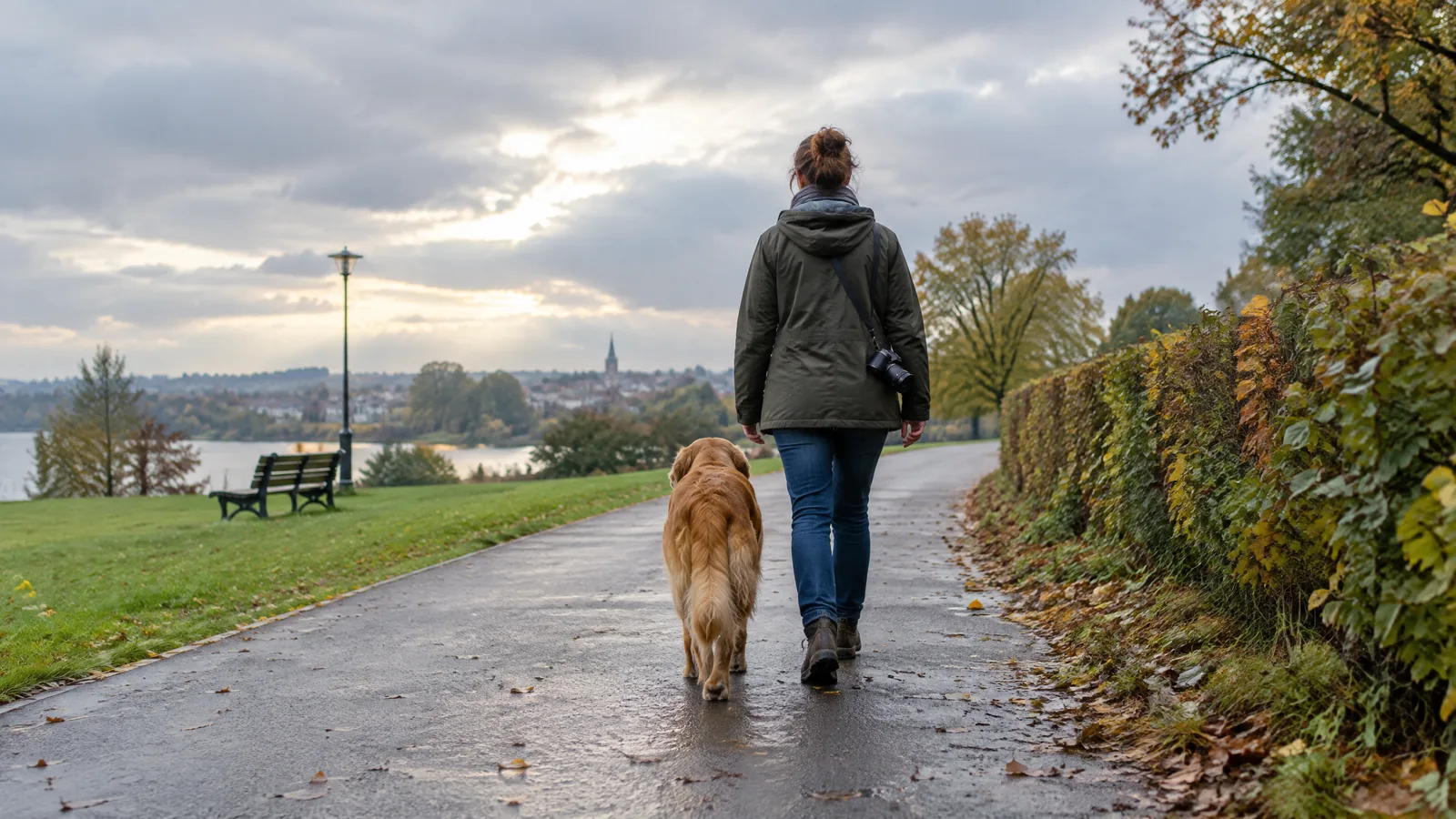
The Weather We Walk Through Together
A familiar path can look different with every change in light, weather and season—and companionship can make those small differences easier to notice.
Read this article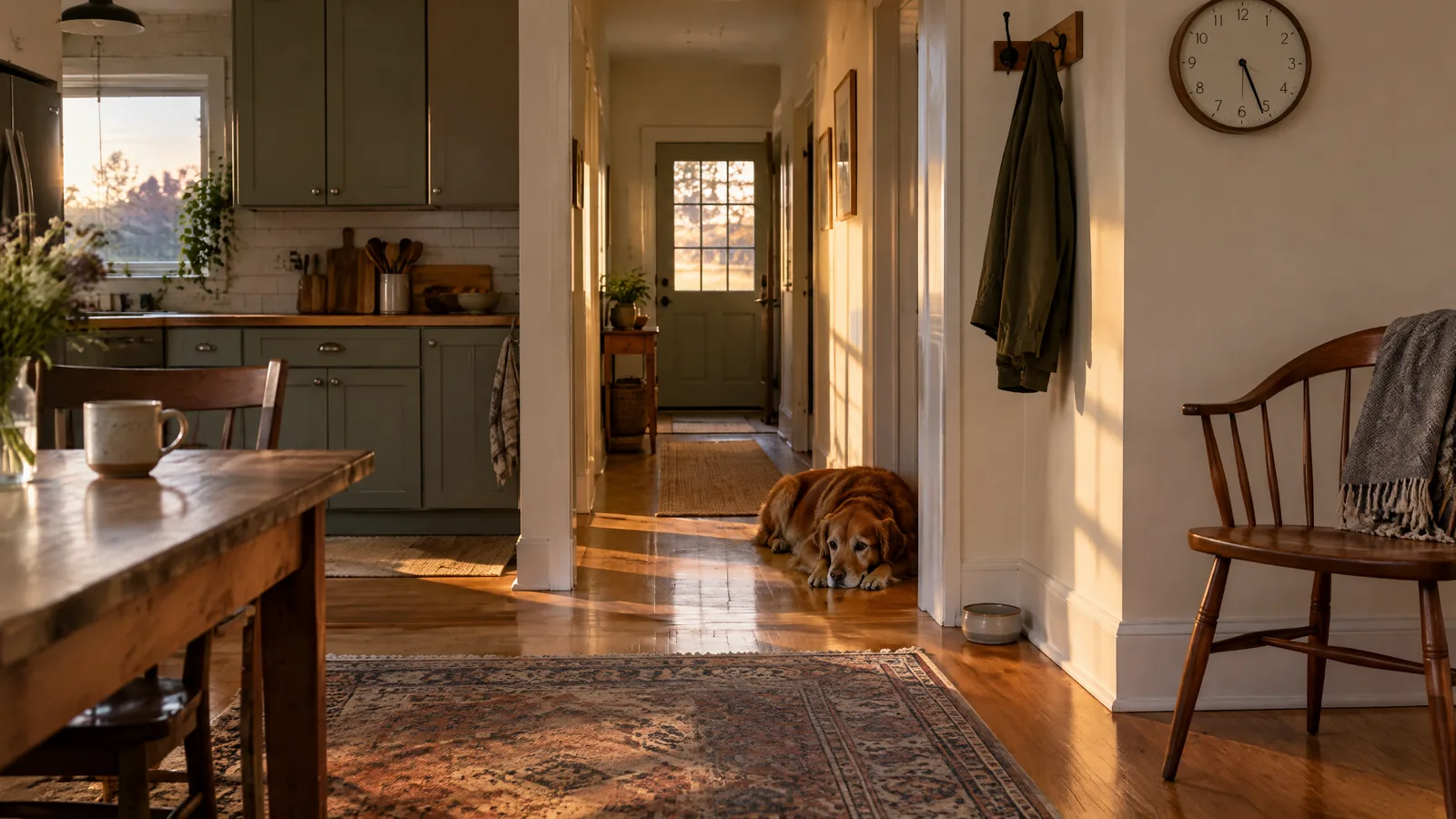
Everyday companionship & place · 30 July 2025
The Quiet Keeper of Our Ordinary Hours
A remembrance of the small, familiar moments that made a home’s daily rhythm feel shared.
Read this article
Everyday companionship & place · 28 July 2025
The Road We Still Tell Stories About
A familiar road can gather the small details of a journey into a story shared across years, households, and generations.
Read this articleA place for their story
Remember a life, one link at a time.
Explore Paw & Memory at the address below, or scan the QR code to open the memorial starting point in your browser.
Explore memorials Scan or visitpawmemory.live/