
Paw & Memory Journal · A companion’s character and funny little habits
The Little Habits That Made Them Themselves
A companion’s character often lives in the smallest details: a chosen chair, a familiar pause, a look that needs no caption. Those little habits belong to the story, whether it is still unfolding or being remembered.
31 July 2026
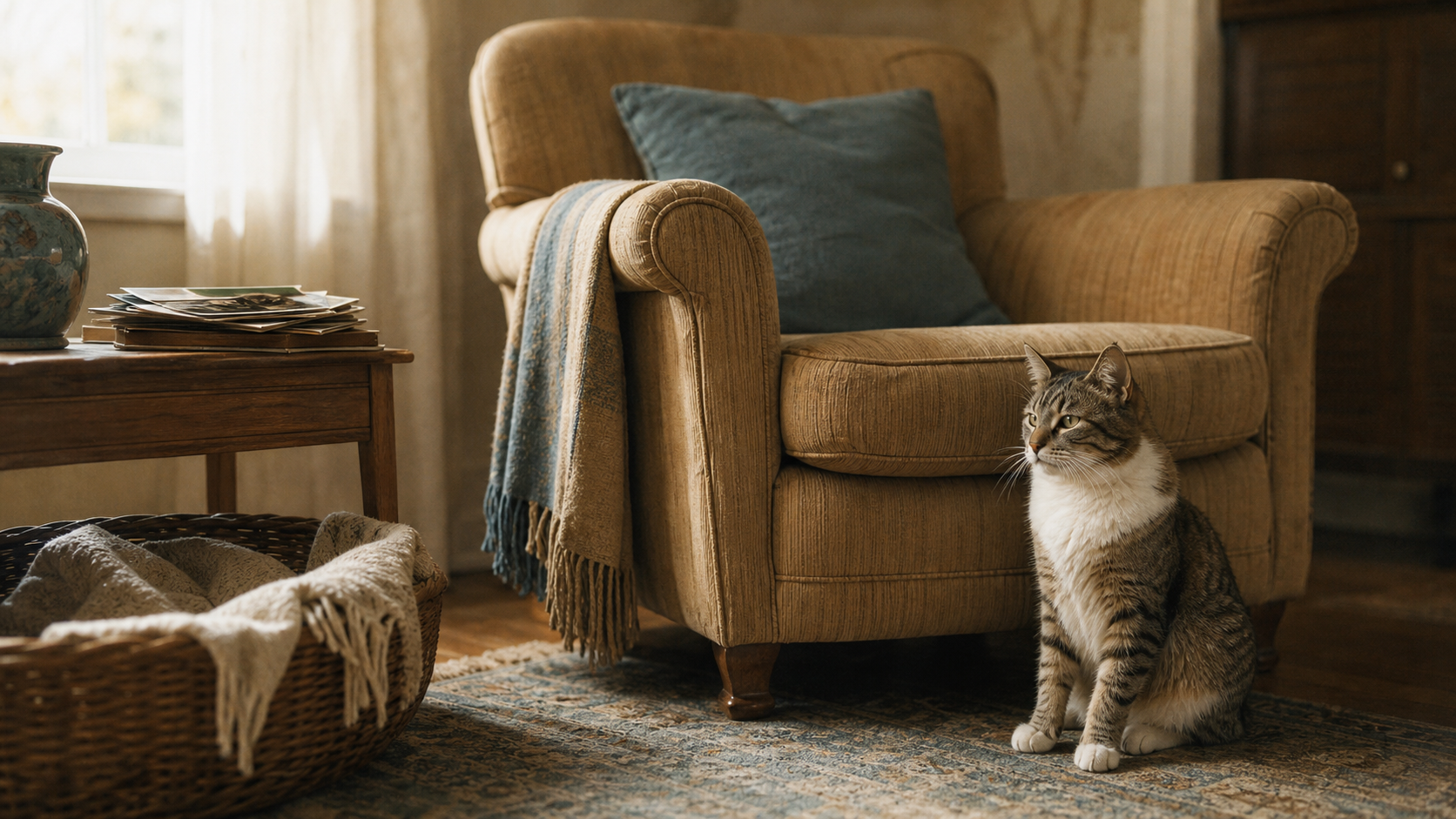
We may call them little habits, but they take up a surprising amount of room in a shared life. The chosen chair, the pause at the door, the expression everyone knows: these are the details that make a companion unmistakably themselves.
A companion’s character rarely fits inside one grand word. Sweet, bold, shy, curious: each may be true, yet none quite holds the whole small person we know. There is the way they enter a room, the place they choose when every place is free, the look they give a sound that has interrupted their afternoon. We come to know these details without setting out to learn them. They become part of the house, as familiar as the light across the floor. Which little detail makes your companion instantly themselves? It might be something happening beside you now, or something you can still picture with lovely precision, right down to the tilt of a head. Some habits seem to have their own private logic.
A companion might pass three fine places to sit and settle on the one scrap of paper in the room. There is something quietly funny about a creature with a whole home at their disposal choosing a receipt as an estate. The charm is not that we can explain it. The charm is that we know whose choice it would be. What was your companion’s oddly particular preference? A certain corner, a certain window, the chair nobody else thought special? In a family’s telling, an ordinary spot can acquire a second name: not the blue chair, but their chair, even when someone else happens to occupy it. Photographs sometimes catch character by accident. The picture meant to show a sunny room also holds a familiar shape in the far corner.
A family portrait includes a face turned firmly away from the camera. What seemed like the imperfect frame may be the one that feels most like them. Perhaps the formal picture is beautiful, while the blurred one brings back a whole afternoon. Which image carries a gesture you would recognise anywhere? What sits just outside its edges: a voice, a half-open door, somebody trying not to laugh? A photograph cannot include every part of a moment, but we often bring those missing parts with us when we look at it. Character also lives in the words a household makes up. There may be a nickname that bears almost no relation to the original name, or a phrase said whenever a familiar little scene unfolds.
Perhaps one person remembers the companion as dignified, while another remembers a distinctly less grand moment. Both versions can belong. Shared life gives everyone a slightly different view, and a companion can be many things without becoming less recognisable. What would each person in your family say was unmistakably theirs? Which word would turn up more than once? Which answer would surprise you? The story grows richer when it has room for the solemn face and the small absurdity beside it. For someone remembering a companion, the smallest habits may feel especially vivid. Not the whole sweep of the years, but the pause at a doorway or the outline of a familiar ear above a chair.
For someone sharing daily life with a companion, those same details may still slip past as part of an ordinary Tuesday. Neither story needs to be made grand to matter. A worn cushion, a snapshot or a name scribbled on the back of a photograph can call up a very particular presence. What everyday moment feels most like yours together? It need not be the happiest, funniest or most polished memory, only one whose texture you know from the inside. There is no final, tidy account of a companion’s character. Even a much-told story leaves something out: the quiet hour after the funny moment, the softer expression, the habit only one person noticed. Perhaps that is why these stories remain so companionable.
They make space for recognition rather than a perfect summary. What small scene would you want someone else to understand about your companion? What would need to be in it for you to think, yes, that is exactly them? The answer might be a grand entrance, or almost nothing at all: a room, a chosen place, and the familiar presence that made an ordinary day feel like your shared life.
A place for their story
Remember a life, one link at a time.
Explore Paw & Memory at the address below, or scan the QR code to open the memorial starting point in your browser.
Explore memorials Scan or visitpawmemory.live/