
Paw & Memory Journal · A companion’s character and funny little habits
The Little Habits That Made Them Themselves
The grand stories matter, but so do the crooked sits, solemn inspections and small household ceremonies. A companion’s character often comes into focus through the details that would mean little to anyone else.
14 October 2026
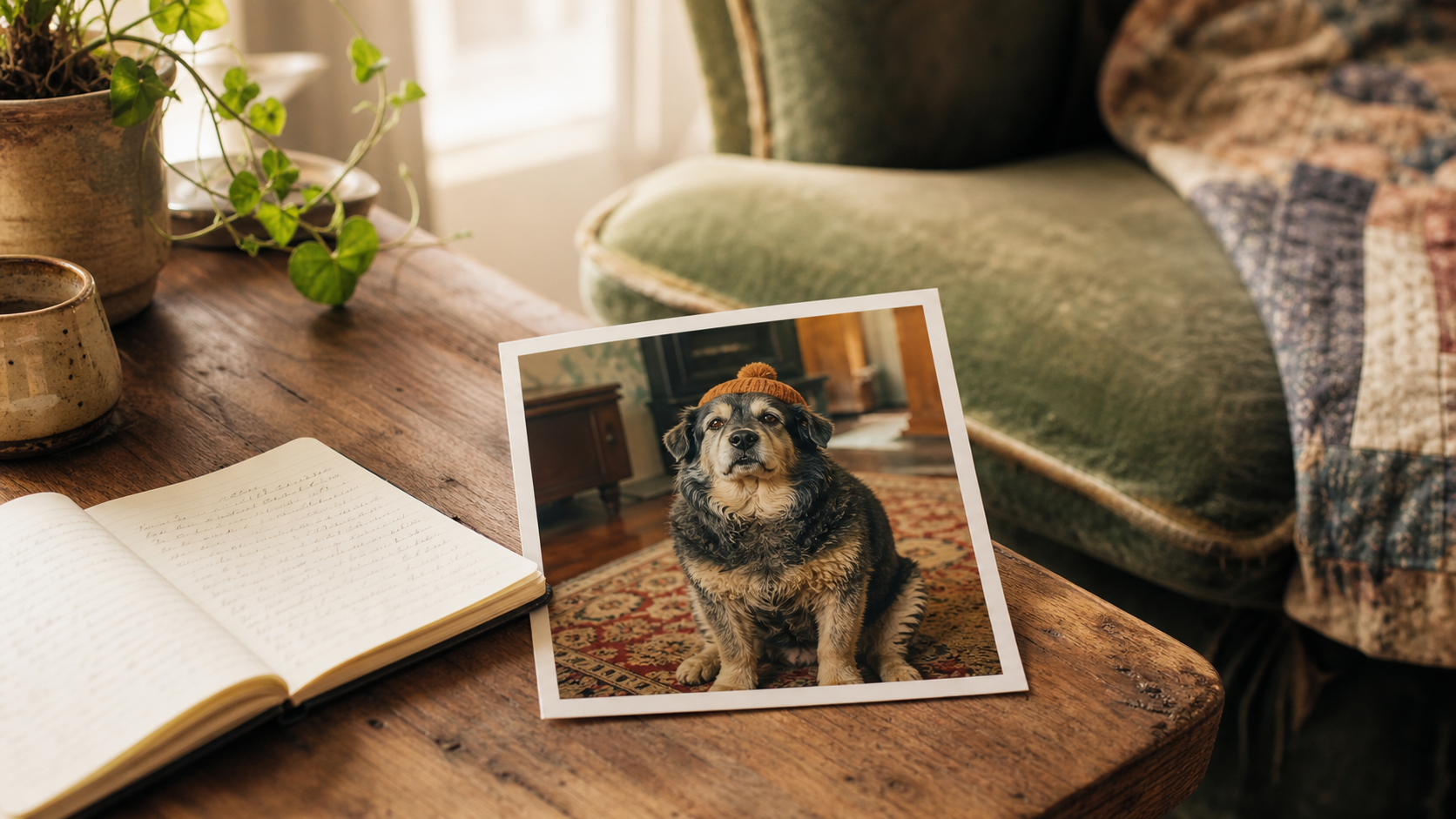
A companion’s character is not always captured by a word like playful or gentle. Sometimes it lives in a pause at the doorway, a preferred patch of rug or the serious business of watching a cupboard open. These ordinary details offer a way to celebrate a companion here beside us, or remember one whose habits still belong to the family story.
A companion’s character can be hard to sum up, even when their face is the easiest one in the world to recognise. Friendly is a start. Mischievous gets closer. Dignified might apply, though perhaps not to the afternoon they sat with one ear turned inside out. The fuller portrait lives in smaller details: the pause at a doorway, the particular angle of a head, the way a familiar room seems to have an entirely different map when seen through their habits. Whether that companion is beside you now or belongs to your memories, which tiny detail would make someone in your family say, without needing a photograph, yes, that was them? There may be a household ceremony that never appeared on anyone’s calendar.
An inspection of every bag that crossed the threshold. A careful turn before settling in one particular spot. A solemn audience whenever a cupboard opened, as though important news might emerge with the tablecloths. Such moments need no grand explanation to earn a place in a story. Their charm can sit in the contrast between how ordinary the occasion was and how seriously your companion seemed to take it. Perhaps the family still has a name for that performance. What was the ceremony, who usually witnessed it, and what small flourish made it unmistakably your companion’s own rather than just another moment in the day? Funny habits have their own precise timing. The head tilt arrived just after a certain word.
The enormous sigh followed the settling of the last person onto the sofa. A companion could occupy almost none of a chair and somehow leave no room for anyone else. There is a small domestic mystery worth smiling at: an empty seat can look spacious until its unofficial owner returns. In a photograph, that joke might be barely visible, tucked into the edge of the frame. What would a stranger miss about the scene? What happened just before the shutter clicked, or a moment afterward, that gives the picture its real place in your family’s telling? Then there are the details that resist the neat labels. The companion remembered as bold might have approached a new cushion with elaborate suspicion.
The one called reserved might have saved a ridiculous little greeting for a single person. Character is more interesting when it has these loose ends. A memory does not have to make every moment agree with every other moment; affection can hold both the poised portrait and the decidedly unpoised outtake. Which habit would surprise someone who knew only your favourite photograph? Perhaps there is a small contradiction you especially love, a glimpse of the companion who was never quite as simple as the description on the first page of their story. Some habits become family language. A crooked sit acquires a nickname. A familiar look turns into a phrase that needs no explanation at the dinner table.
Someone says, ‘You know the face,’ and everyone does, even if each person pictures a slightly different moment. For a companion still sharing the household, these words may be part of today’s ordinary chatter. For one being remembered, they may appear in the margin of an album or beside a keepsake whose significance is not obvious to anyone else. What words belonged to your shared life? Who first said them, and does the story of that name reveal something about the people as well as the companion? A character sketch need not finish with a grand conclusion. It might end with the sound of paws crossing a room, a nose appearing beside a book, or the expression worn by someone who had absolutely no plans to move.
There is room for fondness without polishing away the odd bits, and room for remembrance without making every detail solemn. Some stories are funny because they were funny then. Some are tender because they were so thoroughly ordinary. If one small scene could stand at the end of your companion’s portrait, which would it be? Who else is there, what is slightly askew, and what familiar little habit makes the scene feel like yours?
A place for their story
Remember a life, one link at a time.
Explore Paw & Memory at the address below, or scan the QR code to open the memorial starting point in your browser.
Explore memorials Scan or visitpawmemory.live/