
Paw & Memory Journal · A companion’s character and funny little habits
The Little Things That Made Them Themselves
A companion’s character often lives in the smallest details: a particular seat, an elaborate sigh, a look that seems to have an opinion. These everyday signatures belong in the stories we keep.
19 August 2026
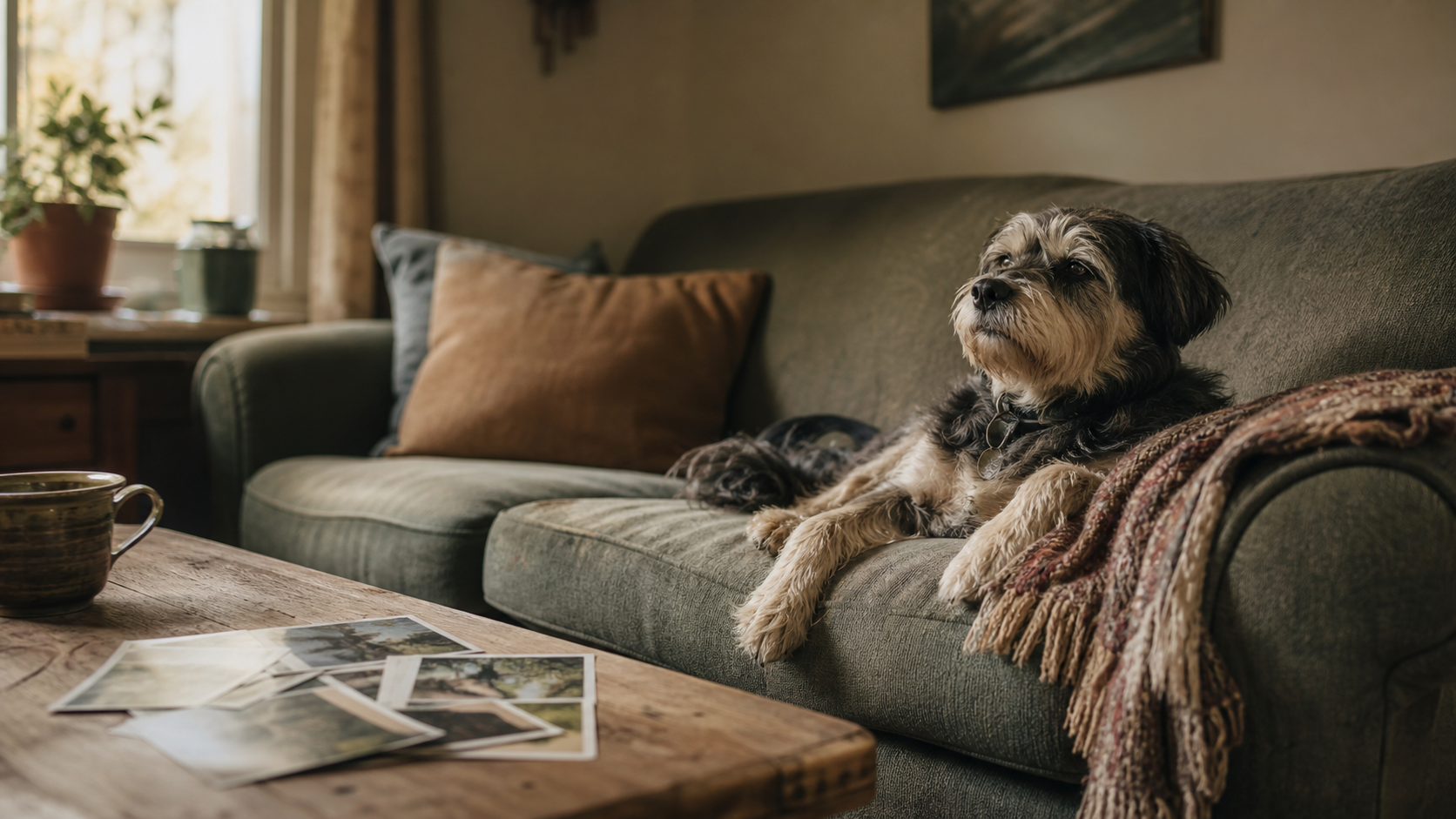
The grand descriptions are easy: beloved, gentle, spirited, dear. But character often lives somewhere smaller—in the pause before settling down, the possession of one particular cushion, or the expression that seems to ask why everyone else is being so peculiar.
The grand descriptions are easy: beloved, gentle, spirited, dear. They are true, but they can leave out the part that made your companion unmistakably themselves. Character often lives somewhere smaller: in a pause before settling down, a sideways glance, or the precise way a familiar room was entered. Perhaps your companion makes an ordinary afternoon feel like an occasion. Perhaps you remember how they did. Either way, there is room in their story for details that would mean very little to a stranger and everything to you. What small gesture comes to mind before any grand description does? What would someone who knew them recognize without needing to hear their name? A favorite place can become a portrait without ever containing a face.
One end of the sofa, the patch beneath a table, a windowsill with a view of nothing especially remarkable: these places may carry a companion’s particular preferences. There might be a cushion that appears to have been selected after lengthy deliberation, although every cushion looks much the same to everyone else. A pet family may recognize the quiet comedy of a seat becoming unavailable without anyone formally discussing it. What made that spot theirs? Was it the position, the expression they wore there, or the way the rest of the household came to describe it as though it had an owner? Funny little habits rarely arrive with a proper introduction. They become familiar by repetition, until a tiny ceremony seems woven into the day.
Perhaps there is a turn before lying down, a nose appearing around a doorway, or a dramatic stretch whenever someone looks up. The charm is often in the exactness: not simply a stretch, but that stretch, with its particular pause and finish. Remembering such a detail does not require an explanation for it. The gesture can remain a gesture, lovely because it belonged to your companion. Which small moment had a beginning, middle, and end that you knew by heart? Which ordinary scene still feels entirely their own? Photographs can hold these distinctions in wonderfully untidy ways. The picture with the crooked horizon may contain the expression you know best. A companion might be half out of frame, leaving only an ear, a tail, or a familiar blur, while the photograph somehow feels more faithful than the carefully arranged one.
There is something companionable about an image that includes the clutter of an actual day: a book left open, shoes near the door, the corner of a blanket. What does the background remember alongside the face? Is there a photograph whose imperfections belong to the story, because they show the household your companion inhabited rather than a scene prepared for the camera? Objects gather character by association, too. A blanket is still a blanket, yet its folds may bring back a particular outline. A small keepsake can call to mind not a grand occasion but a quiet sequence: your companion appearing, choosing their place, and making themselves comfortable while something else happened nearby. These memories can sit beside stories of exuberance, mischief, dignity, or a magnificent lack of dignity.
No single adjective has to do all the work. A companion can be solemn in one remembered moment and gloriously absurd in another. Which object holds that contrast for you? What scene does it suggest that a more polished description of their character would leave out? Whether your companion is beside you now or present in the stories you tell, their character need not be reduced to a tidy summary. It can remain a collection of particulars: the preferred corner, the distinctive entrance, the look across a room. Some details may be easy to explain; others belong to the shared language of your household and lose something in translation. That is all right within a story.
What would you want another person to picture about your companion, beyond what they looked like? Perhaps it is one small scene, almost too ordinary to mention. Perhaps it is the way they occupied a familiar place, with such unmistakable individuality that even the room seemed to have a favorite character.
A place for their story
Remember a life, one link at a time.
Explore Paw & Memory at the address below, or scan the QR code to open the memorial starting point in your browser.
Explore memorials Scan or visitpawmemory.live/