
Paw & Memory Journal · Shared stories & family life
The Many Languages of a Beloved Companion’s Story
A reflection on the many ways a family can remember a beloved companion, in words shared, translated, or left gently unspoken.
31 October 2025
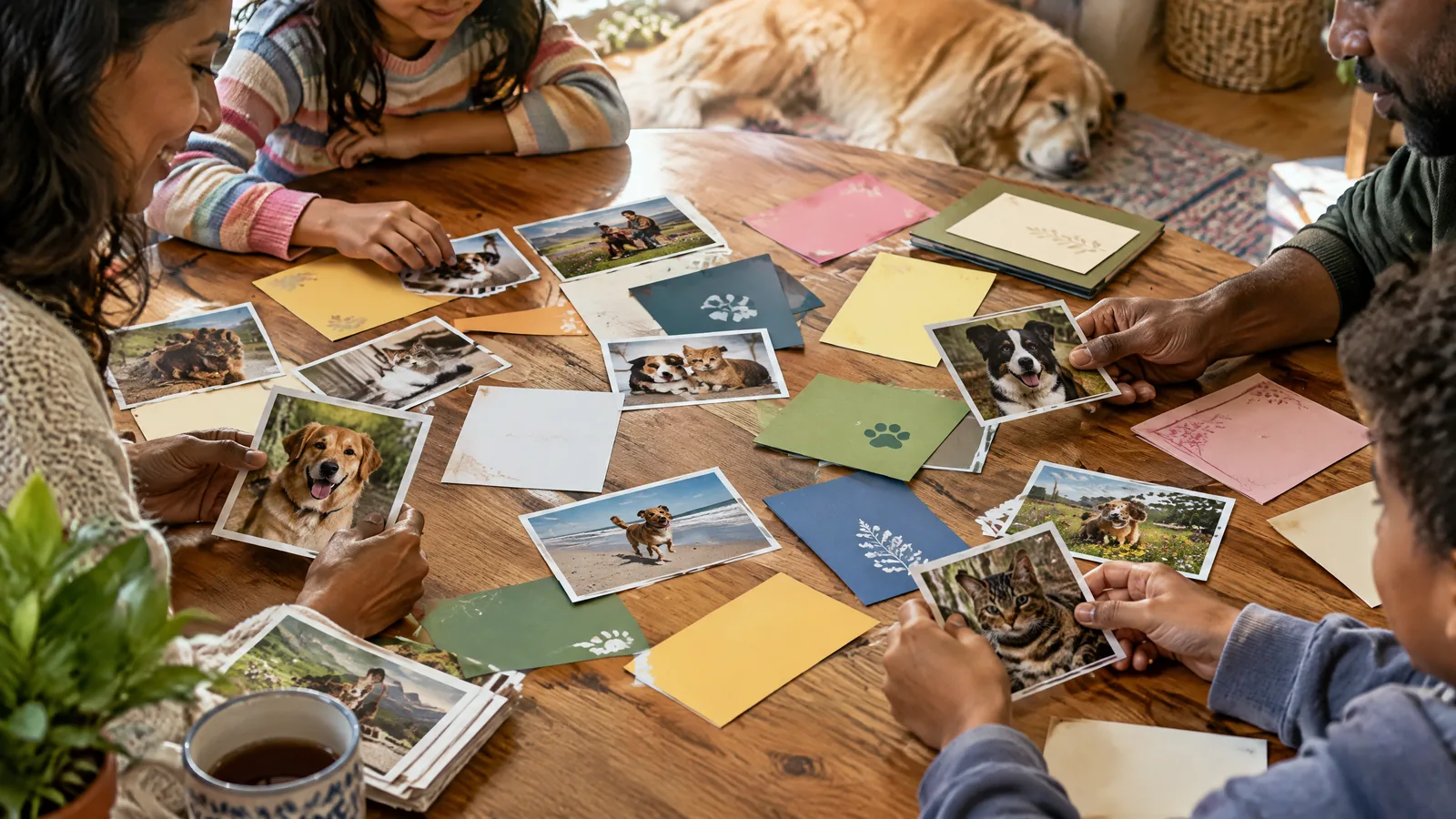
In a multilingual family, a companion’s story may travel through different words, voices, and memories. There is room for translation, for beloved nicknames, and for each person to choose whether and how to share.
A beloved companion’s story rarely belongs to just one voice. In a family where several languages are spoken, memories may surface in the language of a childhood home, a school day, a shared joke, or a quiet moment together. One person might remember the animal by a formal name; another might reach first for a nickname whose warmth is hard to explain. Someone else may prefer to listen, or to hold a photograph without adding words. These different ways of being present need not compete. A family’s story can make room for them all, including pauses and versions that remain unfinished.
The language that feels closest to a memory is not always the one another family member knows best. Some relatives may share a language comfortably; others may move between languages, understand more than they speak, or prefer not to translate at all. Even within one household, fluency and familiarity can vary by age, relationship, and circumstance. There is no single correct language for remembering, and translation is not a test of anyone’s love or belonging. A phrase may be carried across almost literally, reshaped to preserve its humor, or simply explained as best it can be. Sometimes the original word is enough, with its meaning held in the sound, the story around it, or the person who remembers it.
Translation can carry more than a dictionary definition. A nickname may suggest affection, mischief, or a small household ritual; a sound someone used to call a companion may be difficult to reproduce in another language. The translated version might preserve the meaning while losing the rhythm, or keep the rhythm while changing the words. Neither version has to be declared the definitive one. A brief public-facing note about pet loss recognizes that people’s experiences of loss can differ. That modest point leaves room for variation; it does not tell a family what language to use or what remembering should accomplish. Grief and remembrance are not measured by how fluently a person speaks, how often they share, or how closely their account matches another person’s.
If it feels welcome, a family might compare the names or favorite words different people remember, gather images and recollections in an album, or invite an older relative and a child to trade stories in whichever languages they choose. These are optional creative possibilities, not requirements, and a shared collection can remain private. If someone records a voice or includes photographs, the people involved can decide together what may be kept, shown, or shared; anyone can decline, change their mind, or stop. A child’s contribution need not be translated for every reader, and an elder’s recollection need not be reduced to a caption. Some families may choose several languages on a page; others may keep one phrase untranslated, or make no album at all. What matters is not producing a complete account, but allowing each person to approach the companion’s story in a way that feels their own.
Continue reading
Related articles.
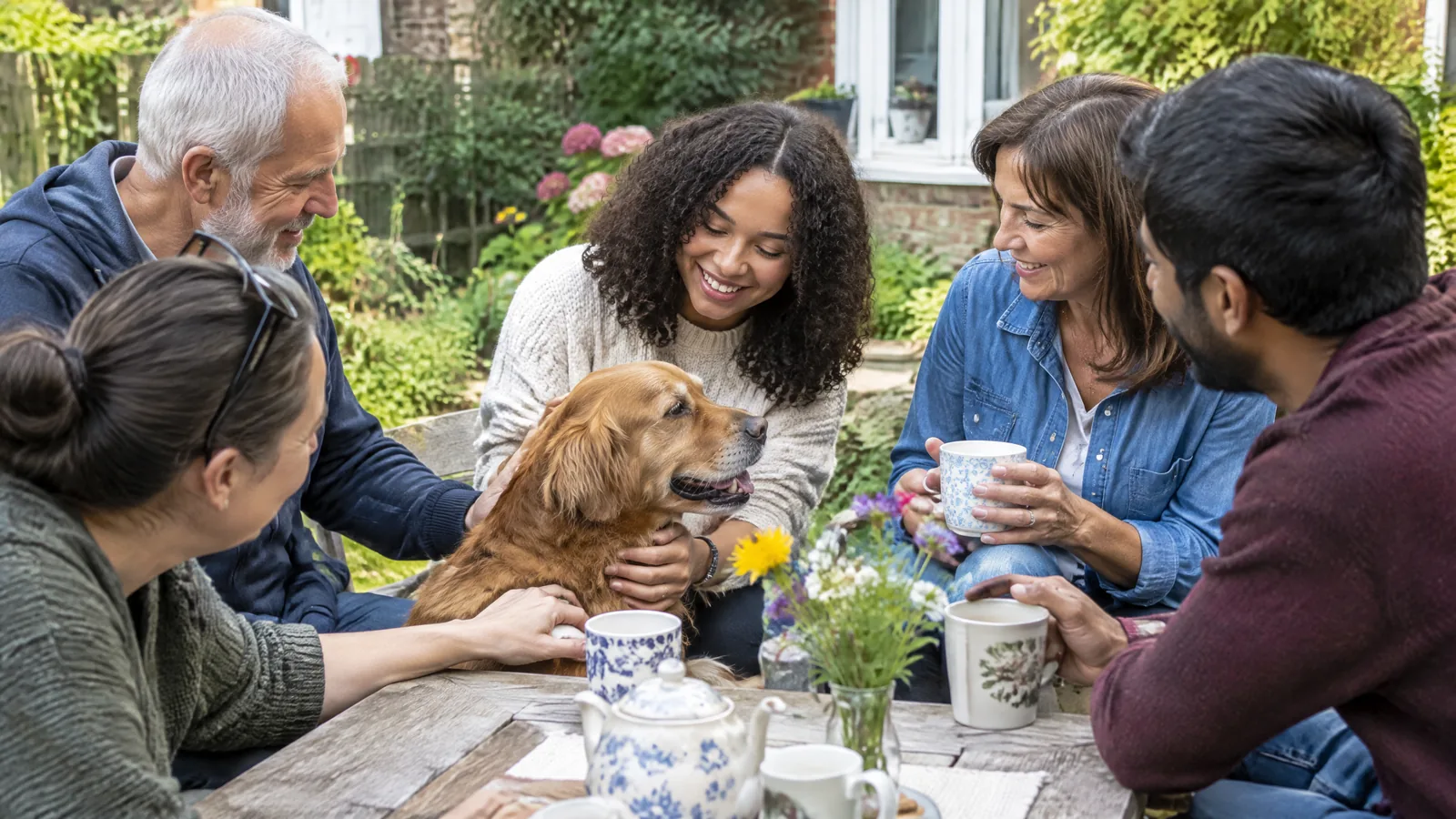
Shared stories & family life · 5 November 2025
The Circle of Care: Remembering Everyone Who Loved a Companion
A companion’s place in a family story is often shared. Remembering them can include the many people, and the ordinary moments, that made that story together.
Read this article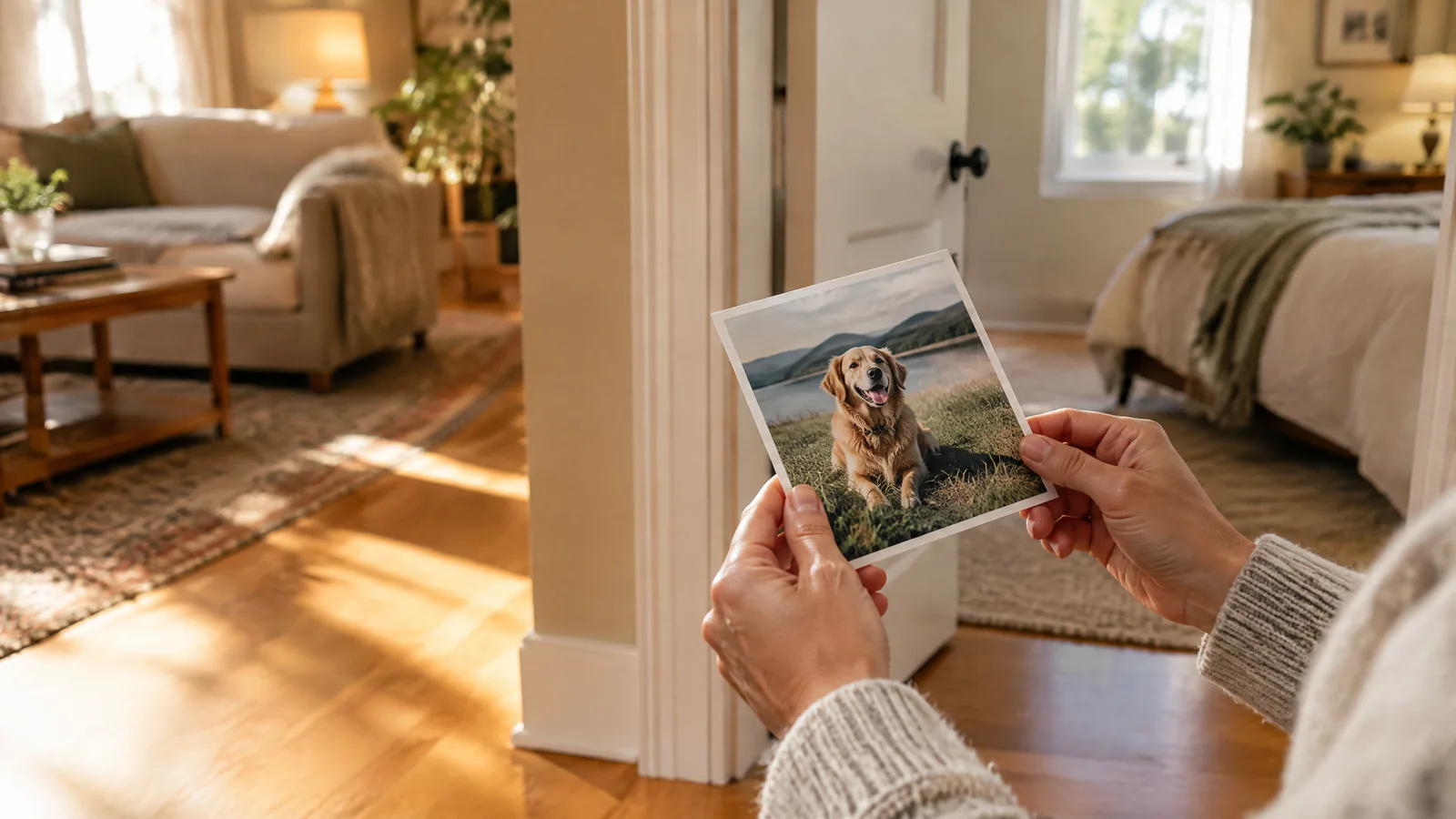
Shared stories & family life · 3 November 2025
The Photograph That Opens the Door to a Story
A familiar photograph can offer a shared place to begin, while leaving room for different memories, new observations, and silence.
Read this article
Shared stories & family life · 29 October 2025
A Place for the Whole Day: Writing a Remembrance When Love and Grief Arrive Together
A remembrance can hold affection beside absence, gratitude beside anger, and shared memories beside private ones, without requiring the day to add up neatly.
Read this articleA place for their story
Remember a life, one link at a time.
Explore Paw & Memory at the address below, or scan the QR code to open the memorial starting point in your browser.
Explore memorials Scan or visitpawmemory.live/