
Paw & Memory Journal · ordinary routines worth remembering
The Ordinary Days We Remember
The small scenes of life with a companion rarely announce themselves as keepsakes. A familiar seat, a kitchen pause, a certain look: each can hold a story worth telling.
10 August 2026
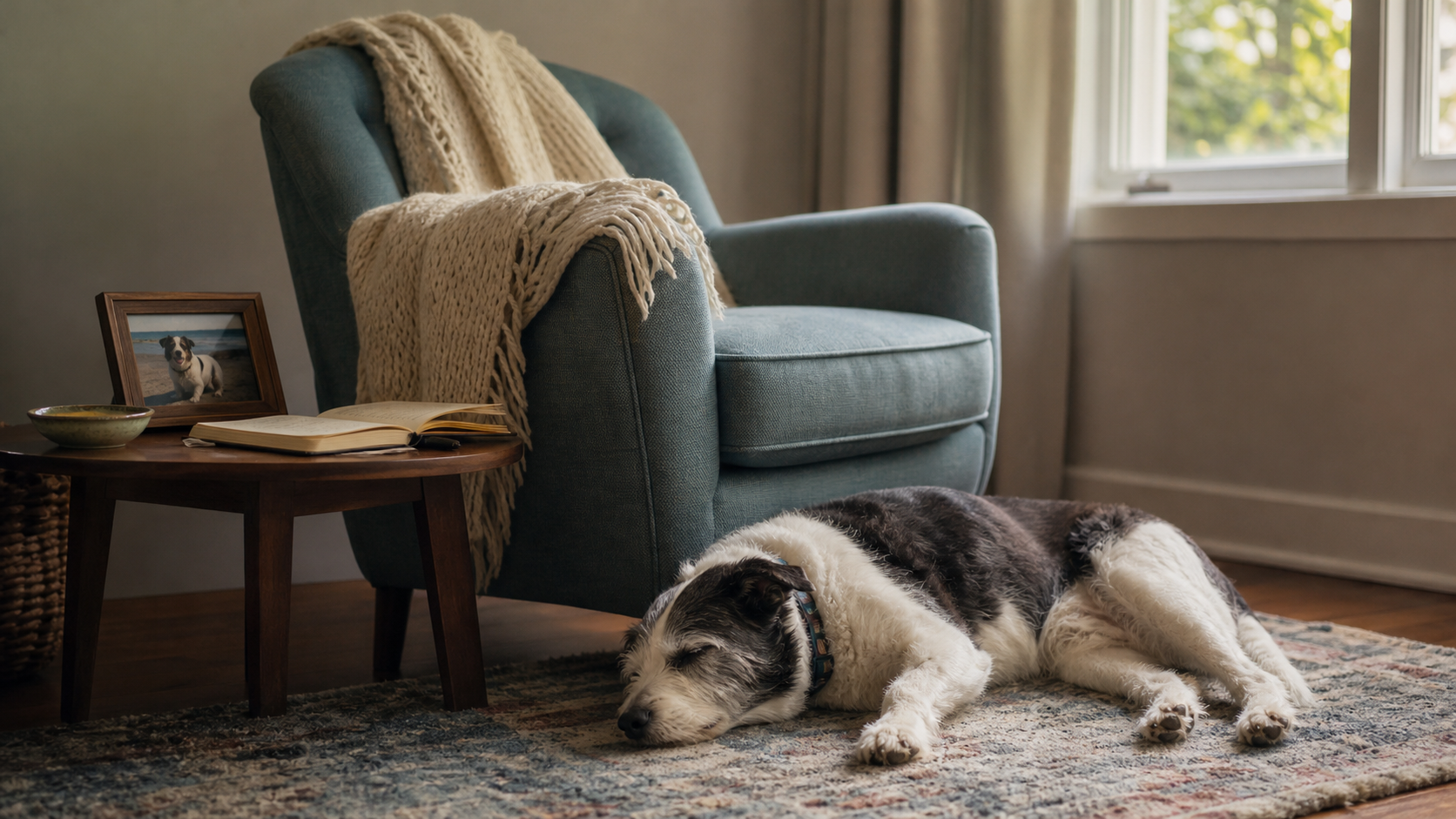
An ordinary day can seem too small for a story, until we notice how much of a companion lives inside it: the chosen chair, the pause by the door, the look that made a whole household laugh. These familiar scenes belong both to lives shared now and to lives remembered.
An ordinary day can seem too small for a story. Nothing grand happened; there was a cup on the table, a door opening, a familiar shape in a familiar place. Yet those are often the scenes that give a shared life its particular feel. A companion may belong to our memory as much through a pause beside the chair as through any special outing. What part of the day felt unmistakably like yours together? The answer might begin with a sound, a patch of light, or the way you made room without thinking. It need not become an important occasion to deserve a few words. The smallness is part of what makes the scene yours. Morning has its own cast of objects: the mug with the chipped handle, the slippers that never quite stayed paired, the chair occupied before anyone had officially chosen a seat.
Perhaps your companion appeared at the same point in this little sequence, or perhaps each morning had a different entrance. There may have been a look you came to know so well that the whole room seemed to carry its meaning. Some pets appear to regard a freshly vacated chair as a generous personal invitation. What was the small detail that made you smile before the day had properly begun? A remembered morning can hold that detail without needing to account for everything that followed. There are also the in-between hours, the ones a calendar rarely records. A person turns a page. A companion shifts position. Someone looks up from a task and finds company nearby.
These moments may have had no clear beginning or end; they were simply how the room was inhabited. In a photograph, the pet might even be partly out of frame, with only an ear, a paw, or a soft blur at the edge. What does that corner of the picture bring back? Sometimes the background holds as much of the story as the face in focus: an old rug, a stack of books, the ordinary clutter of a day when you were together. Evening can leave another set of particulars: the sound of a key, the lamp switched on, the place where everyone gradually settled. For someone sharing these hours now, the scene may still be unfolding in familiar ways.
For someone remembering, it may return with surprising detail, right down to the fold in a blanket. Neither version has to be made more polished than it was. There could have been dishes waiting, a television murmuring, a person searching for the remote while a companion occupied the best spot. Which part of an evening would someone else have missed, but you would recognize at once? That private little detail can be enough to give the memory its shape. A keepsake from such a day might be almost comically modest. Not the portrait chosen for the mantel, but the photograph in which the room is untidy and the companion looks away. Not a carefully written account, but a note about something that happened between one ordinary thing and the next.
The charm may lie in how little the moment tried to be memorable. What everyday object has become attached to a story in your mind? A cushion, a doorway, or the corner of a table can call up a whole scene. Its meaning comes from the life around it, including the habits and small surprises that made this particular companion different from any other. There is room in these stories for affection without a grand conclusion. A companion’s everyday character might appear in a patient wait, a dramatic stretch, or the choice of one spot over all the others. For a family remembering, those details can sit alongside the larger stories without having to explain the whole bond.
For a family celebrating the present, they can simply describe what today looked like. What small scene would you like another person to know, and what would you want them to notice within it? Perhaps the story ends where the moment did: a page turned, a light changed, and there was your companion, making an otherwise ordinary room feel like your shared place.
A place for their story
Remember a life, one link at a time.
Explore Paw & Memory at the address below, or scan the QR code to open the memorial starting point in your browser.
Explore memorials Scan or visitpawmemory.live/