
Paw & Memory Journal · keepsakes, albums and memory boxes
The Ordinary Things That Hold a Companion’s Story
A photograph, a familiar tag, a box with an ordinary lid: small keepsakes can hold stories of a companion’s everyday character, whether those days are still unfolding or being remembered.
12 August 2026
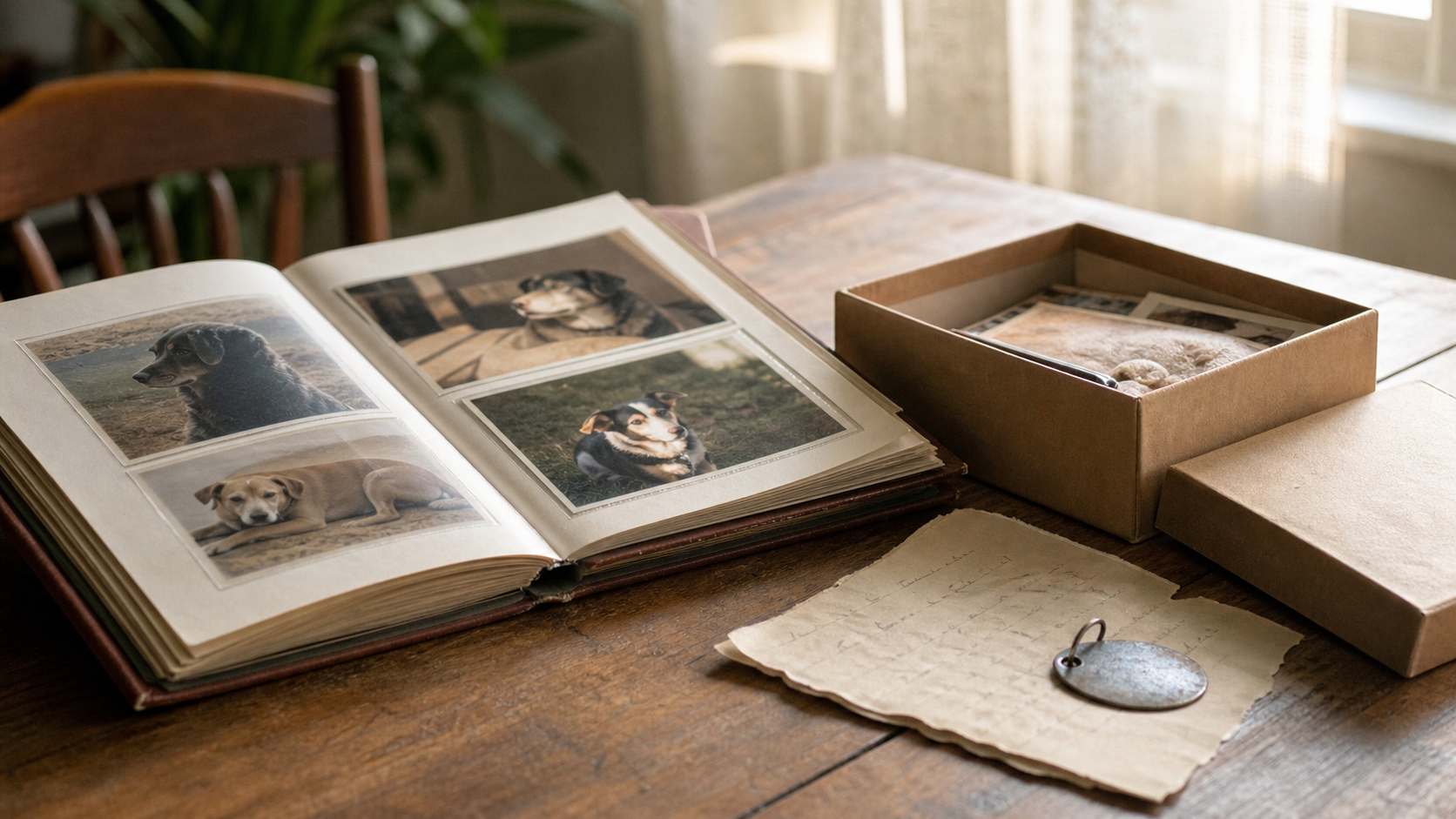
An album may show what a companion looked like, while a handwritten note remembers what happened just outside the frame. Between photographs, keepsakes and the ordinary things tucked into a memory box, there is room for both the much-loved moments and the wonderfully uneventful ones.
A memory box does not have to look especially memorable. It might be a plain box with a slightly bowed lid, the sort that once held something entirely unrelated. What makes it particular is the company inside: a photograph, a familiar tag, a scrap of paper with a date that means something to one household. For a family remembering a companion, these objects belong to days already lived. For a family sharing life with a companion now, they belong to a story still unfolding. Neither story needs a grand occasion. What small thing seems to carry the shape of an ordinary afternoon, and what would someone else never guess about it? Photographs have their own way of choosing what stays in the frame.
There is the companion by the window, but perhaps not the person sitting just beyond the edge. There is the patch of sunlight, but not the sound of a cupboard opening in another room. An album can hold the visible part of a moment while a few words hold what the picture leaves out. What was happening before that photograph, or immediately afterward? Who remembers the room differently? A beautifully composed portrait and a blurred glimpse of a tail may belong beside each other, each telling a different part of the day. The least impressive photograph may have the most familiar story attached. Some keepsakes are unmistakably connected to a companion; others would look quite ordinary to a visitor.
A folded blanket might recall a particular corner of the sofa. An envelope might contain the first photograph someone printed, its colors a little different from the scene remembered. There may be a note whose handwriting is as much a part of the memory as its words. Not every object needs to stand for an entire life. Some belong to a season, a room, or a single shared morning. Which detail comes back with an object: its texture, its place in the house, or the person who first noticed it? What makes this one yours rather than simply another thing? Everyday character often appears in the pictures nobody would call formal portraits. A companion occupies the middle of a doorway, investigates an empty bag, or rests beside someone whose face is outside the frame.
Somehow, the family album may suggest that the most photographed member of the household also contributed least to choosing the photographs. Beyond that small imbalance lies a collection of familiar scenes: the same chair, the same window, the same expression caught on different days. Which picture feels most like the companion you know, or knew? Is it the one everyone admires, or the one that makes sense only after a story about that particular afternoon? Both have a place in the telling. An album and a memory box hold different kinds of company. The album offers a sequence, even when the dates wander; the box allows unlike things to sit together without explaining their order.
A recent photograph may lie beside an old tag. A carefully written account may share space with a caption of only three words. There can be room in the story for several people’s memories, including memories that do not quite match. One person recalls the weather; another remembers what was on the table. What does each version reveal about the day they shared? The differences need not become a puzzle with one correct answer. They may simply show where each person was looking. There is no need for these collections to account for every day. Much of a shared life was never photographed, labeled, or set aside, and it still belongs to the story. A box may contain only a handful of objects; an album may return again and again to the same small stretch of time.
What feels present when you look through it? Perhaps a room, a person’s voice, or the particular way your companion appeared in the middle of an otherwise ordinary day. Whether you are remembering a companion or noticing one beside you now, the question can remain small: what about this moment feels like us? Not the whole story, necessarily. Just a recognizable part.
A place for their story
Remember a life, one link at a time.
Explore Paw & Memory at the address below, or scan the QR code to open the memorial starting point in your browser.
Explore memorials Scan or visitpawmemory.live/