
Paw & Memory Journal · family stories shared with permission
The Stories We Share Together
A reflection on the family stories we share about our companions, and the people whose permission belongs alongside them.
20 July 2026
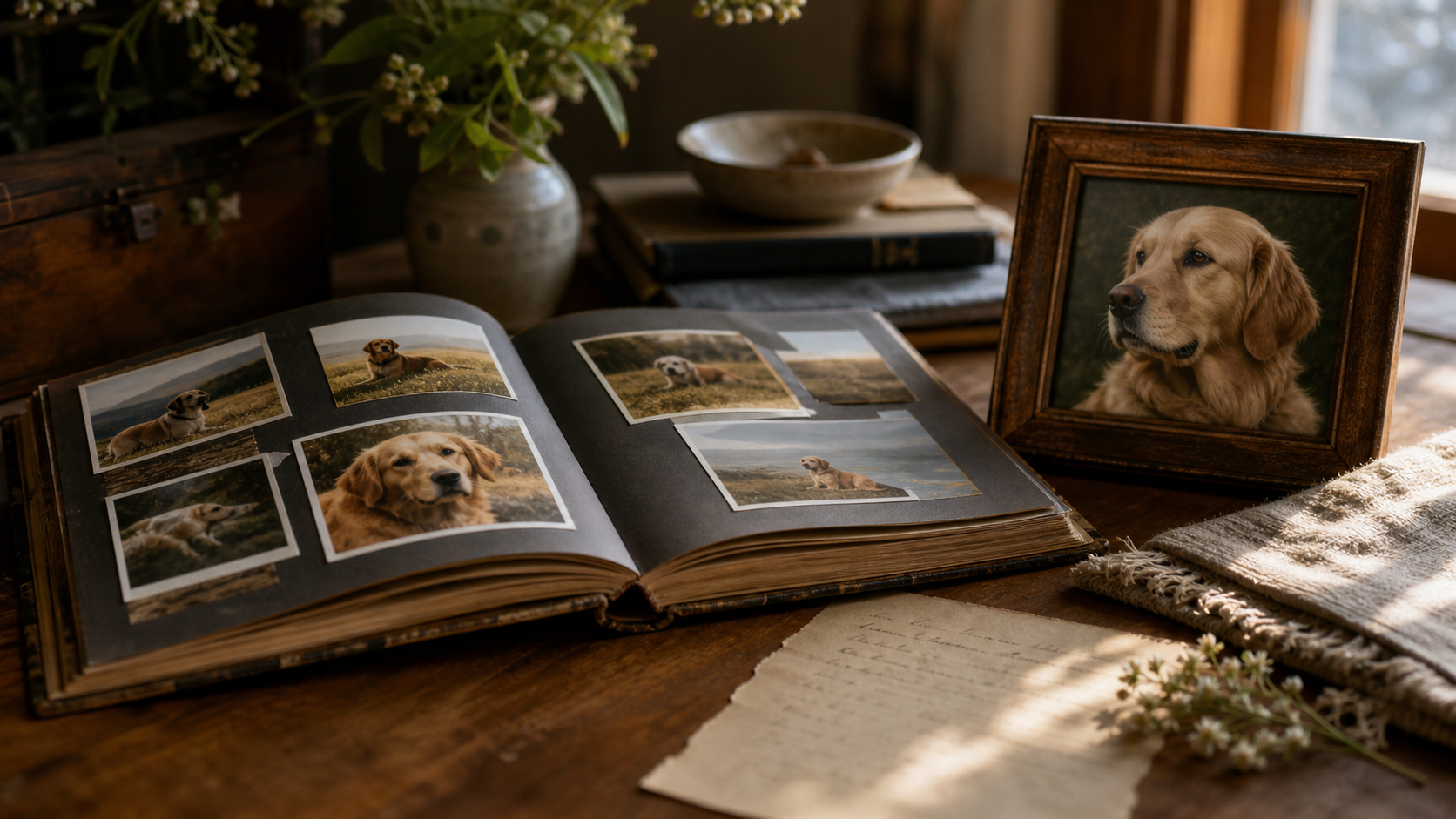
A companion’s story often belongs to more than one person. Sharing it with permission leaves room for different memories, private meanings, and the small everyday details that make a family story its own.
A companion’s story rarely belongs to just one person. There is the person who remembers the first afternoon, the one who took the slightly crooked photograph, and the one who insists that the animal’s finest quality was an excellent sense of timing. Around a family table, those versions can sit together without becoming identical. One person remembers a cat in a sunlit window; another remembers the conversation happening just outside the frame. Sharing such a story with permission makes room for the people inside it, not only the person holding the pen. Which moments feel like yours to tell? Which contain someone else’s words, photograph, or private meaning? The distinction can be small, but it belongs to the story as surely as the setting does.
Permission can be part of the telling rather than a formal interruption to it. A family story might begin with a question about whether a particular photograph belongs in a journal, or whether a remembered sentence can appear beside it. The answer might be yes to the picture and not to the caption, or yes to the animal’s name but not to the circumstances of that day. There can also be a difference between sharing something around the kitchen table and sharing it with readers who have never sat there. What audience did the person picture when they agreed? What part of the memory were they comfortable offering? A story’s edges become more visible when the people connected to it have their own say about what appears.
Family memories sometimes disagree in wonderfully ordinary ways. Was the dog waiting beside the blue chair or the green one? Did the rabbit investigate the wrapping paper before the presents were opened, or afterward? One person’s central detail may be another person’s background scenery. A journal does not have to turn these differences into a verdict. There is room for a memory to sound like its teller: tentative in one place, certain in another, affectionate throughout. What would this moment look like through another family member’s eyes? Which detail would they keep that you might leave out? Even the household’s seating arrangements may have two versions: the family’s belief that the sofa was shared, and the dog’s apparent understanding that everyone else was visiting.
Photographs bring another kind of shared authorship. Someone stood behind the camera; someone else may be half visible at the edge; the companion may occupy the center with complete indifference to everybody’s plans for the picture. A photograph can carry an everyday scene and a more personal memory at once. For someone remembering a companion, a familiar hand in the frame might matter as much as the face turned toward the lens. For someone celebrating a companion’s current character, the untidy room around them might be part of what makes the image recognizable. What does the photographer remember that the image cannot show? What would the other person in the frame want included, left unnamed, or kept within the family? Those questions belong beside the question of which picture is most beautiful.
Sometimes the most shareable piece is not the largest story. It might be a short phrase everyone associates with the companion, the nickname one relative used, or the description of a morning that otherwise seemed entirely ordinary. A whole family history need not appear around a small remembered detail. Nor does a person’s agreement to share one moment necessarily speak for every moment connected to it. What is the smallest piece that still feels complete? Whose voice gives it its particular warmth? If a relative’s exact words are part of the memory, how do they feel about seeing those words on the page? There is something companionable about a journal passage that leaves space around what it tells, rather than trying to gather every available detail into one account.
A family story shared with permission can remain recognizably a family story: a little uneven, full of specific objects, and told by people who noticed different things. The companion at its center may be remembered in past tense or described in the middle of an ongoing, ordinary day. Either way, the human voices around them matter too. Perhaps the passage holds one person’s recollection alongside another’s photograph, with both offered willingly and neither made to stand for everyone. What would you like a reader to understand about this companion? What would the people in the story recognize as their own? And what might remain simply yours: not a missing paragraph, but a moment whose place is still at the table, in the album, or between the people who were there?
A place for their story
Remember a life, one link at a time.
Explore Paw & Memory at the address below, or scan the QR code to open the memorial starting point in your browser.
Explore memorials Scan or visitpawmemory.live/