
Paw & Memory Journal · Shared stories & family life
A Memorial Belongs to More Than One Heart
A shared tribute can hold different kinds of closeness, while leaving room for each person to choose what remains within the family.
13 October 2025
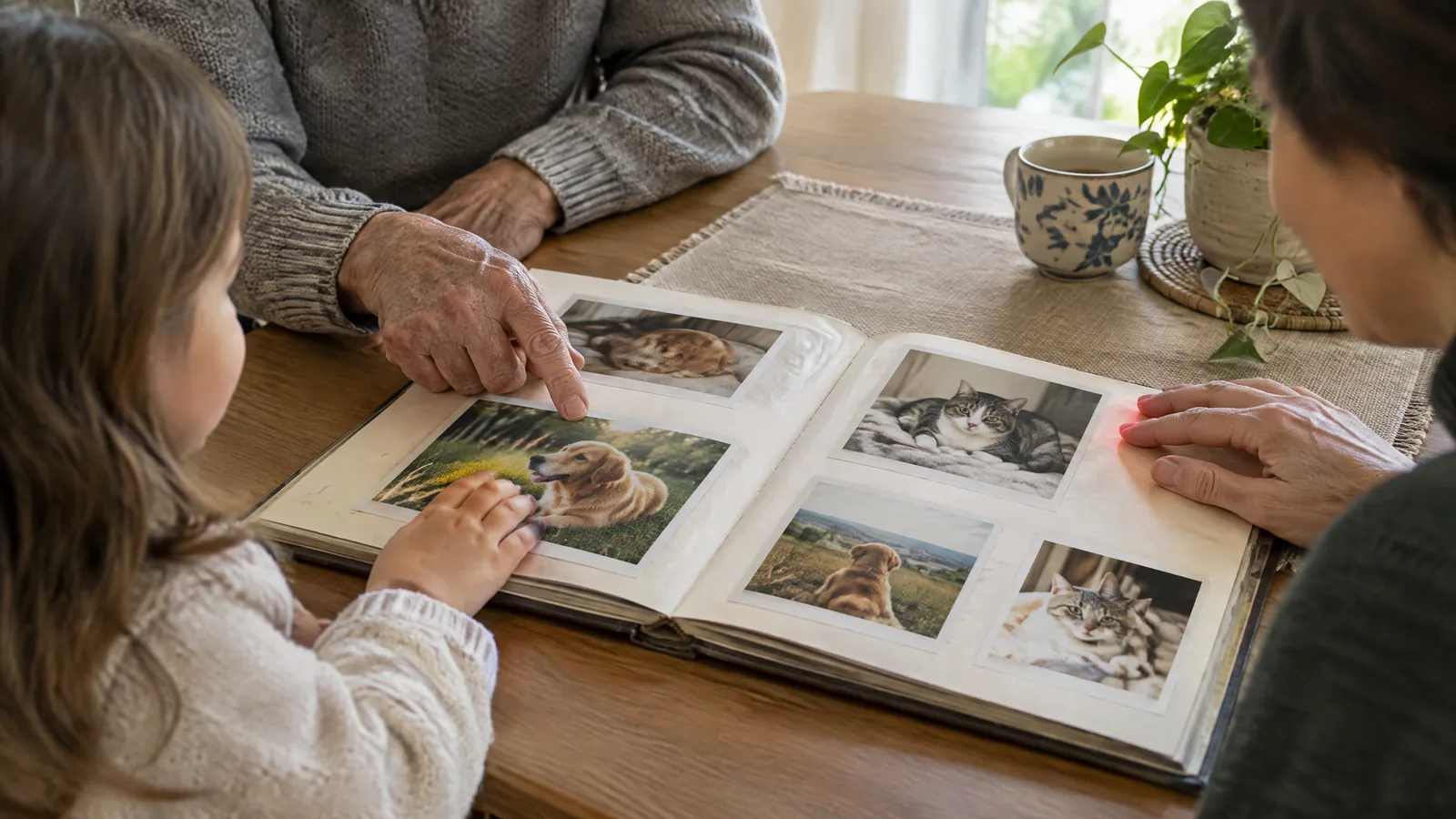
A pet’s memorial may be a photograph shared widely, a quiet gathering, or something kept close. Families can honour a life together without making every memory public—and without expecting everyone to want the same kind of tribute.
A memorial can be a way of saying that a pet belonged in the life of a family. It might take the form of a photograph shared with friends, a gathering around the kitchen table, a note tucked into a keepsake box, or a story repeated among people who already know it by heart. None of these forms has to stand for everyone. Even within one household, a person may welcome a public tribute while another prefers a private remembrance. Those differences need not mean that anyone cared less, or that the family’s bond is in doubt. They may simply reflect distinct ways of holding a tender memory. Togetherness does not have to mean that every detail, image, or feeling is offered to a wider audience.
Sharing a tribute often brings other people into a story that is not only one person’s to tell. A photograph may include someone who did not expect to appear online; a caption might reveal a name or a detail about a family’s life; a child’s voice or drawing may feel personal even when it seems harmless to an adult. General online-safety guidance encourages seeking people’s permission before uploading their pictures or personal information. That narrow reminder can make room for a considerate pause, without turning a family memorial into a legal exercise or implying that every post has the same rules. The useful question is human as much as practical: whose memories and identifying details are gathered into this tribute, and are those people comfortable with this audience seeing them? A person’s hesitation can be heard without being treated as an accusation against the person who wants to share.
Audience can change the meaning of the same remembrance. A picture kept in a family album, a message sent to a small group, and a public post may all honour the same pet, but they offer different degrees of reach and control. Online material can be copied or reshared beyond its first audience, which may make later changes harder than changing a private keepsake. That possibility does not make public sharing wrong; it helps explain why people may want different boundaries. A family might find that the most fitting tribute is a mix: one memory shared broadly, another kept among relatives, and some stories left unposted. Preferences can shift, too. Someone who is ready to share today may want more privacy later, while a quiet remembrance may eventually feel right to bring into conversation. No single choice needs to represent the whole family forever.
Children can be part of remembering without carrying responsibility for adult decisions about privacy. Their drawings, words, photographs, or presence may feel precious, and they may also be personal; a gentle, age-appropriate conversation can make space for their views without asking them to manage other people’s wishes. Not every relative has to attend, appear in an image, speak about the pet, or explain a preference. For families who would rather keep the remembrance close, a memory box, an album, a handwritten letter, or a small gathering can hold meaning without becoming a public post. For others, sharing a tribute may be an important expression of love. The point is not to settle on one ideal memorial, but to leave room for care in more than one form: honouring the pet, respecting the people connected to the story, and allowing a family’s shared remembrance to include both what is offered and what stays private.
Continue reading
Related articles.
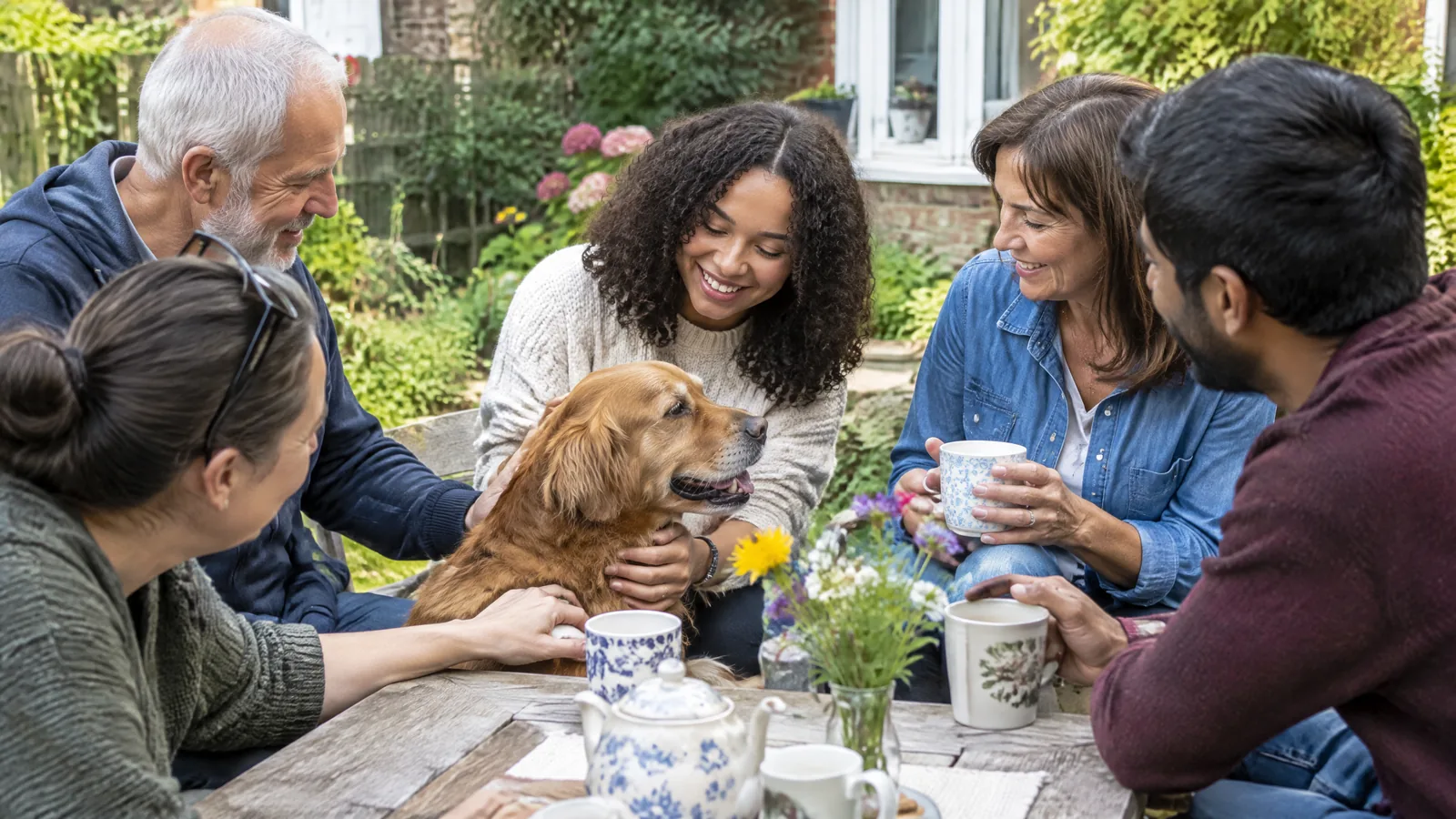
Shared stories & family life · 5 November 2025
The Circle of Care: Remembering Everyone Who Loved a Companion
A companion’s place in a family story is often shared. Remembering them can include the many people, and the ordinary moments, that made that story together.
Read this article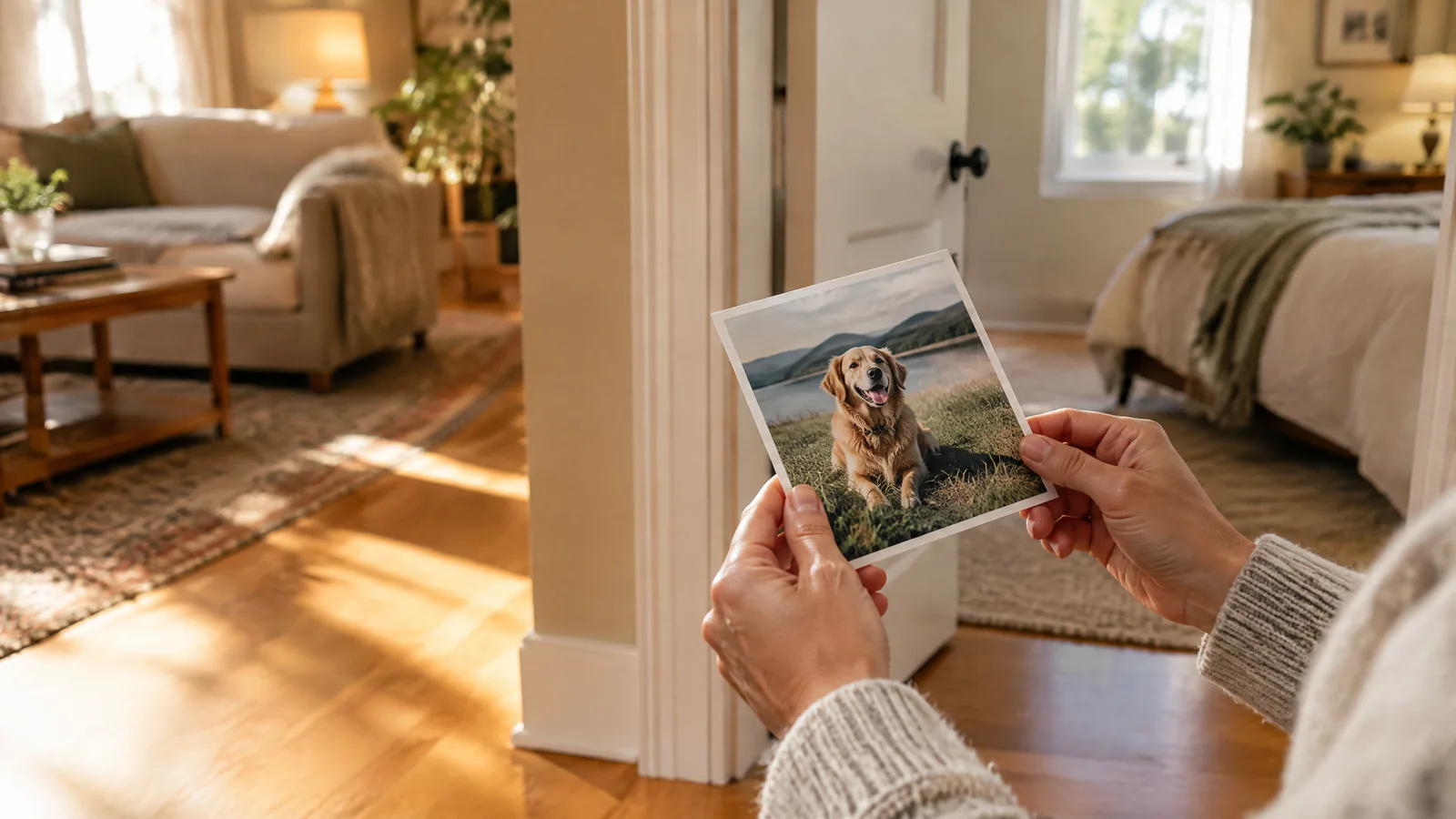
Shared stories & family life · 3 November 2025
The Photograph That Opens the Door to a Story
A familiar photograph can offer a shared place to begin, while leaving room for different memories, new observations, and silence.
Read this article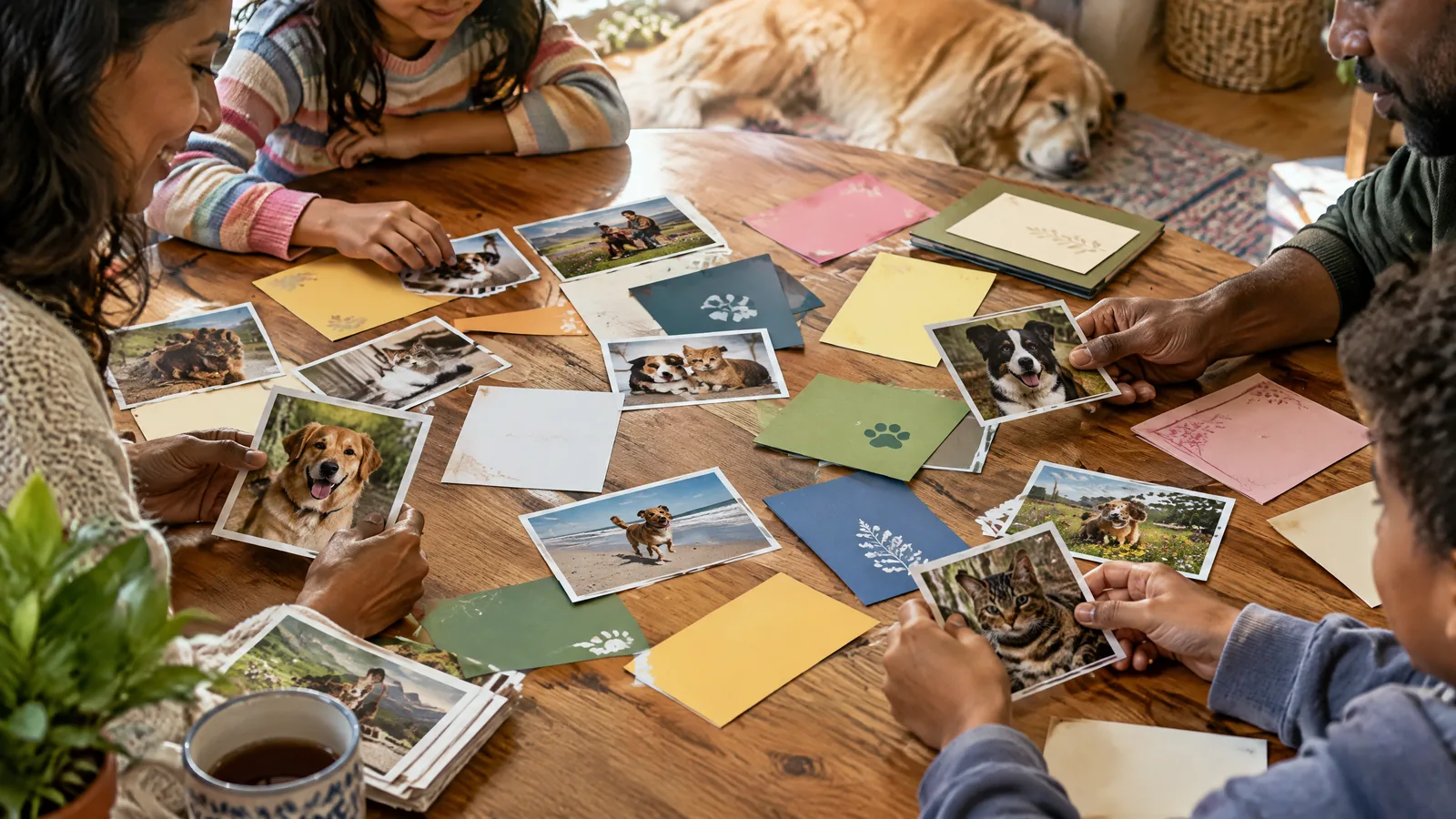
Shared stories & family life · 31 October 2025
The Many Languages of a Beloved Companion’s Story
A reflection on the many ways a family can remember a beloved companion, in words shared, translated, or left gently unspoken.
Read this articleA place for their story
Remember a life, one link at a time.
Explore Paw & Memory at the address below, or scan the QR code to open the memorial starting point in your browser.
Explore memorials Scan or visitpawmemory.live/