
Paw & Memory Journal · Connection, culture & community
More Than a Memorial: Keeping a Companion’s Place in the Family Archive
A digital memorial may be one gentle layer in a family’s larger collection of photographs, keepsakes, stories, and shared remembrance.
5 December 2025
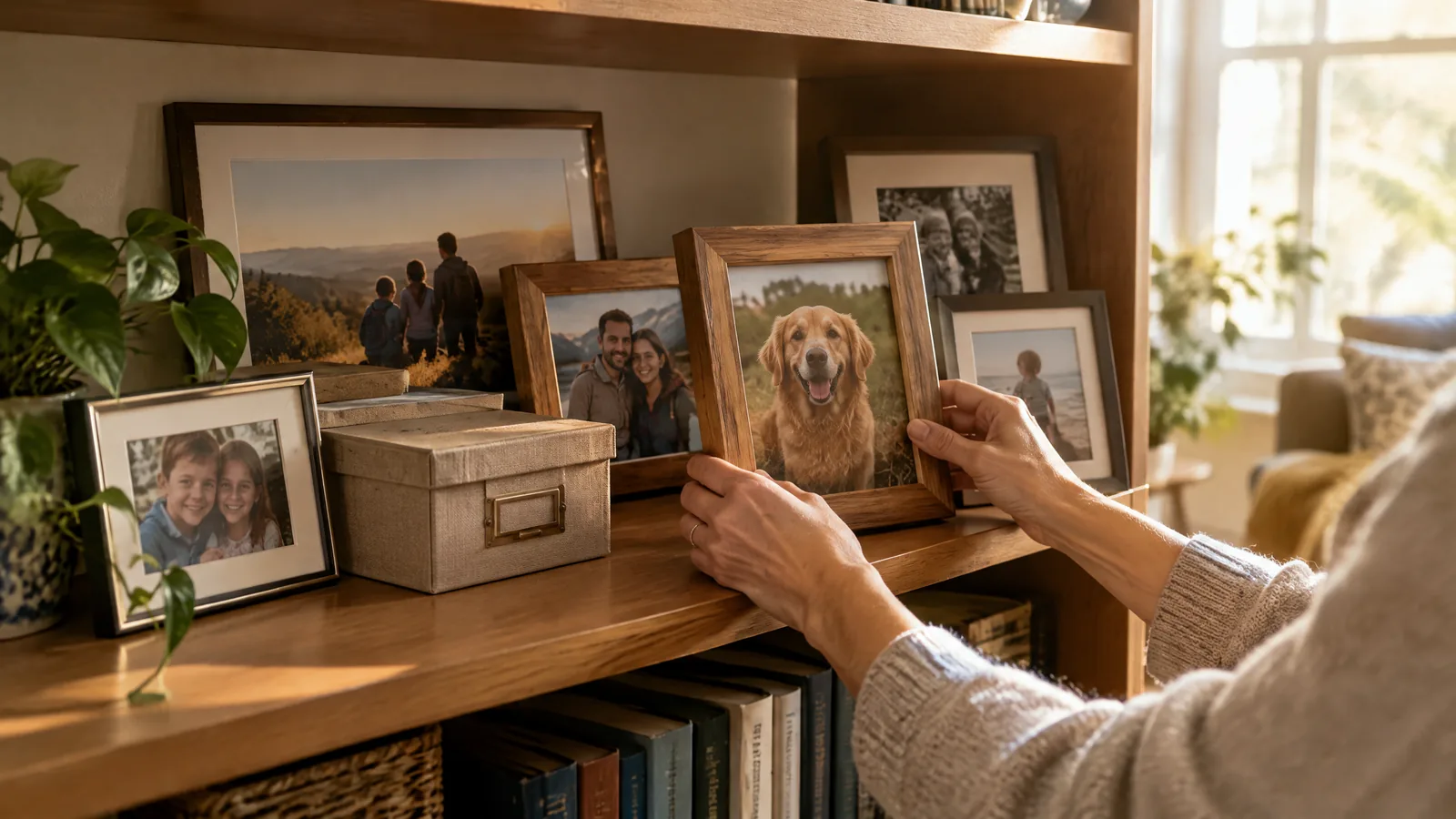
Family archives can hold many forms of remembrance, from a collar or handwritten note to a digital memorial. Each may offer a different way to preserve a companion’s place in the family record, without requiring one shared form or timetable.
A family archive is rarely a single thing. It may be a box on a closet shelf, a row of photographs, a letter kept in a drawer, a story repeated at gatherings, or a familiar object that has found a place in the home. When a companion animal is part of family life, memories of that relationship may gather in many of these forms. A digital memorial can become another part of the collection: a place where photographs, recollections, and other contributions sit together, while physical keepsakes and private ways of remembering remain meaningful in their own right. It need not stand in for a conversation, a ceremony, or an object someone wants to hold. It can simply occupy one place among many. The idea of an archive here is not necessarily formal or complete. It can be an evolving collection, shaped by what relatives choose to keep, share, or leave private.
Different family members may connect with different kinds of remembrance. One person might value a printed photograph; another might remember a small everyday detail and want to write it down; someone else may prefer to contribute quietly, or not contribute at all. A shared digital page can make room for varied kinds of memories, but it does not have to gather everyone’s experience into one account. Family histories are often made from partial recollections, different perspectives, and silences as much as from a polished record. A memorial can reflect that variety without asking for a single agreed-upon story. Nor does it need to appear at a particular moment or be completed on a timetable. For some relatives, a page may feel welcome; for others, a private photograph or an unspoken memory may be enough. There is no universal form or pace for keeping someone’s place in family life.
The physical and digital parts of an archive also have different qualities. A collar, drawing, envelope, or printed image can carry the texture and presence of an object that a screen cannot reproduce. A digital collection, in turn, may bring together contributions from people who are not in the same room, or preserve copies of materials that are otherwise kept separately. The U.S. National Archives and Records Administration notes a simple preservation distinction: digitized copies do not remove the reasons some people may choose to keep original papers or photographs. Digital files, too, can be lost, and services, formats, links, or accounts can change. Clear context can help a future family member understand a digital item: who or what it shows, when it was made if that is known, or why it was saved. More than one copy of important files may offer another layer of care, without making any archive permanent or risk-free.
A family archive can also reflect choices about audience and access. A memorial might be private, shared only with invited relatives, or made public; no one format is required, and families may have different views about photographs, names, and personal details. The design of a digital page matters to the people who encounter it, too. Descriptions for images, captions or transcripts for recordings, readable contrast, and interaction that works with a keyboard are among the considerations that can help more people use a page, though accessibility is something to assess rather than assume. These details are not a measure of how much a family remembers. They are part of the practical shape of a collection. Over time, some pieces may be added, moved, or kept private, while others remain exactly where they are. A digital memorial can be one layer in that changing family archive—not the whole story, and not a required way to tell it.
Continue reading
Related articles.

Connection, culture & community · 22 December 2025
The Stories We Return To: Remembering a Companion in Our Own Time
A companion’s story can remain woven through ordinary days, shared places and the memories people choose to revisit—or leave resting for a while.
Read this article
Connection, culture & community · 19 December 2025
A Place to Keep the Story: Remembering Quietly, Sharing Carefully
A reflection on keeping an animal’s story meaningful and findable while choosing carefully who may see it.
Read this article
Connection, culture & community · 17 December 2025
The Places We Carried Home: Remembering a Pet Across Borders
Across moves, languages, and changing homes, a pet’s place in a household story can offer a gentle way to remember what traveled—and what changed.
Read this articleA place for their story
Remember a life, one link at a time.
Explore Paw & Memory at the address below, or scan the QR code to open the memorial starting point in your browser.
Explore memorials Scan or visitpawmemory.live/