
Paw & Memory Journal · Behavior, Training & Enrichment
Litter Boxes and the Shared Geography of a Multi-Cat Home
A reflection on litter boxes as part of shared domestic space, where questions of number sit alongside the quieter subjects of location, privacy, and individuality.
4 May 2026
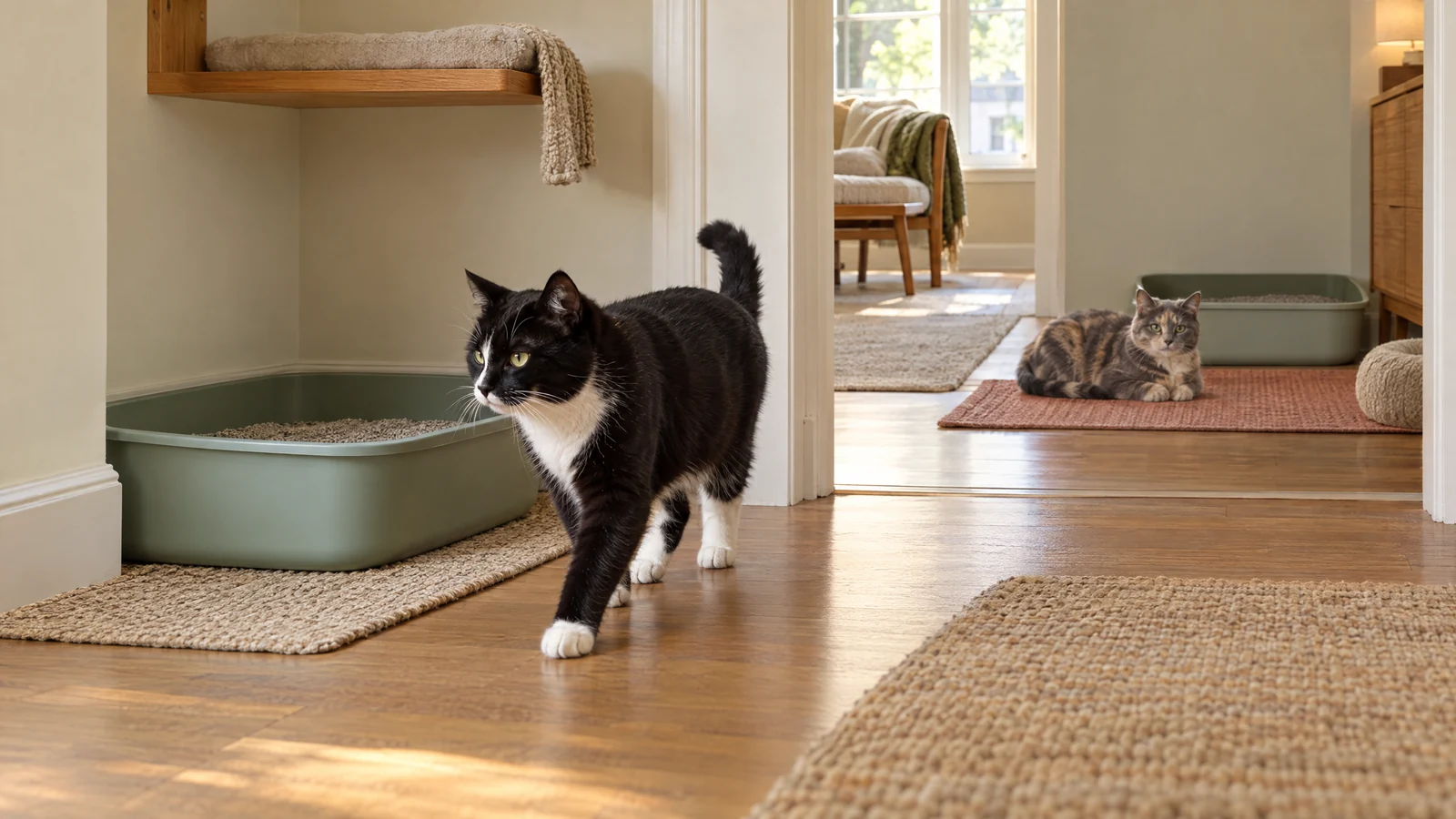
The number of litter boxes is one way to describe a multi-cat home, but it is not the whole conversation. General educational writing also considers the spaces around those objects and the distinction between sharing an address and sharing every preference.
Litter boxes are an ordinary part of the shared geography of a multi-cat home. They belong to the practical side of living with animals, yet the question of how many a household needs opens a broader conversation about space. A numerical answer has an appealing simplicity: it turns a domestic question into something that can be counted. The educational material behind this topic takes a wider view, discussing number alongside location, access, privacy, and the arrangement of rooms. This article considers those themes without turning them into a household formula.
The distinction between an object and its surroundings is central to that discussion. A litter box can be described by its dimensions or design, while its setting includes doorways, nearby furniture, and the rest of the room. Several boxes can therefore be counted as separate objects while still occupying one small area. That contrast offers a useful way to understand the subject as a question of domestic geography rather than arithmetic alone. It does not establish which arrangement belongs in any particular home, or what an individual cat would make of it.
Sharing a home is also different from sharing an identity. The language of a multi-cat household gathers several animals into a single phrase, but general educational accounts leave room for individuality within that group. Discussions of litter boxes reflect this distinction through their attention to separate spaces and differing preferences. Privacy, proximity, and shared resources become topics for understanding the home, not labels for judging its residents. The same restraint applies to the objects themselves: a covered or uncovered tray can be named and described without declaring one design the answer for every household.
The original question about litter-box numbers remains meaningful, even when a public reflection leaves it unanswered. Its value lies partly in revealing how much an everyday object can bring into a conversation about living together. A count describes one feature of a home; it does not describe every relationship, room, or individual within it. Individual questions belong with a qualified veterinary professional. At the general level, this subject invites a modest perspective: the domestic life we share with cats contains both visible arrangements and details that a simple number cannot express.
Continue reading
Related articles.
Behavior, Training & Enrichment · 8 May 2026
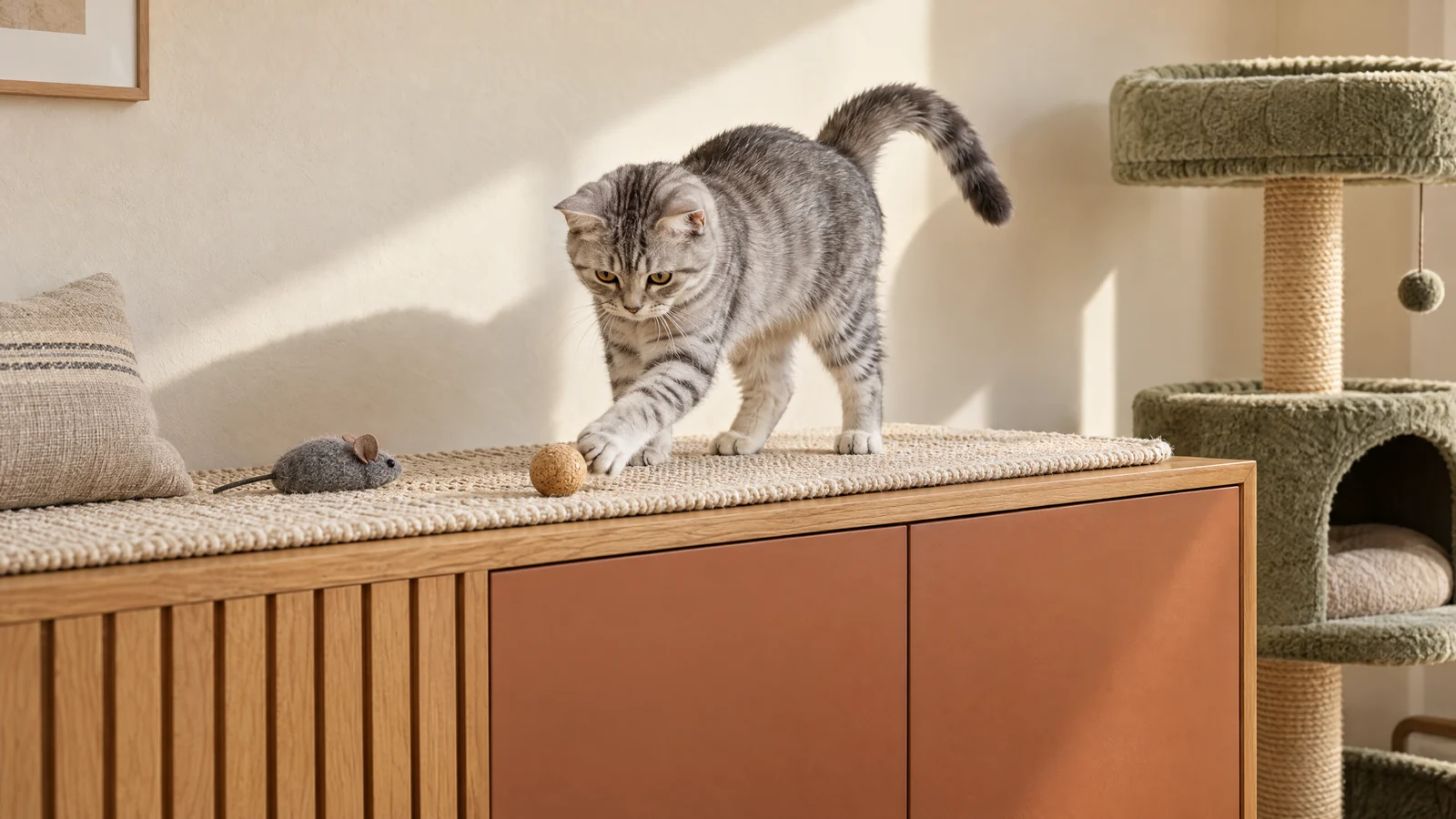
Cats, Tabletop Objects, and the Stories We Tell
A cat batting something from a table sits at the meeting point of feline curiosity and human expectations. The familiar question opens a wider conversation about play, attention, and the meanings people give to everyday behaviour.
Read this article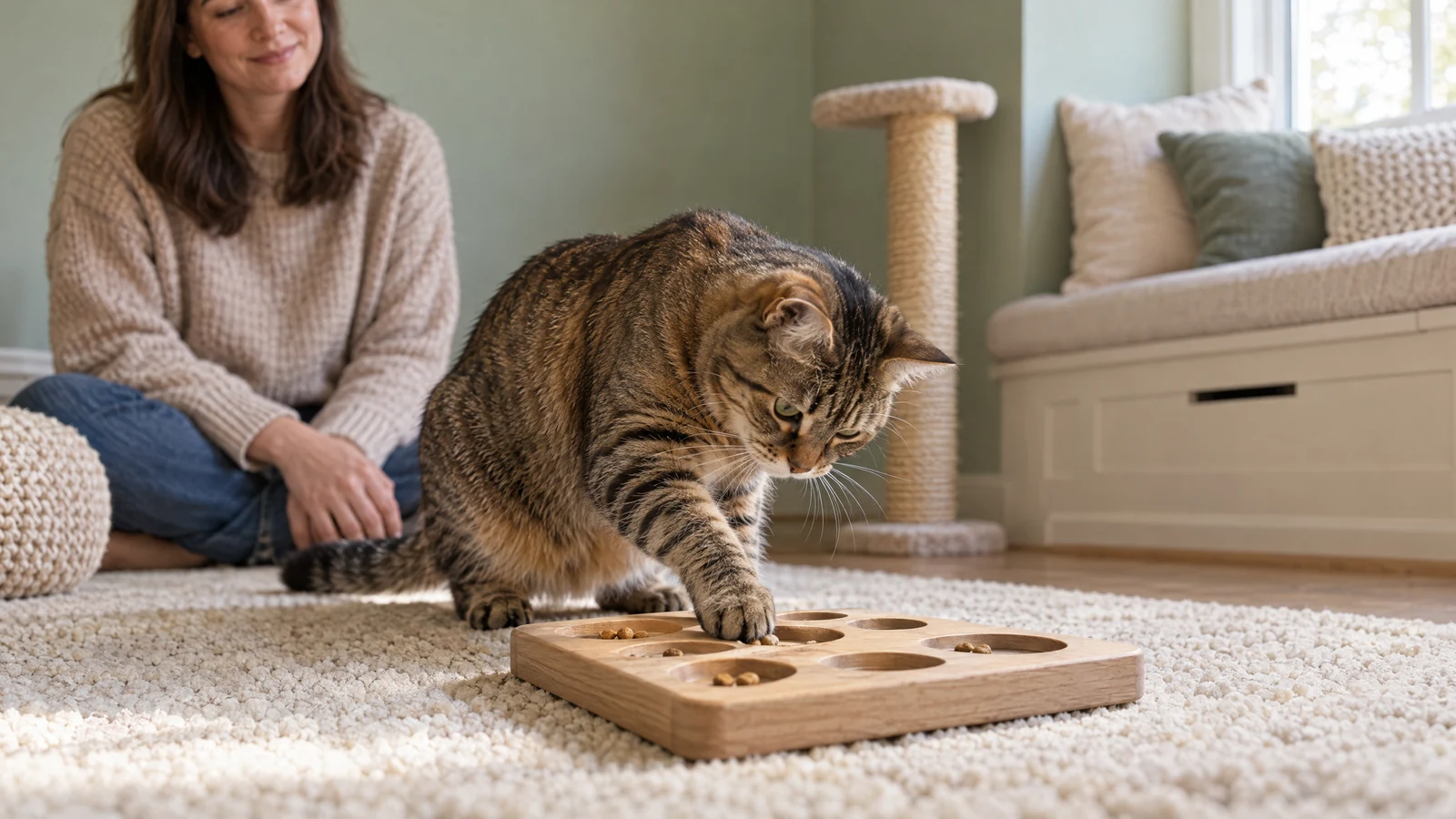
Behavior, Training & Enrichment · 6 May 2026
Cat Puzzle Toys and the Meaning of Play
A reflective look at cat puzzle toys, the language surrounding them, and the place of a single object within the larger idea of an indoor home.
Read this article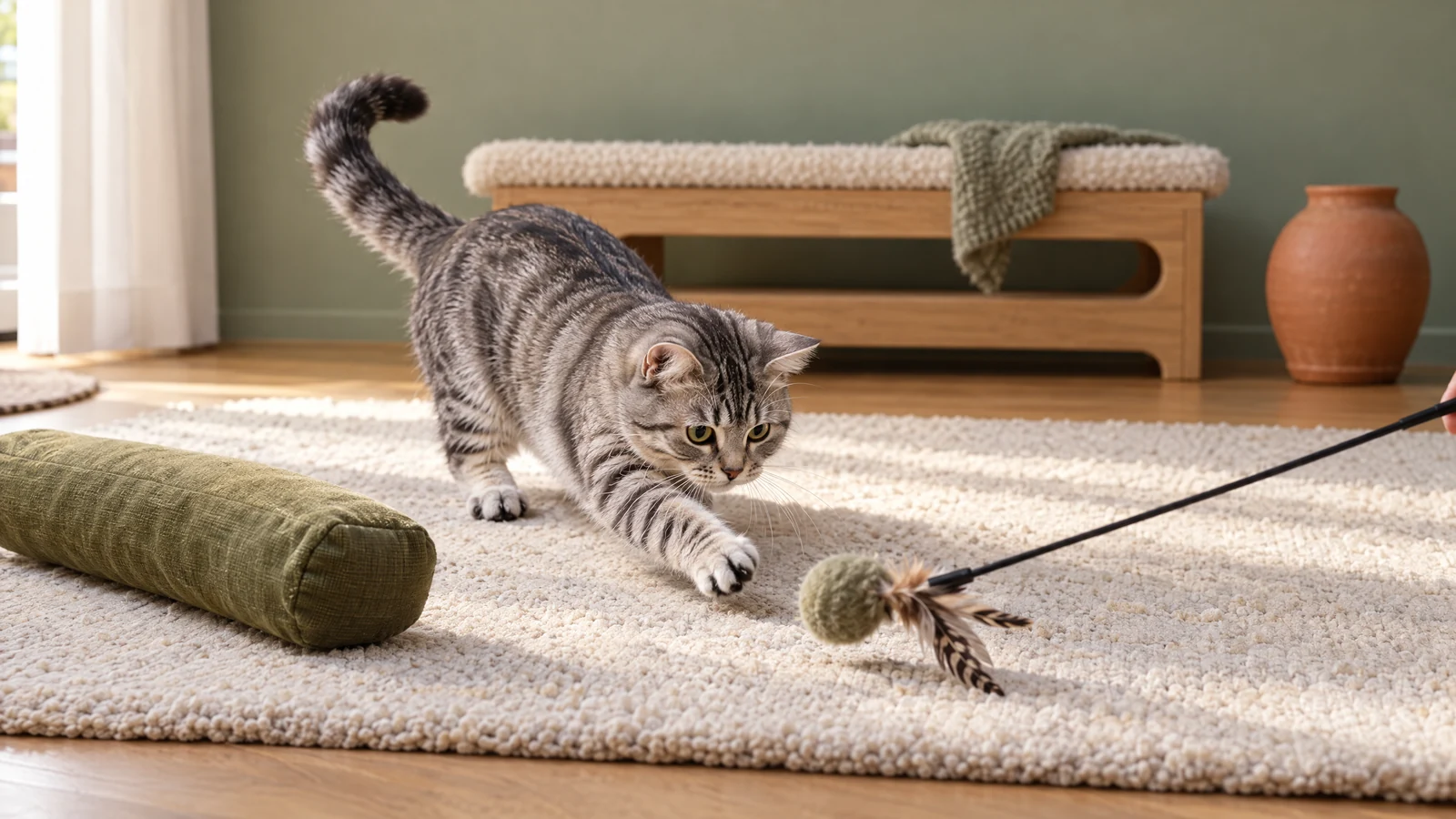
Behavior, Training & Enrichment · 1 May 2026
Cat Play Biting and the Meaning of a Shared Game
A reflection on the language of feline play, the place of hands and toys in its description, and the limits of what a general account can tell us.
Read this articleA place for their story
Remember a life, one link at a time.
Explore Paw & Memory at the address below, or scan the QR code to open the memorial starting point in your browser.
Explore memorials Scan or visitpawmemory.live/