
Paw & Memory Journal · Behavior, Training & Enrichment
Cats, Tabletop Objects, and the Stories We Tell
A cat batting something from a table sits at the meeting point of feline curiosity and human expectations. The familiar question opens a wider conversation about play, attention, and the meanings people give to everyday behaviour.
8 May 2026
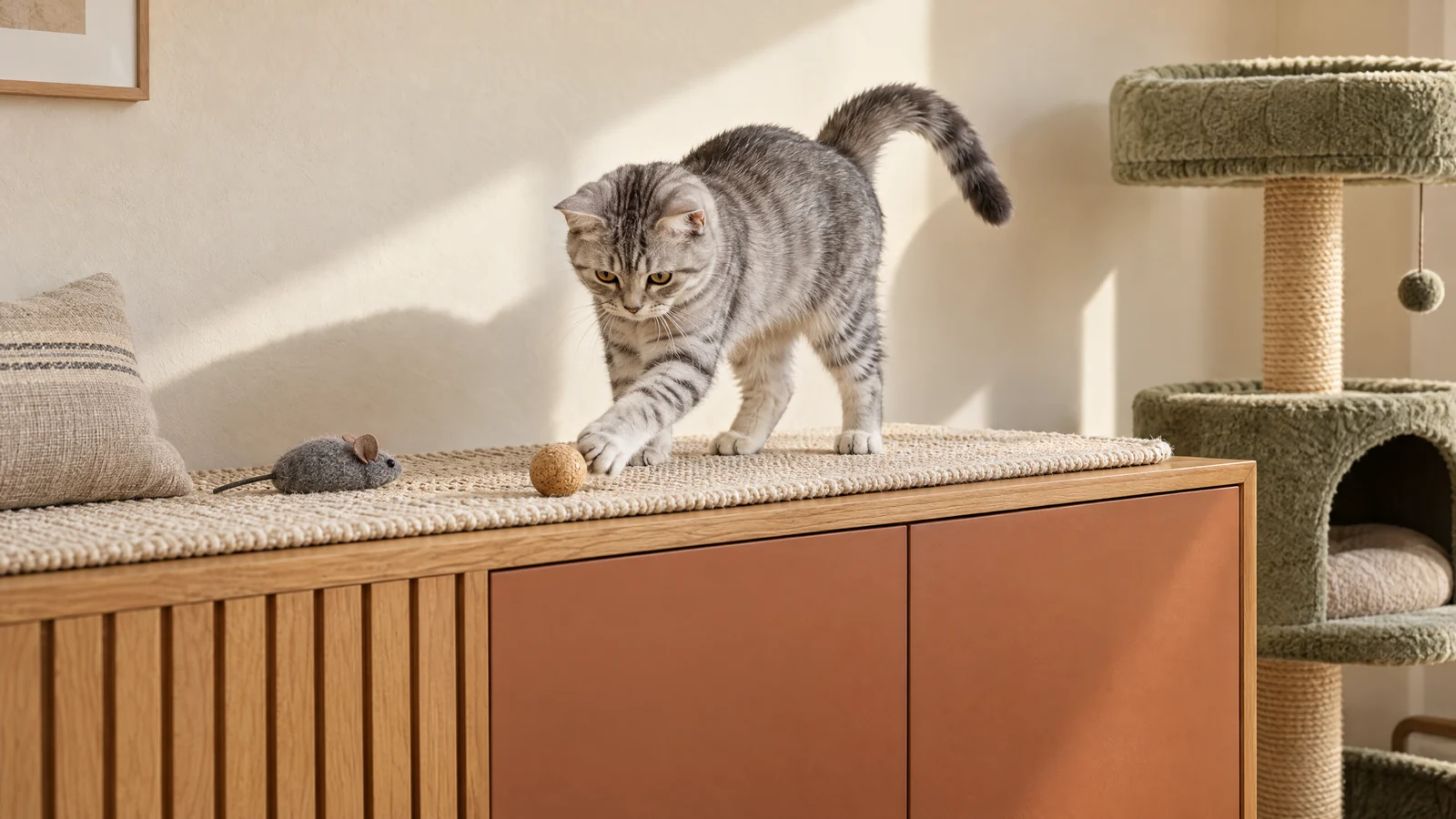
Tabletop objects belong to the human arrangement of a home, but they also feature in discussions of feline investigation and play. The question of why cats knock things down reveals how easily an observable action becomes a story about intention.
Cats knocking objects from tables is a familiar subject in writing about life with companion animals. It brings together an ordinary household setting and a question about intention: why would a cat move something that a person meant to stay in place? The wording often carries a human expectation before the explanation begins. A table is a place for belongings, and an object falling from it feels like a disruption of that purpose. Yet the visible action and the meaning assigned to it are different parts of the account. A paw touching an object describes an event; calling that event mischief adds an interpretation.
General discussions of feline behaviour place object-batting alongside investigation, play, and interest in movement. These are broader categories than the familiar idea of a cat deliberately causing trouble. The original subject also touches on hunting-related behaviour, with its vocabulary of stalking, chasing, pouncing, and catching. Such categories provide context for the conversation without establishing the reason for any particular encounter with a pen or ornament. The distinction matters because a general explanation is not a private account of an animal's intentions. The same everyday question can invite several interpretations without any one of them becoming a complete answer.
Attention is another theme in accounts of tabletop behaviour. Here the focus widens from the cat and the object to the people sharing the room. Human reactions form part of the discussion, alongside movement, sound, and the setting itself. This makes the subject a small example of how writing about companion animals often concerns relationships rather than isolated actions. Words such as defiant or spiteful bring familiar human motives into that writing. More descriptive language leaves room for uncertainty and keeps a household inconvenience separate from a judgment about character.
The lasting interest of this topic lies partly in the different meanings a shared home can hold. A desk may represent work, a shelf may represent display, and a small object may represent something worth keeping exactly where it is. Writing about cats introduces another perspective without requiring an invented inner monologue or a single explanation for every falling item. Individual questions belong with a qualified veterinary professional, while a general reflection can remain with the broader subject. The cat, the tabletop, and the human response offer a modest reminder that sharing space also means encountering actions whose meaning is not immediately ours to know.
Continue reading
Related articles.
Behavior, Training & Enrichment · 6 May 2026
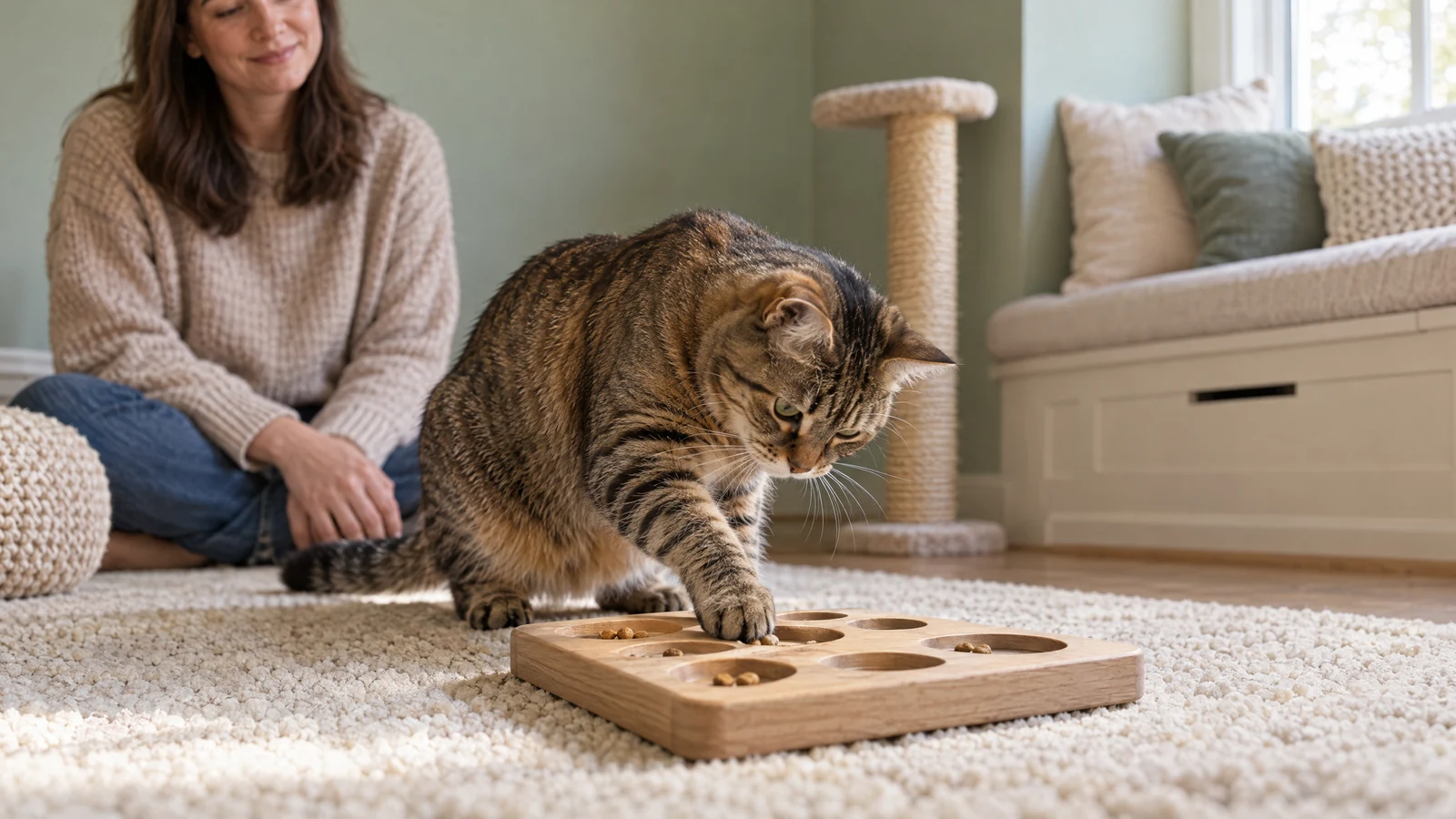
Cat Puzzle Toys and the Meaning of Play
A reflective look at cat puzzle toys, the language surrounding them, and the place of a single object within the larger idea of an indoor home.
Read this article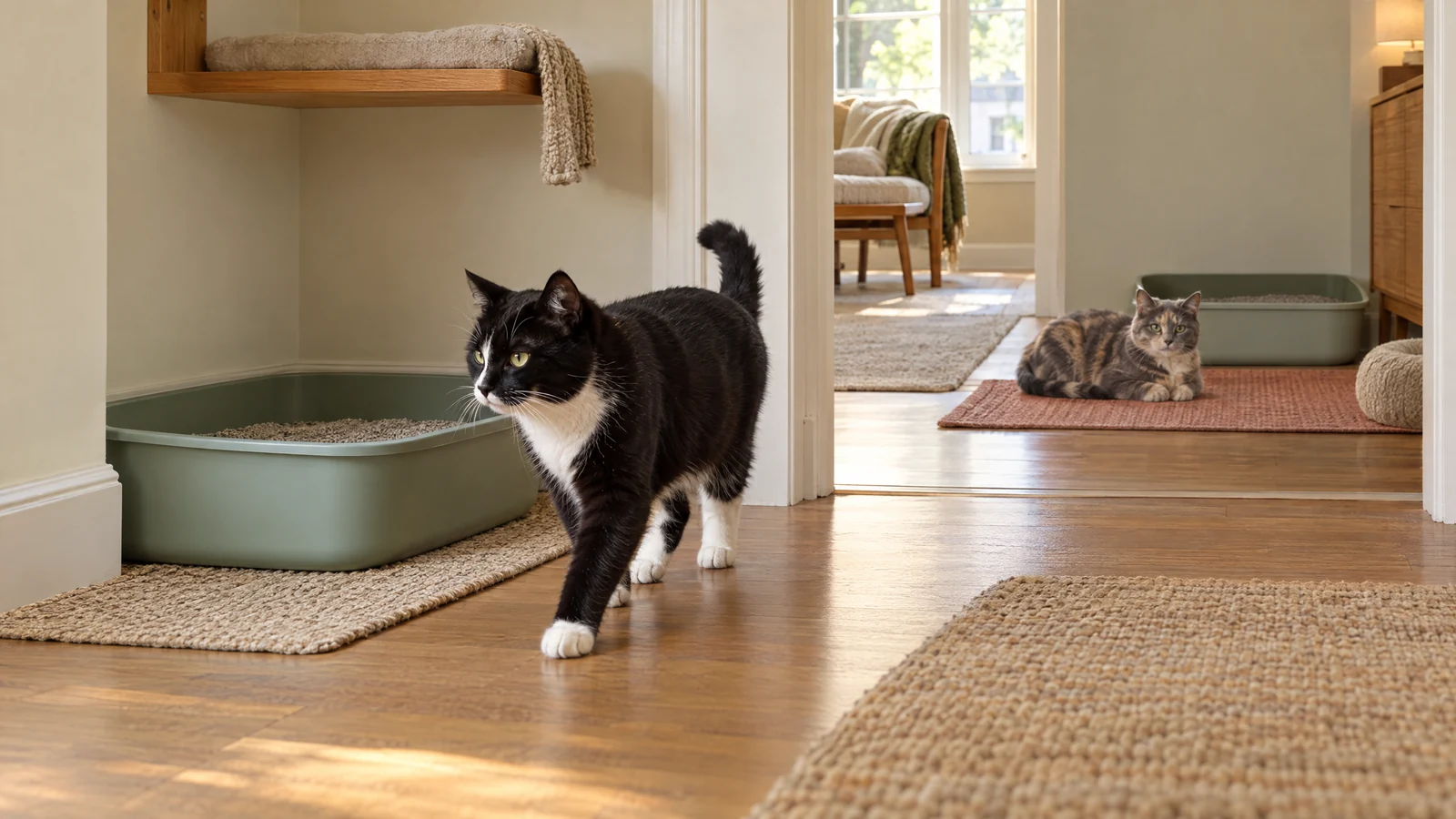
Behavior, Training & Enrichment · 4 May 2026
Litter Boxes and the Shared Geography of a Multi-Cat Home
A reflection on litter boxes as part of shared domestic space, where questions of number sit alongside the quieter subjects of location, privacy, and individuality.
Read this article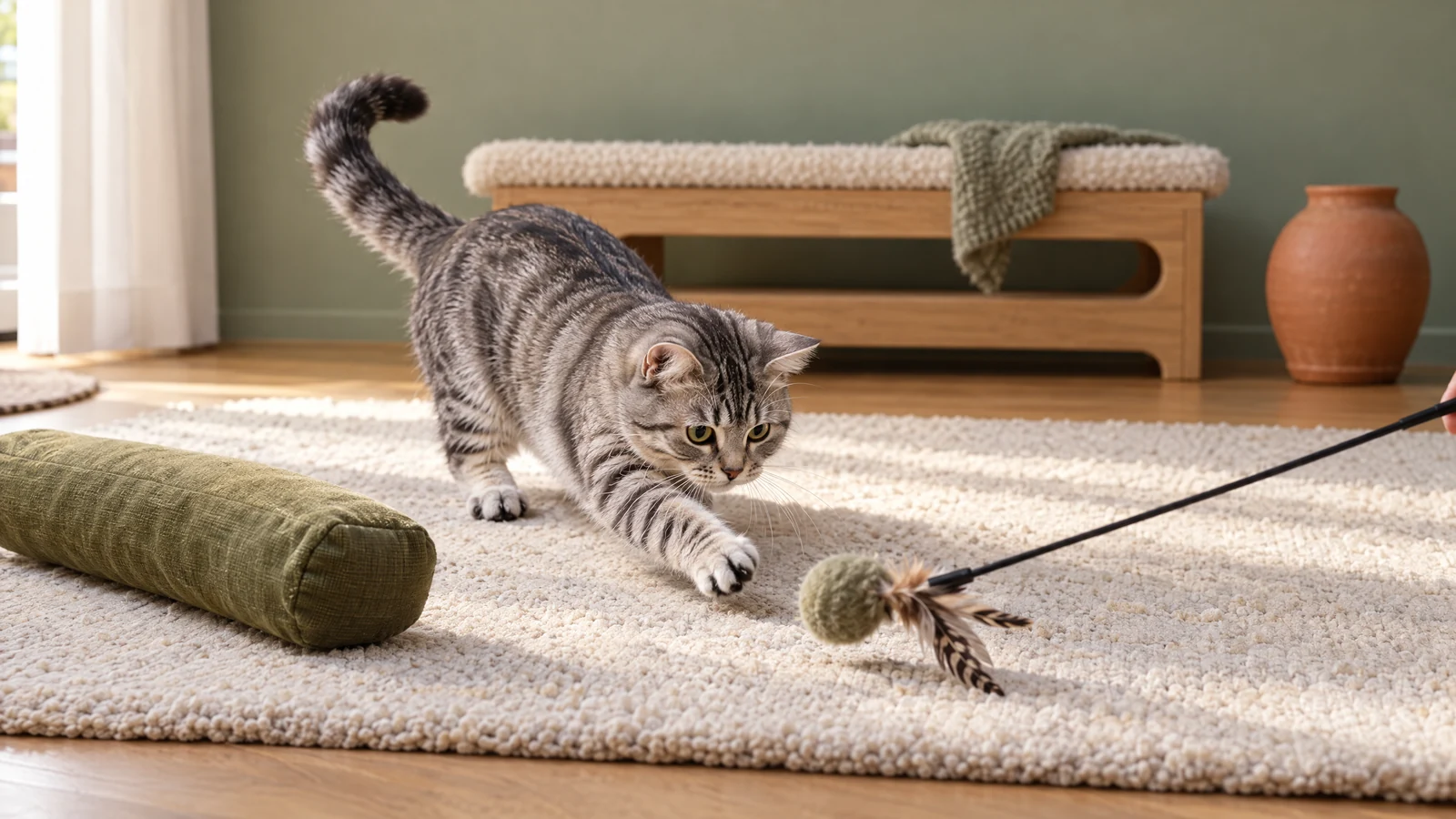
Behavior, Training & Enrichment · 1 May 2026
Cat Play Biting and the Meaning of a Shared Game
A reflection on the language of feline play, the place of hands and toys in its description, and the limits of what a general account can tell us.
Read this articleA place for their story
Remember a life, one link at a time.
Explore Paw & Memory at the address below, or scan the QR code to open the memorial starting point in your browser.
Explore memorials Scan or visitpawmemory.live/