
Paw & Memory Journal · Shared stories & family life
One Small Story to Keep: Inviting Family Memories of a Beloved Companion
A gentle reflection on the small, ordinary details families may choose to remember—and on the freedom to keep a memory private.
29 September 2025
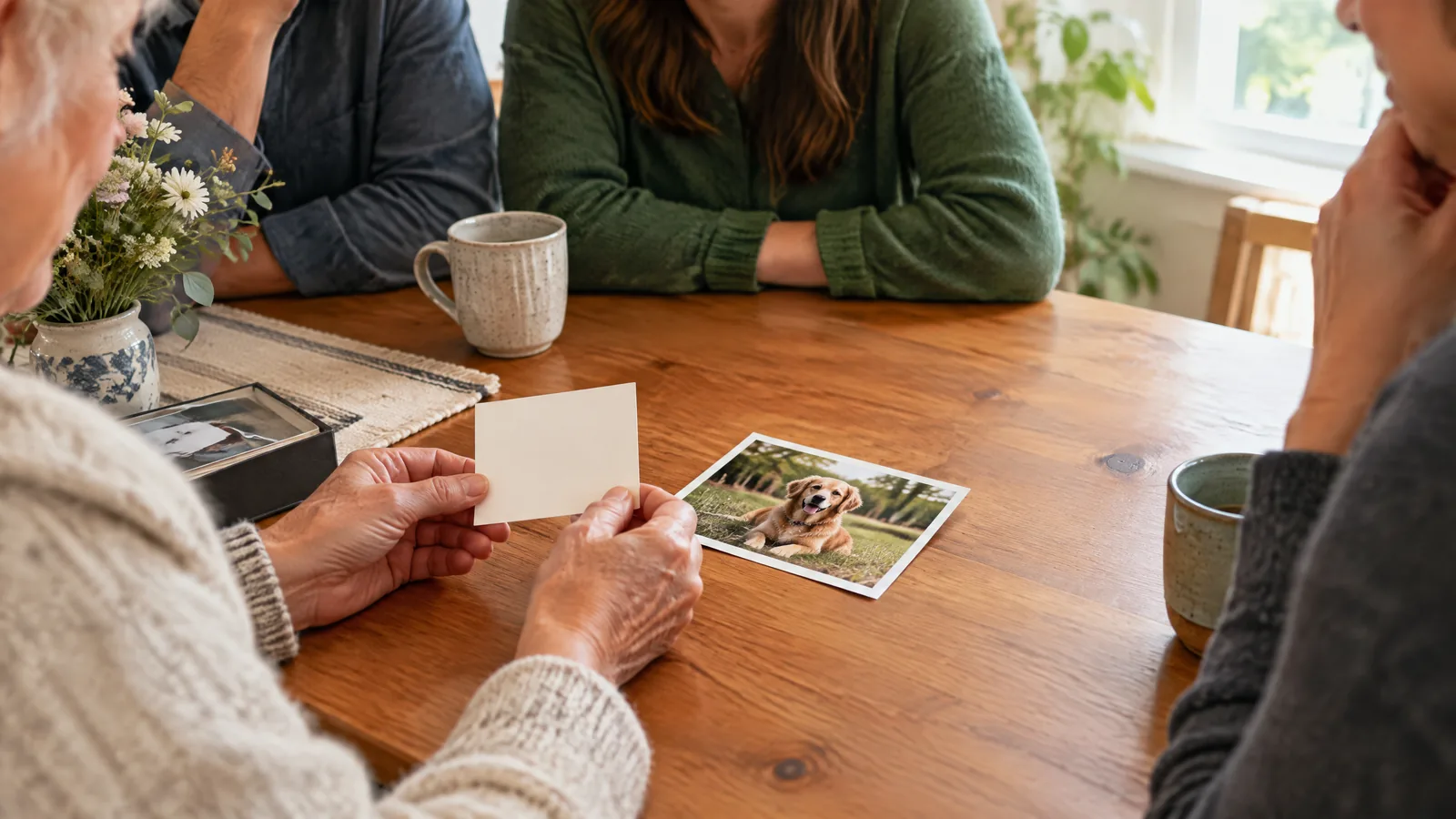
A companion can remain part of family life in many different ways. Inviting someone to share one small memory may open a space for listening, but the invitation can be declined, paused, or kept private.
A family memory does not have to be a grand story to matter. It might be a small, particular detail: the sound of paws crossing a hallway, a familiar shape in a favorite window, or the way a companion seemed to appear whenever someone opened a cupboard. For some families, asking a relative to share one such moment can become a quiet invitation to notice how a companion has touched ordinary life. For others, the question may not feel welcome, or the answer may be silence. Both are complete responses. There is no single way to remember, and no requirement that a memory be spoken aloud to count. A companion may be living, rehomed, missing, deceased, or absent for another reason; the meaning of an invitation does not depend on a particular ending. It can simply offer room for a detail, if someone wishes to place one there.
The wording can stay open and small: “Is there one little moment with them that comes to mind?” A relative might answer with a sentence, a longer story, a message later, or nothing at all. They may prefer to write a private note or keep the thought to themselves. The person asking need not search for the most moving memory or steer toward a particular feeling. An everyday recollection can be enough, and an uncertain answer can remain uncertain. Some relatives may laugh, some may become quiet, some may change the subject, and some may feel several things at once. Others may have little to say, or may not wish to revisit the past. These different responses do not need to be measured against one another. Listening can mean allowing the story to remain ordinary, unfinished, or unshared, rather than asking it to explain the relationship or represent what everyone in the family feels.
If a memory is offered, it belongs first to the person who chose to share it. Asking before recording a voice, taking a photograph of a note, or passing a story along can help keep that choice visible. A private conversation may suit someone better than a saved recording; another person might welcome a written version but not a public post. Recorded-history projects offer one limited example of how permission can shape what happens to a story: in one project, participants received a copy of their interview, while a second copy entered an archive only with their permission. That example does not mean recording is needed, or that every family member will want a story preserved. Even a private note can carry personal details, and an online post may travel beyond the audience first imagined. The person sharing can decide what feels comfortable to keep, where it belongs, and whether anyone else may see it.
Families also differ in language, tradition, beliefs, and in what they call the bond with an animal. A question that feels tender to one person might feel too exposed, sentimental, or simply unwelcome to another. It can be offered without assuming a shared interpretation of absence or remembrance, and withdrawn without making the refusal into a family statement. The invitation need not happen on a particular date or follow a particular rhythm. It might arise naturally in conversation, or it might never be made. No one has to provide a memory, and no particular emotional response is expected. If someone begins and then stops, the moment can end there. The small story, when it is offered, need not resolve anything or stand for the whole relationship. It can remain one detail among many: a sound, a habit, a place at home, or a passing scene that one relative chose to share and another chose to hear.
Continue reading
Related articles.

Shared stories & family life · 5 November 2025
The Circle of Care: Remembering Everyone Who Loved a Companion
A companion’s place in a family story is often shared. Remembering them can include the many people, and the ordinary moments, that made that story together.
Read this article
Shared stories & family life · 3 November 2025
The Photograph That Opens the Door to a Story
A familiar photograph can offer a shared place to begin, while leaving room for different memories, new observations, and silence.
Read this article
Shared stories & family life · 31 October 2025
The Many Languages of a Beloved Companion’s Story
A reflection on the many ways a family can remember a beloved companion, in words shared, translated, or left gently unspoken.
Read this articleA place for their story
Remember a life, one link at a time.
Explore Paw & Memory at the address below, or scan the QR code to open the memorial starting point in your browser.
Explore memorials Scan or visitpawmemory.live/