
Paw & Memory Journal · Photographs, records & digital legacy
The Days We Saved: Finding a Companion’s Life in the Family Camera Roll
A family camera roll can hold more than milestones: it can preserve the small, ordinary ways a companion animal belonged in a household.
8 August 2025
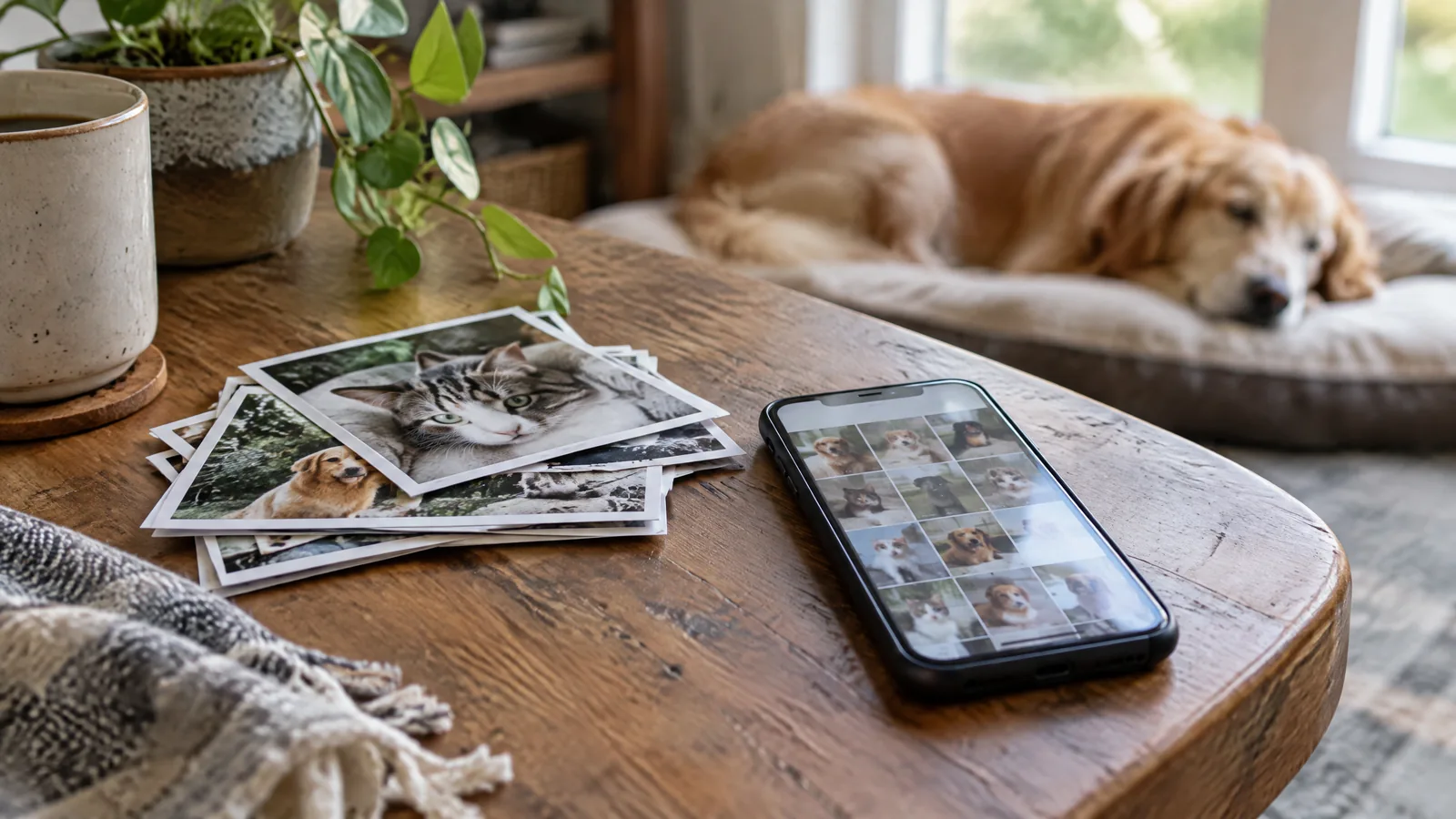
Among the posed portraits and holiday pictures are the quieter images: a dog waiting by the door, a cat near the window, a familiar shape at the edge of a family photograph. With a little context, these everyday moments can become a shared record of life together—without needing to be complete or perfectly arranged.
A family camera roll rarely sets out to become an archive. It grows in the middle of ordinary life: a quick picture before leaving home, a companion animal resting near the window, a familiar presence just inside the frame of a birthday or a day out. Some images are carefully composed; many are blurred, repeated, or taken for reasons that have since faded from memory. Together, they can still hold a record of how an animal appeared in the rhythms of a household—not a complete biography, but a collection of moments in which that life was part of the day. The meaning may be especially noticeable later, whether a family is remembering an animal who has died, welcoming a new chapter, or simply looking back at years that have passed. No one needs to feel the same way about these pictures, and keeping them does not require deciding what they mean.
The camera roll’s abundance can make the idea of preserving it feel larger than it needs to be. An archival collection does not have to begin with the ambition of sorting every image perfectly. A small, manageable selection can be meaningful: perhaps pictures from different seasons, rooms, journeys, or family gatherings, alongside the less formal snapshots that seem to say, simply, “this was part of our everyday.” What counts as a useful selection is personal. One household might value a handful of prints; another might prefer a folder of digital images, or no organized collection at all. Time, cost, privacy, grief, disability, and differing family preferences all shape what feels possible. There is no measure of devotion in the size of a collection, and an unfinished camera roll is not a failed record.
A little plain-language context can help an image remain recognizable to people who encounter it later. A name, an approximate date, a place, or the people present may be enough; where an exact date is uncertain, a broad description such as “early summer” or “at the old apartment” can preserve what is remembered without pretending to precision. Family members may notice different details or recall different parts of an occasion, and their captions can sit alongside one another rather than being made to agree. Such notes are memories offered in human words, not proof of an animal’s thoughts or a definitive account of its inner life. Some families may also choose to keep original image files when they can, retain more than one copy, or make prints. These are ways to reduce certain risks, not guarantees of permanent access; technology, services, and storage can change. A simple collection can remain simple, and nobody needs specialized cataloging language to care about what it holds.
Images can also contain more than their subjects. A photograph may show a child, a visitor, a recognizable home, a collar or tag, or a location that someone would rather keep private. The choice to share pictures beyond the household can therefore be separate from the choice to save them. Families can have different boundaries, and those boundaries may shift with time. Nor does an image need to become a public memorial, a printed album, or a polished account of an animal’s life in order to matter. A snapshot at the edge of a family gathering may say less about a whole life than about one ordinary moment, and that can be enough. The camera roll is not required to explain everything or preserve every year. It can be a modest, shared record of presence: imperfect, personal, and open to being revisited—or left alone—according to what feels right for the people who keep it.
Continue reading
Related articles.
Photographs, records & digital legacy · 19 September 2025
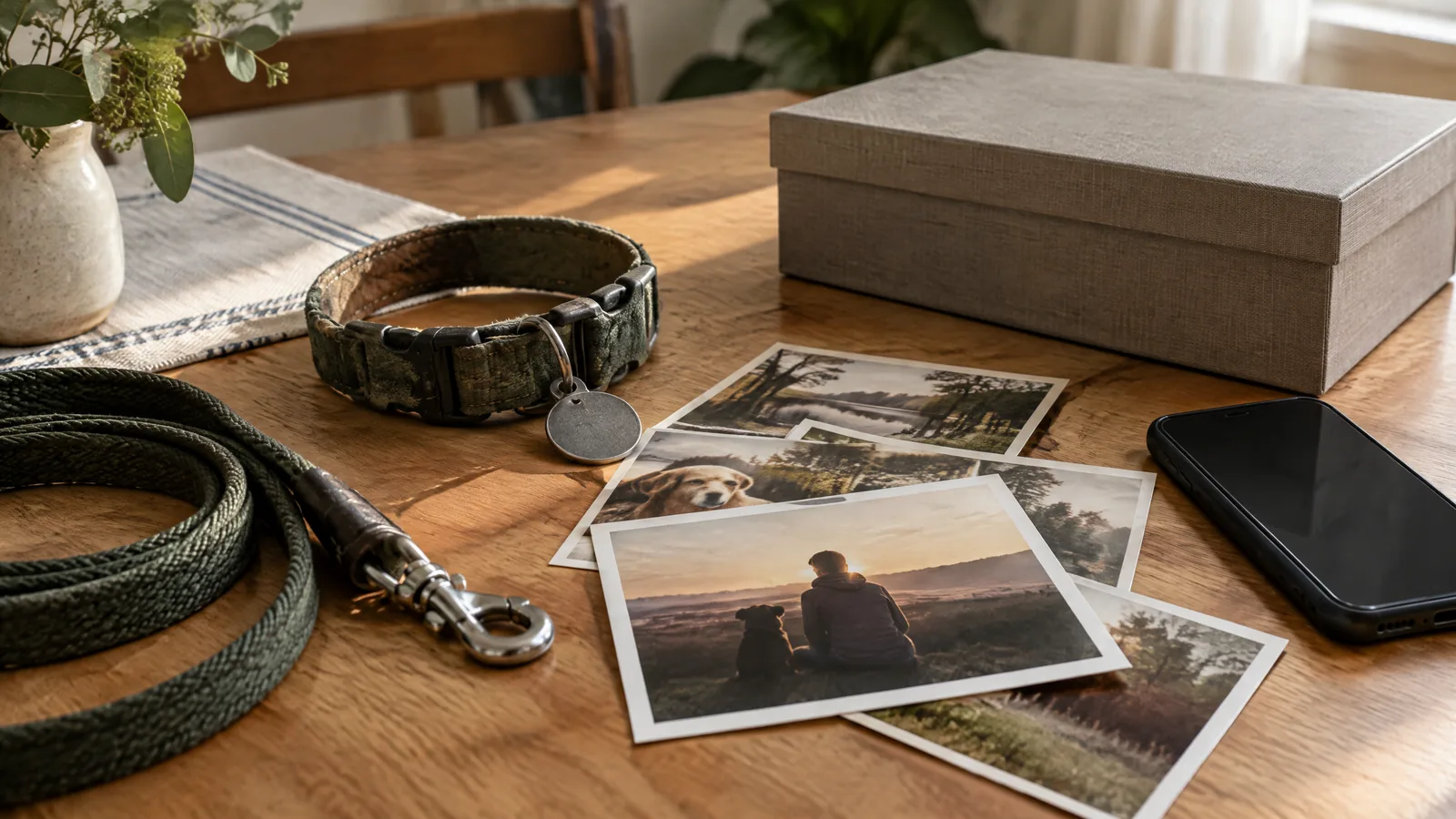
The Small Things We Keep: Making a Family Archive of a Loved Pet
A collar, a tag, a lead, and a handful of photographs may hold different places in a family’s story.
Read this article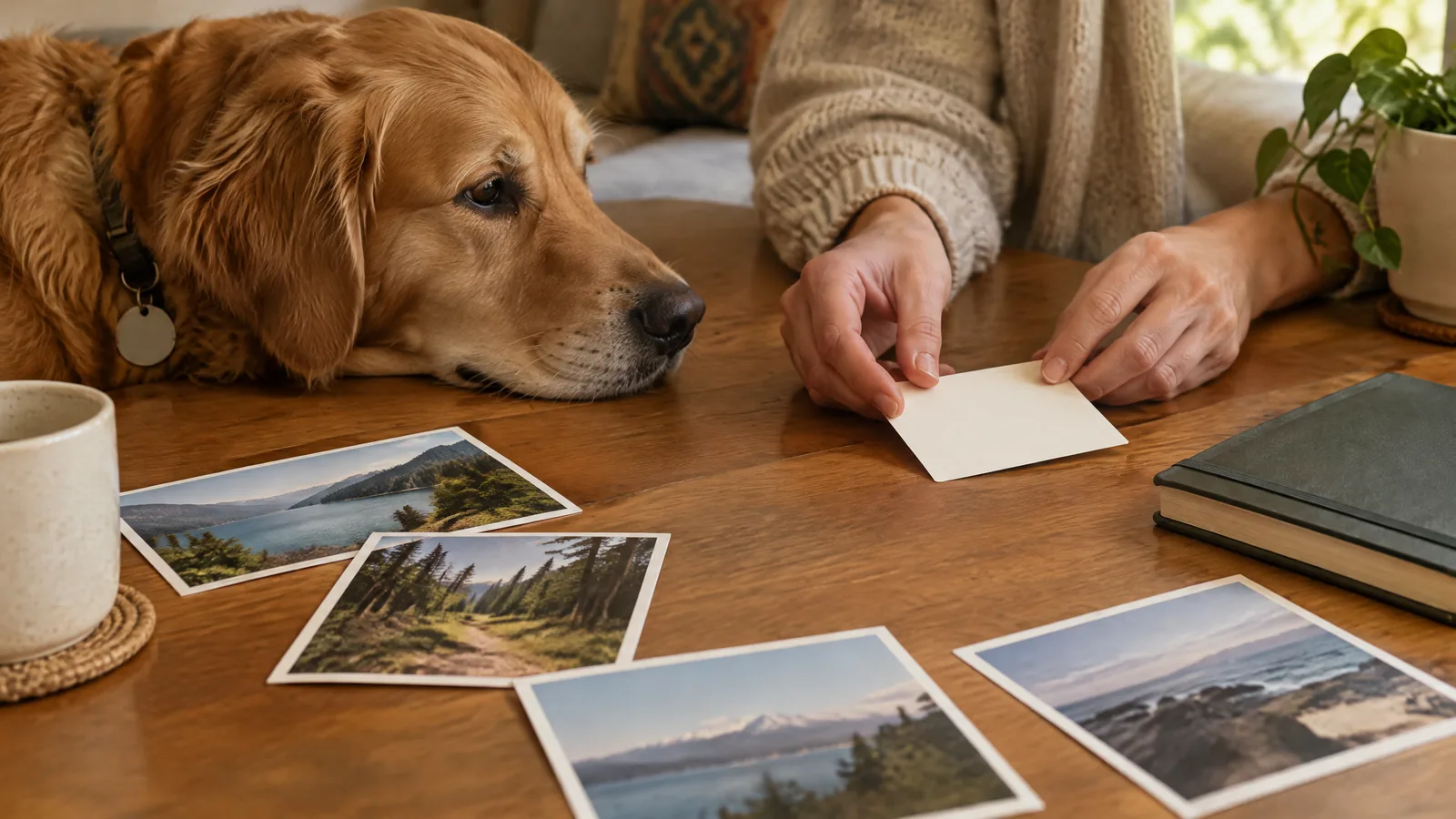
Photographs, records & digital legacy · 17 September 2025
The Small Records That Help Tell a Companion’s Story
A name, identifier, date, or change of keeper can offer a quiet thread through photographs and recollections, while remaining only one small part of a companion’s life.
Read this article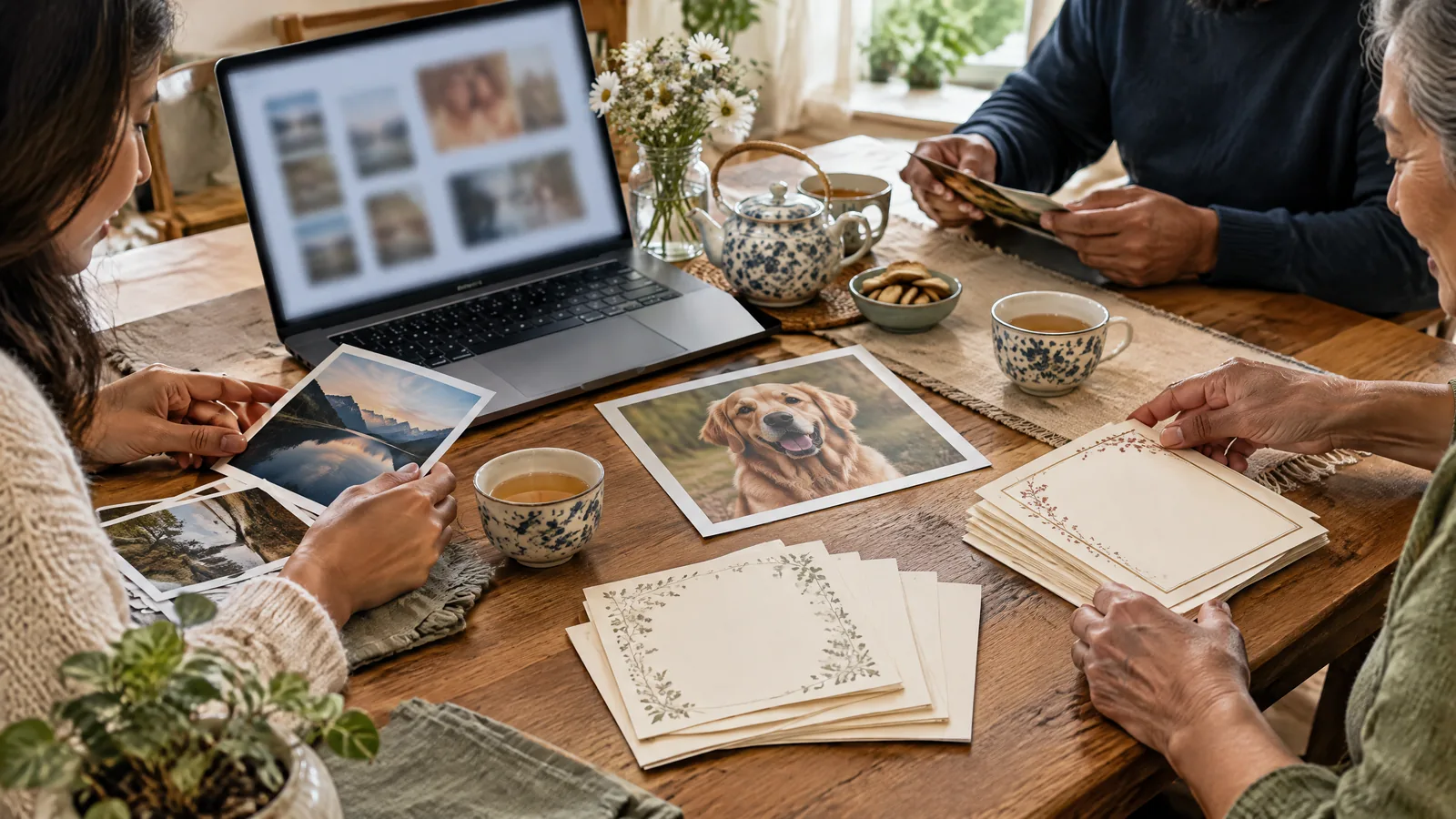
Photographs, records & digital legacy · 15 September 2025
A Memory Everyone Can Read: Making a Multilingual Pet Memorial Page Feel Like Home
A source-led reflection on keeping a memorial page understandable for a family in more than one language, and the ordinary details that can hold a companion’s story.
Read this articleA place for their story
Remember a life, one link at a time.
Explore Paw & Memory at the address below, or scan the QR code to open the memorial starting point in your browser.
Explore memorials Scan or visitpawmemory.live/