
Paw & Memory Journal · Photographs, records & digital legacy
The Faces We Keep: Meeting a Beloved Companion Through Family Photographs
Family photographs can offer later generations a way into a companion’s story, while leaving room for memories that are personal, partial, and sometimes different.
3 September 2025
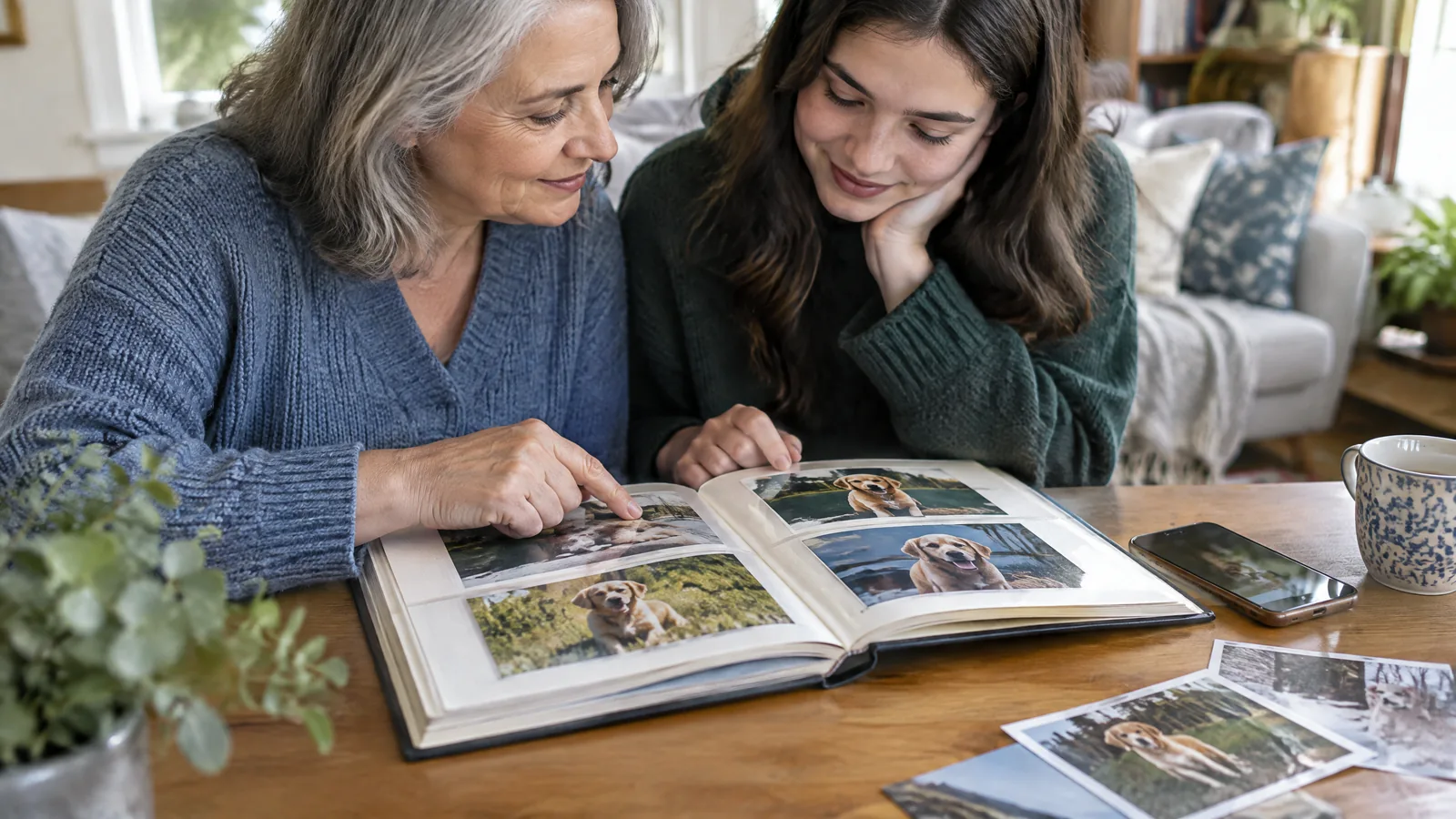
An image may show a familiar face, a place, or a moment, but its context often lives in names, dates, and the details people remember. Sharing photographs can make space for curiosity and conversation without asking every family member to feel the same way.
A photograph can introduce a companion to someone who never met them, but it rarely tells the whole story. A younger relative might notice a dog’s speckled ears, a cat occupying the center of a sofa, or the same blanket appearing in pictures taken years apart. Those visible details can open a door to questions: What was this animal’s name? Where was this taken? Who else was there? The image offers a place to begin, not a complete account of a life. What it shows and what someone remembers may sit side by side, and the distinction can be worth keeping. A face or pose cannot establish everything about a companion’s character, relationships, or experience. Still, photographs can help make a name and a presence more familiar across generations, especially when the people who knew the animal are able to add context in their own words.
Small captions can carry that context beyond the moment of looking. A date, a name, a place, or a few plain words about what is visible may help a future viewer distinguish one picture from another. When a detail comes from memory rather than the image itself, it can be framed as recollection: someone remembers a particular walk, or recalls that a photograph was taken during a visit. That leaves room for uncertainty and for other relatives to remember differently. Not every image needs a long explanation, and not every memory will be shared or available. Even a partial caption can be useful if it reflects what the person writing it knows. Names and dates may matter especially when photographs move between albums, phones, and relatives’ collections; without them, an image can remain vivid yet difficult for someone new to place.
Albums, printed photographs, scans, and digital folders can each make a family archive more accessible in different ways. Family photographs may be preserved for people in generations to come, though the image itself is only one part of what travels forward. A shared album might bring pictures together; a digital copy may make viewing possible for relatives who are far away; a box of prints may hold images that have not yet been identified. There is no single format a family has to choose, and an incomplete collection can still be meaningful. Some households have many photographs, while others have very few, or none that feel appropriate to share. A companion may also be remembered through ordinary objects, stories, or habits rather than pictures. These differences do not measure the importance of a relationship. They describe the different materials and memories families have at hand.
Looking through photographs together may bring warmth, grief, curiosity, or several responses at once; it may also feel ordinary, private, or not right for a particular person. The same picture can prompt one relative to tell a story and another to notice something entirely different. Sharing the images does not require agreement about what they mean, nor does preserving them obligate anyone to display them publicly. Permission and privacy remain part of the story when other people appear in the frame, especially children, or when a picture reveals a home or a personal setting. Families may choose what remains private and who gets to see an image. For someone meeting a companion through photographs years later, a name, a date, and a few carefully distinguished memories can make the encounter less anonymous. What is carried forward need not be a polished account; it can be an open invitation to remember, ask, and listen.
Continue reading
Related articles.
Photographs, records & digital legacy · 19 September 2025
The Small Things We Keep: Making a Family Archive of a Loved Pet
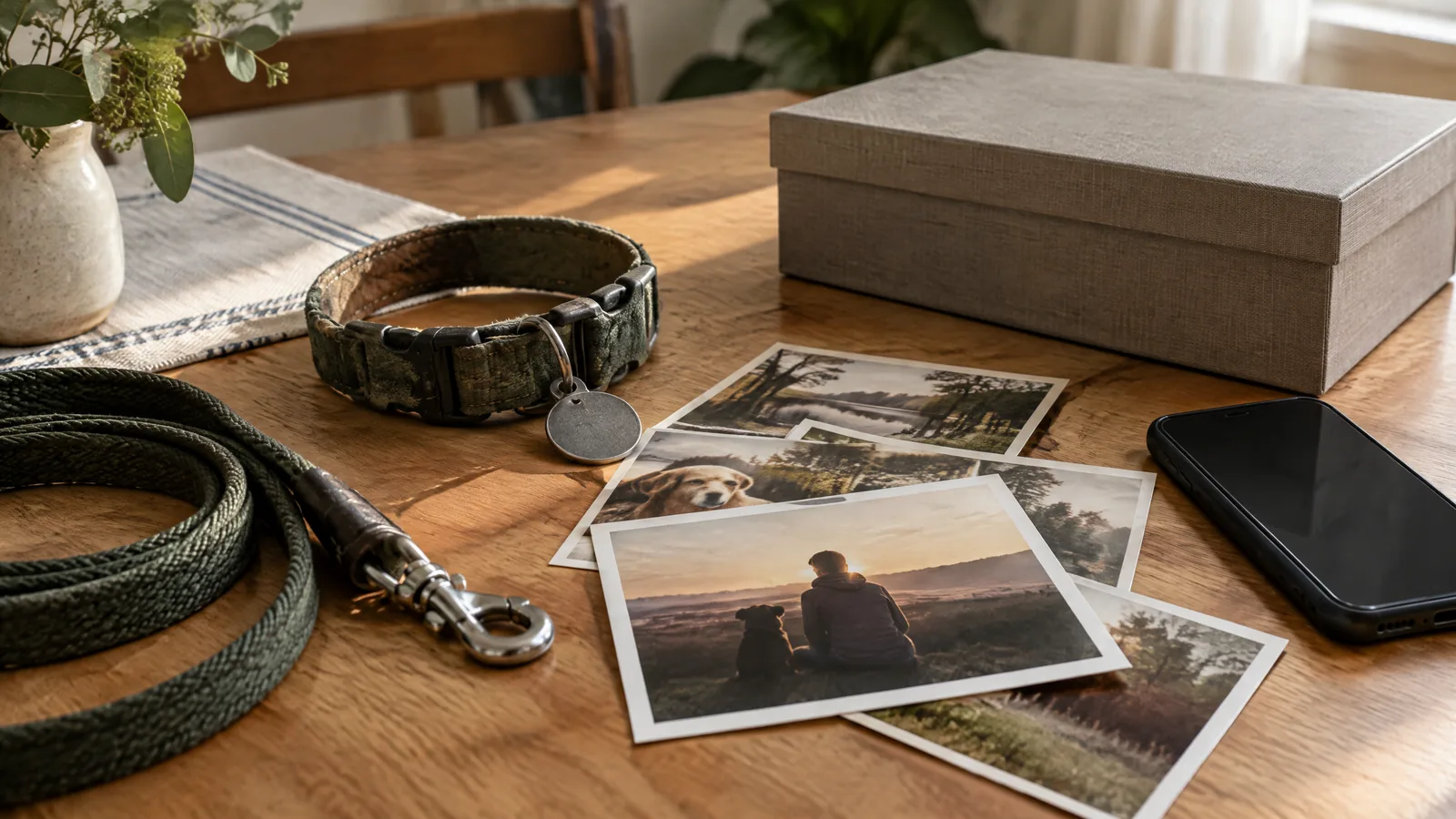
A collar, a tag, a lead, and a handful of photographs may hold different places in a family’s story.
Read this article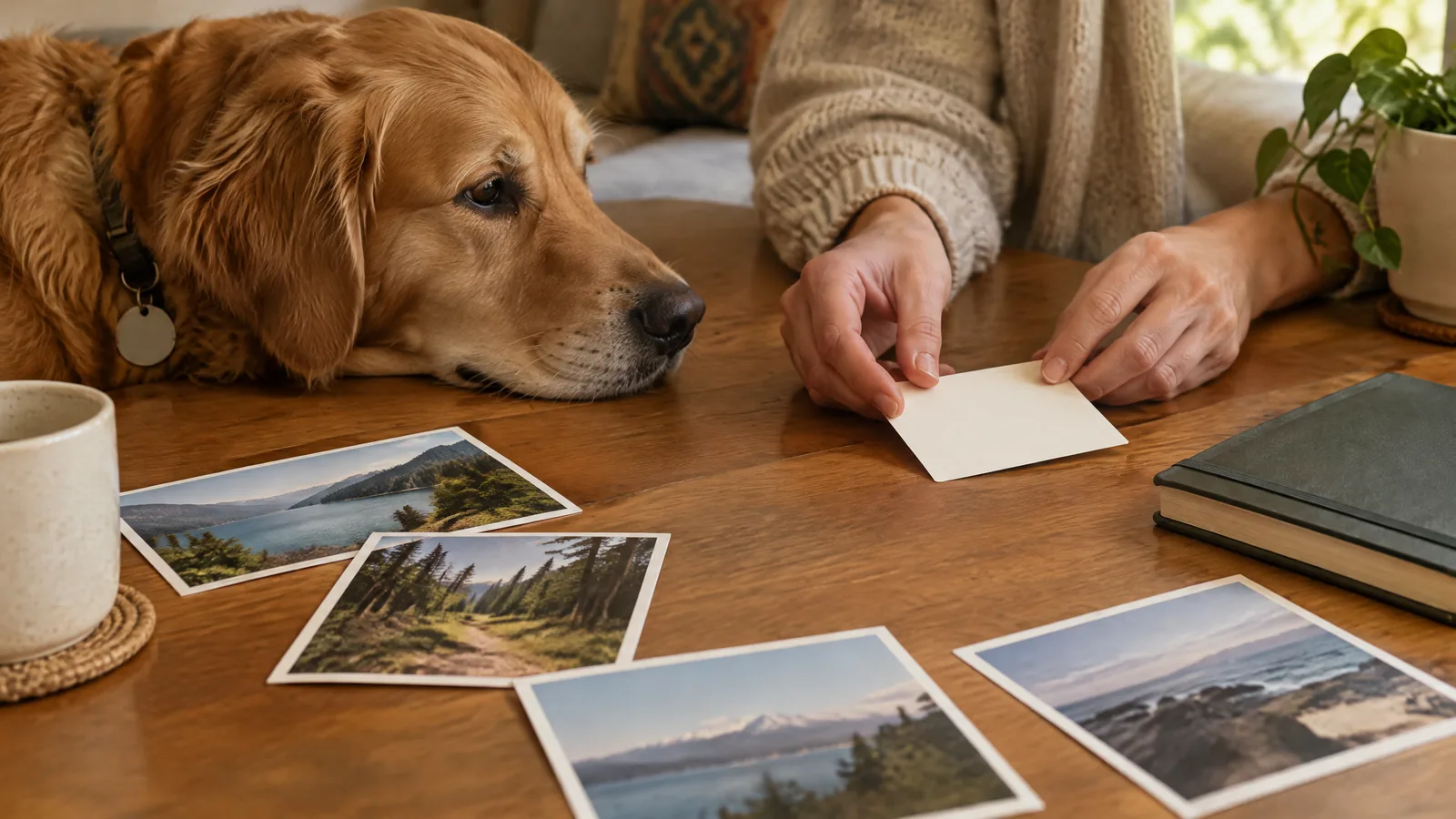
Photographs, records & digital legacy · 17 September 2025
The Small Records That Help Tell a Companion’s Story
A name, identifier, date, or change of keeper can offer a quiet thread through photographs and recollections, while remaining only one small part of a companion’s life.
Read this article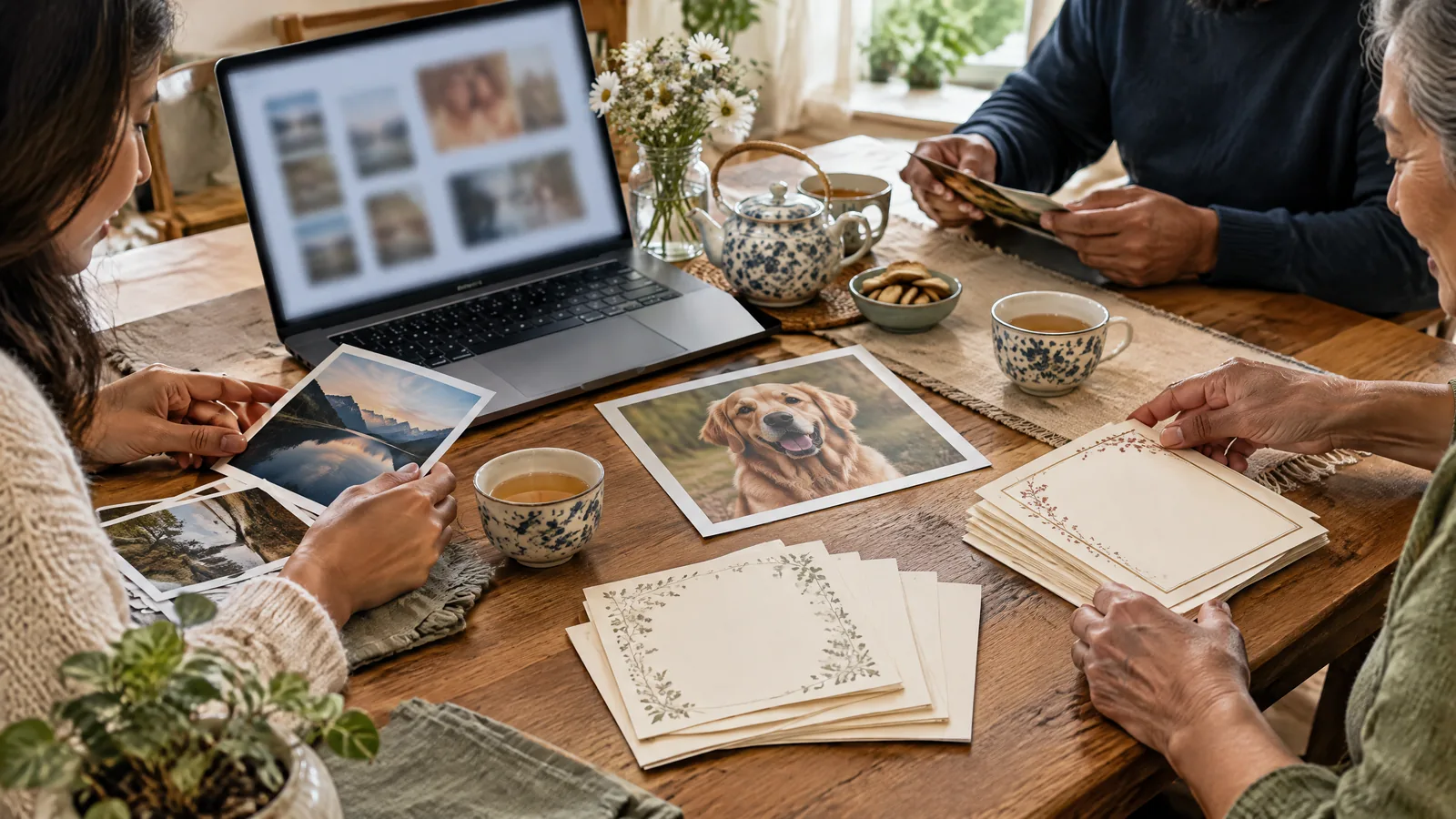
Photographs, records & digital legacy · 15 September 2025
A Memory Everyone Can Read: Making a Multilingual Pet Memorial Page Feel Like Home
A source-led reflection on keeping a memorial page understandable for a family in more than one language, and the ordinary details that can hold a companion’s story.
Read this articleA place for their story
Remember a life, one link at a time.
Explore Paw & Memory at the address below, or scan the QR code to open the memorial starting point in your browser.
Explore memorials Scan or visitpawmemory.live/