
Paw & Memory Journal · Photographs, records & digital legacy
The Gentle Order of Remembering: Scanning the Photographs That Hold a Pet’s Story
Printed photographs carry more than an image: their order, grouping, and small accompanying notes can hold traces of how a pet’s story was remembered.
11 August 2025
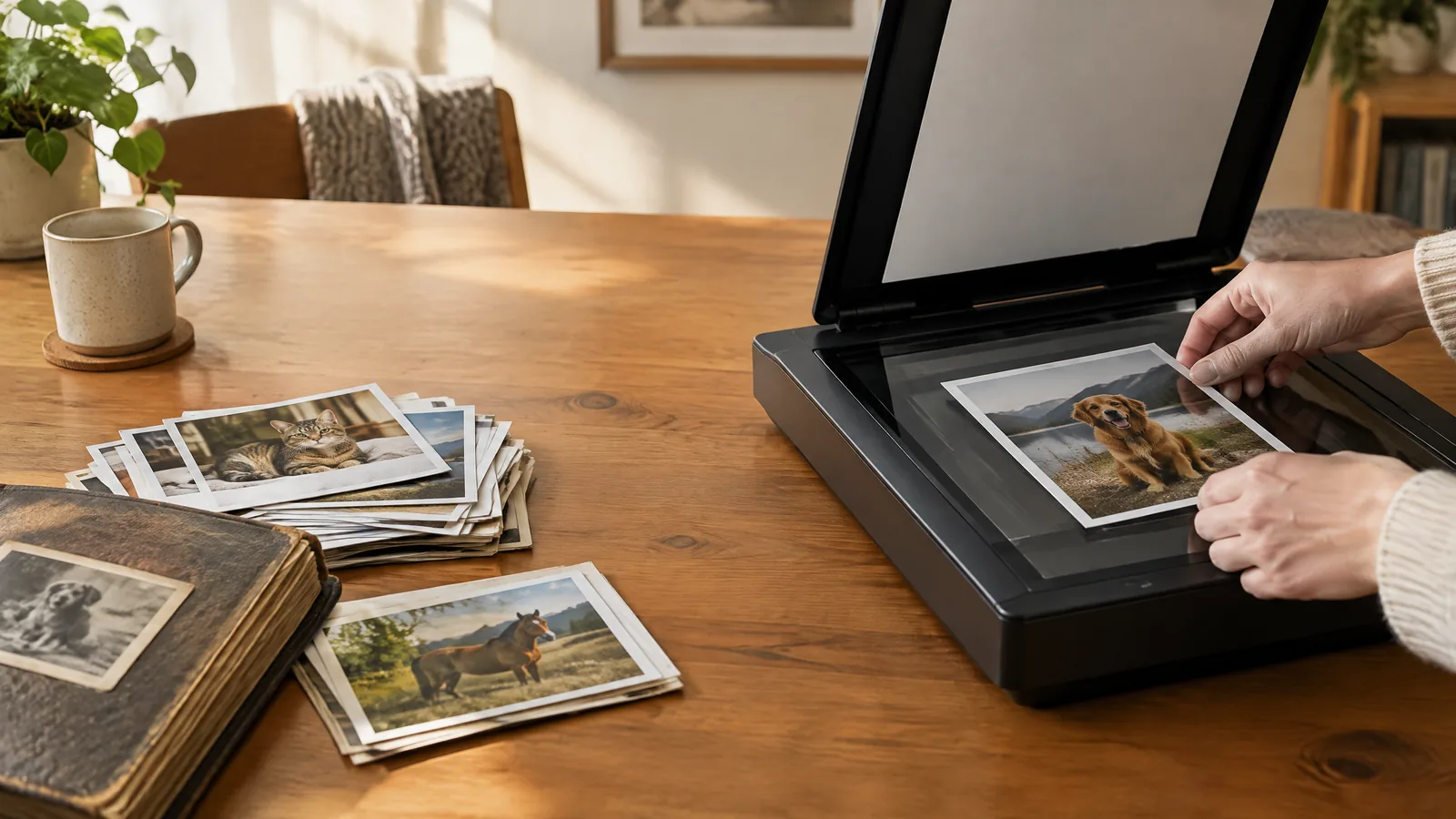
Scanning can make printed photographs easier to revisit and share, while the originals—and the order or groupings around them—remain part of the collection. There is no single correct way for a family’s photographs to tell their story.
A printed photograph can seem to hold its meaning in the image alone: a familiar face, a small body in a patch of sunlight, a pet beside someone whose younger self is just visible at the edge. Yet photographs often arrive in company. They may sit in an album, rest in an envelope, follow one another in a box, or be gathered around a handwritten note. The order might reflect dates, a particular person’s choices, or simply the way pictures were put away. It need not be a complete or perfectly legible account to matter. For a family revisiting a pet’s photographs, these arrangements can be part of the story of how the images were kept and remembered, even when their meaning is uncertain.
Scanning offers another way for those pictures to be encountered. A digital version can be easier to look through, send to relatives, or bring into a shared collection than a print that stays in an album or drawer. That possibility does not make the scan a replacement for the original. A print has its own surface, scale, and place among neighboring photographs; the digital copy can travel more readily, while the physical collection retains its particular presence. Making copies may also allow different kinds of revisiting: one person might return to an album’s sequence, while others share a small selection across distance. Neither approach needs to become the definitive account of a pet’s life.
Original order can be worth noticing without being treated as a rule that everyone must preserve or reconstruct. An album’s sequence may suggest time passing; a labeled envelope may gather pictures from one occasion; an informal pile may reflect a household’s own sense of connection. Sometimes dates are missing, or two photographs seem to belong together for reasons no longer known. Leaving those uncertainties visible can be more faithful to the collection than supplying certainty it cannot provide. A brief note about what is known—or simply that the context is unknown—can sit alongside an image without turning the photographs into a research project. A small group may be enough to begin making a collection more accessible; there is no obligation for every print to be scanned or described at once.
Digital copies, too, belong to an ongoing story rather than a promise of permanence. Files need to remain findable and accessible over time, and copies kept in more than one place may reduce reliance on a single device or account. That does not make any particular storage choice automatically secure or lasting. A clearly identified master set can remain distinct from selections made for sharing, helping the collection’s fuller shape stay separate from the images chosen for a particular occasion. Sharing also has its own considerations: a photograph may show other people, private parts of a home, or work made by a photographer, and keeping a copy privately is different from distributing it publicly. In the end, scanning can offer another door into a set of photographs. The original prints, their order, their gaps, and the care with which they are passed along can remain meaningful in their own right.
Continue reading
Related articles.
Photographs, records & digital legacy · 19 September 2025
The Small Things We Keep: Making a Family Archive of a Loved Pet
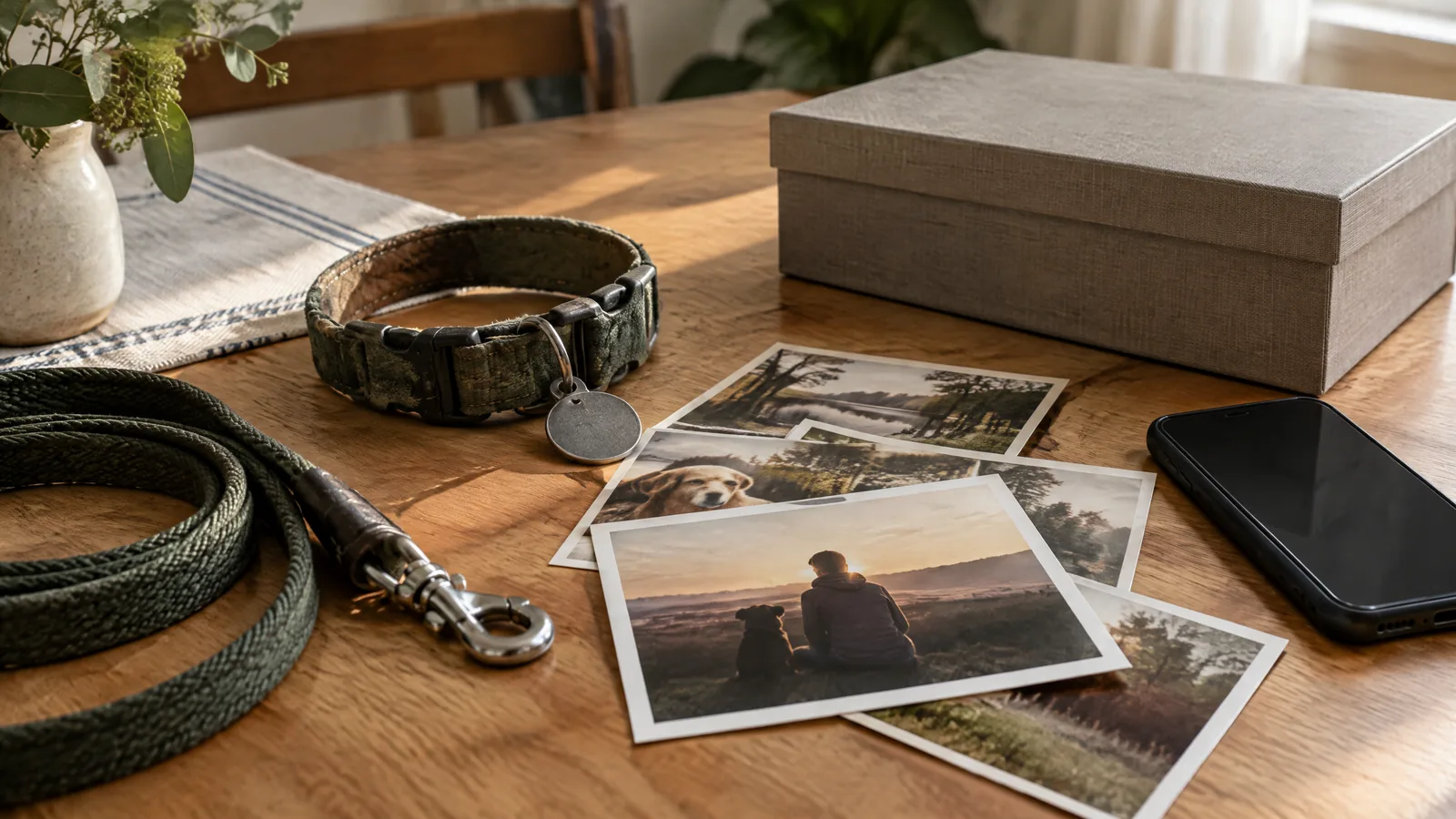
A collar, a tag, a lead, and a handful of photographs may hold different places in a family’s story.
Read this article
Photographs, records & digital legacy · 17 September 2025
The Small Records That Help Tell a Companion’s Story
A name, identifier, date, or change of keeper can offer a quiet thread through photographs and recollections, while remaining only one small part of a companion’s life.
Read this article
Photographs, records & digital legacy · 15 September 2025
A Memory Everyone Can Read: Making a Multilingual Pet Memorial Page Feel Like Home
A source-led reflection on keeping a memorial page understandable for a family in more than one language, and the ordinary details that can hold a companion’s story.
Read this articleA place for their story
Remember a life, one link at a time.
Explore Paw & Memory at the address below, or scan the QR code to open the memorial starting point in your browser.
Explore memorials Scan or visitpawmemory.live/