
Paw & Memory Journal · Photographs, records & digital legacy
The Little Clues That Help Us Find Our Animals Again
A reflection on the small details that can help a pet photograph remain recognizable and meaningful to someone who finds it later.
13 August 2025
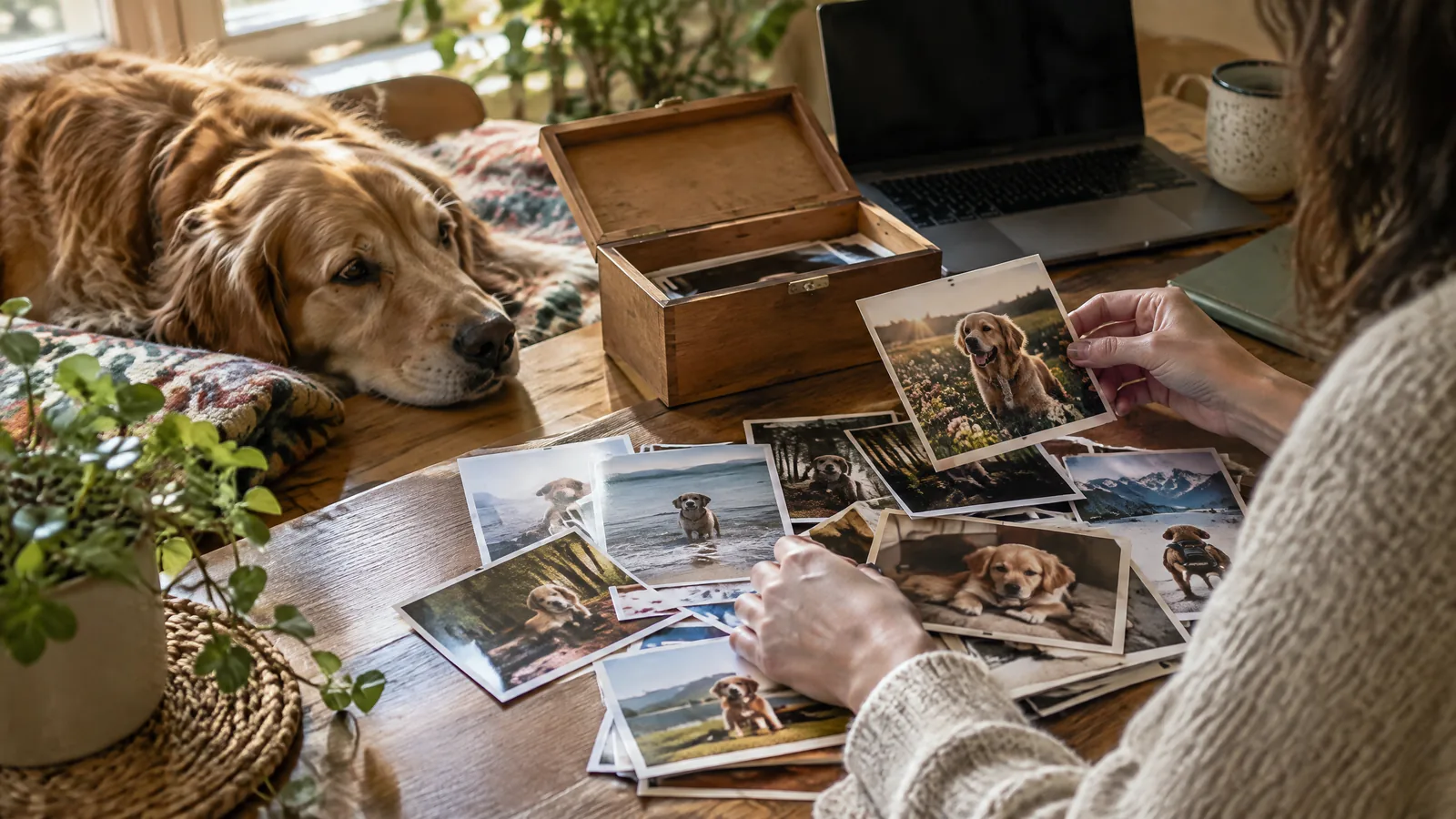
A photograph may outlast the moment in which it was made, while the details around it grow less certain. A name, an approximate date, a place, or a few honest words about what is shown can offer a future viewer a gentle point of recognition.
A photograph can hold a small, vivid part of a life: a familiar shape in a doorway, a patch of sunlight, a face turned toward the camera. Yet the picture does not always carry its own introduction. Years later, someone looking through a folder may recognize the animal but not remember when the image was made, where it belongs in a sequence, or what the occasion was. That gap is ordinary. Memory is not a filing cabinet, and a person’s attention has many places to go. A few plain details kept beside an image can give it a little context without asking it to explain everything. The point is not to turn private memories into a formal collection, or to make each photograph speak for every part of a relationship. It is simply to leave a few useful clues for a future viewer, including a future version of oneself.
Names are often the easiest place to begin, but a name alone may not be enough when images are shared, copied, or gathered into a larger family archive. A known date can place a photograph in time; an approximate one can do so too, as long as the uncertainty is visible. “Around spring 2019” or “possibly the first week at home” can be more faithful than a precise date chosen only to fill a blank. A place or event may add another small landmark: the garden, a visit with relatives, a quiet afternoon by the window. One or two identifying details can help distinguish a particular animal from other pets in the collection, especially when a household has kept photographs over many years. These notes need not be polished. Their value may lie in being understandable, modest, and honest about what is known and what is remembered only roughly.
A simple filename or a short note stored with the photographs can make those clues easier to encounter later. Some people might use an animal’s name, a date or date range, and a brief description, while others may find an album note more natural. There is no single naming pattern that will suit every collection or every device. What matters is less the exact arrangement than the presence of a few recognizable words in a place likely to stay with the image when it is moved or shared. Even a small, occasional habit can be enough to make a group of pictures feel less anonymous. Perfection can become its own obstacle: a collection with some clear notes and some blanks is still a collection with real memories in it. An unlabeled photograph is not automatically lost to understanding, and a label cannot capture everything a person might wish to remember. Each can simply offer a different kind of starting point.
Descriptions also belong to the larger question of who may see a photograph. A filename or caption can reveal a person’s name, a precise location, a routine, or circumstances that were meant to remain private. When images might be shared beyond a close circle, it can be worth thinking about which details feel comfortable to carry with them, and whether a broader description would serve the memory just as well. Not every image needs a full account; sometimes a few words are enough, and sometimes leaving a detail unwritten is the kinder choice. The small work of naming and describing photographs is therefore not about building a perfect record or guaranteeing how it will fare over time. It is a quiet act of attention, shaped by what is known, what is uncertain, and what feels appropriate to pass along. For someone encountering the picture later, those few words may make the difference between seeing an image and recognizing a particular moment.
Continue reading
Related articles.
Photographs, records & digital legacy · 19 September 2025
The Small Things We Keep: Making a Family Archive of a Loved Pet
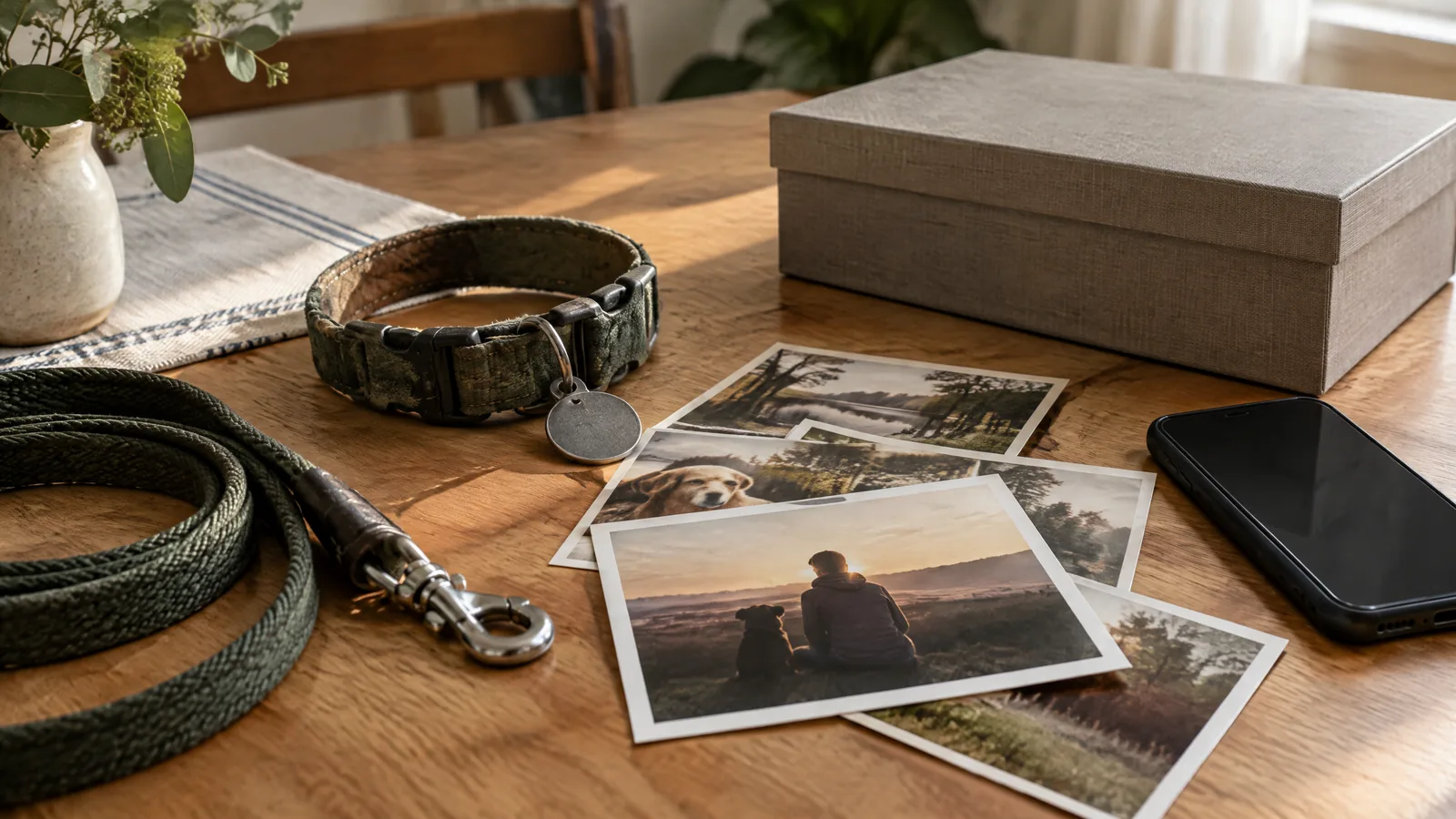
A collar, a tag, a lead, and a handful of photographs may hold different places in a family’s story.
Read this article
Photographs, records & digital legacy · 17 September 2025
The Small Records That Help Tell a Companion’s Story
A name, identifier, date, or change of keeper can offer a quiet thread through photographs and recollections, while remaining only one small part of a companion’s life.
Read this article
Photographs, records & digital legacy · 15 September 2025
A Memory Everyone Can Read: Making a Multilingual Pet Memorial Page Feel Like Home
A source-led reflection on keeping a memorial page understandable for a family in more than one language, and the ordinary details that can hold a companion’s story.
Read this articleA place for their story
Remember a life, one link at a time.
Explore Paw & Memory at the address below, or scan the QR code to open the memorial starting point in your browser.
Explore memorials Scan or visitpawmemory.live/