
Paw & Memory Journal · Photographs, records & digital legacy
The Little Note That Lets a Pet Photograph Remember
A few careful words beside a beloved pet’s picture can help its context and family meaning travel together.
6 August 2025
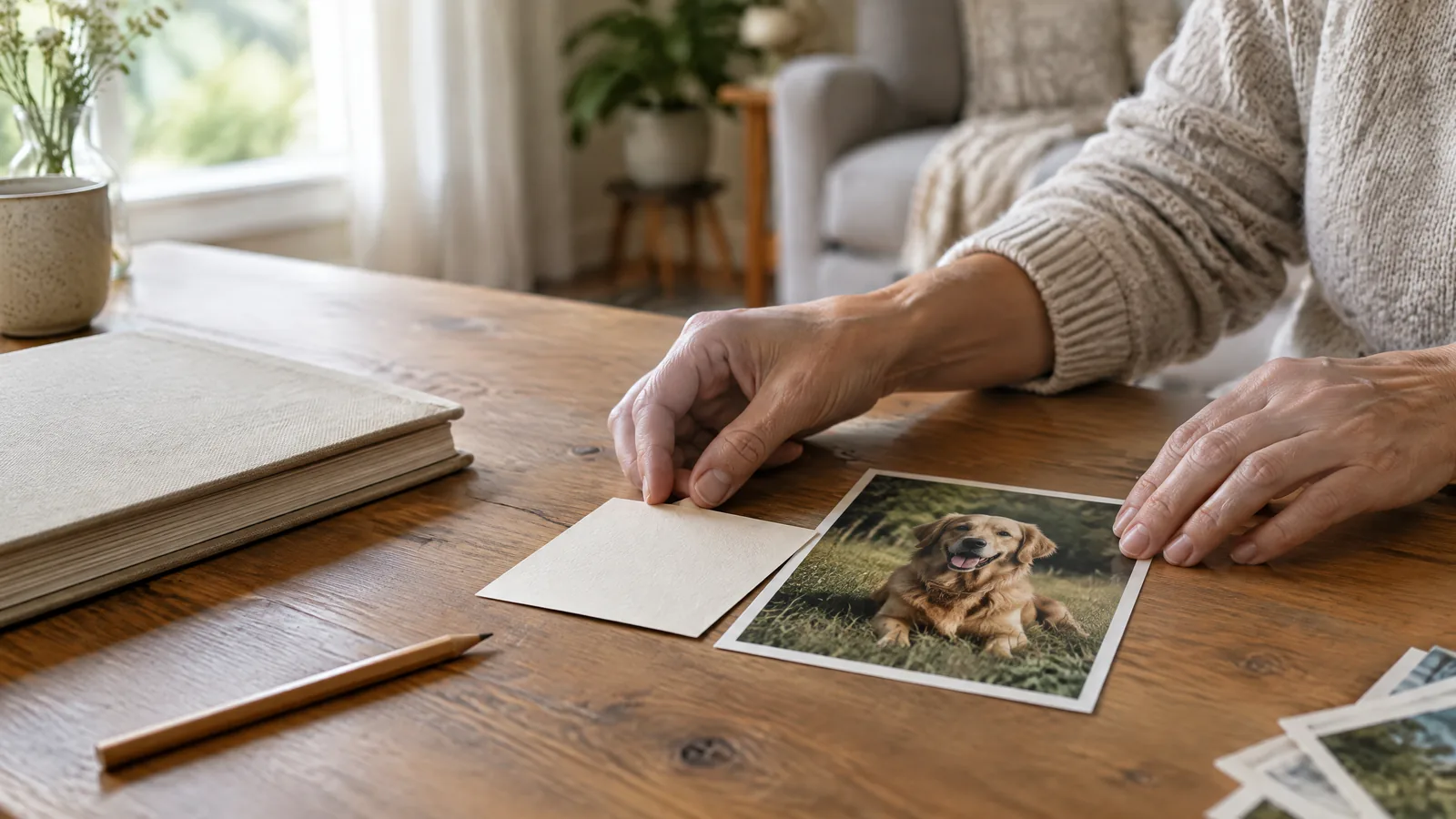
A photograph can keep a moment visible while leaving its details just beyond reach. A modest caption may help a future reader know who appears, when and where the picture was made, and what the family hopes to remember—while leaving room for uncertainty.
A photograph may keep a beloved pet close to view, yet leave a later reader wondering who is pictured or why that ordinary afternoon mattered. Time can blur small details: which dog was called by a family nickname, whose garden formed the background, or whether the image came from a holiday or a day at home. A caption offers a modest companion to the picture. It does not need to explain everything or turn a private memory into a formal archive. A few grounded words can carry context beyond the moment when it was made, giving someone who was not there a way into the family’s story. National recordkeeping guidance makes a similarly narrow point about still photographs: names, places, dates, subjects, and events can matter because familiar details may fade. That principle comes from public records, not a rulebook for family albums, but it offers a useful reminder that context can be worth keeping.
A helpful caption can begin with what is known and leave the rest open. It might identify a pet by the name the family used, mention a person who is visible if they are comfortable being named, and give a place or approximate date when those details are reliable. An occasion may help orient a reader, while a brief note about the image’s significance can preserve what a bare description cannot. “Milo beside the porch steps, autumn 2018” is different from “Milo on the day he first came home” if the timing is uncertain. There is no need to make a guess sound settled simply because a blank space feels unfinished. Phrases such as “probably,” “around,” or “family recollection” can mark the edge between a verifiable detail and a remembered account. Breed, age, location, and event details are all better left qualified when nobody is certain. A quiet admission of uncertainty can itself be part of an honest family record.
Different kinds of image text serve different purposes. A caption is the visible wording that accompanies a photograph and may offer shared context or memory. A record kept with the file can hold additional details, such as a fuller date, photographer, or note about uncertainty; image metadata is another place information may be stored, though it can be separated or lost as files move. Alt text has a distinct accessibility role: it provides a text alternative that conveys an informative image’s relevant visual content for people who may not see it. If an image is purely decorative, its alternative text may appropriately be empty rather than adding a description that contributes nothing. A family caption full of remembrance may be meaningful, but it may not tell someone what the image shows. These forms can complement one another without being interchangeable. For a shared photograph, concise visual description and a separate memory note can each carry their own part of the story.
The most usable caption may be the one a family can keep with the picture without turning the act of remembering into a chore. A short line might name the pet, a month or approximate year, and one defining detail; another note can hold the longer recollection if the family wants it. Keeping a copy of the wording with the image in an album or clearly linked folder makes the connection easier to follow later, although no one arrangement can promise that every platform or file change will preserve it. A printed album, a digital folder, and a separate record can each offer a place for the same context, provided the relationship between picture and words remains clear. Sharing also has boundaries: a caption need not reveal a home address, regular routine, or private information about people in the frame. Names and details can be chosen with care, and others’ comfort can matter when their identity appears in the story. A little note is not a complete history, nor does it have to be. It can,,
Continue reading
Related articles.

Photographs, records & digital legacy · 19 September 2025
The Small Things We Keep: Making a Family Archive of a Loved Pet
A collar, a tag, a lead, and a handful of photographs may hold different places in a family’s story.
Read this article
Photographs, records & digital legacy · 17 September 2025
The Small Records That Help Tell a Companion’s Story
A name, identifier, date, or change of keeper can offer a quiet thread through photographs and recollections, while remaining only one small part of a companion’s life.
Read this article
Photographs, records & digital legacy · 15 September 2025
A Memory Everyone Can Read: Making a Multilingual Pet Memorial Page Feel Like Home
A source-led reflection on keeping a memorial page understandable for a family in more than one language, and the ordinary details that can hold a companion’s story.
Read this articleA place for their story
Remember a life, one link at a time.
Explore Paw & Memory at the address below, or scan the QR code to open the memorial starting point in your browser.
Explore memorials Scan or visitpawmemory.live/