
Paw & Memory Journal · Shared stories & family life
The Little Phrase That Belongs to Us
A familiar family phrase can hold a small world of sound, timing, place, and shared history—without meaning exactly the same thing to everyone who remembers it.
22 October 2025
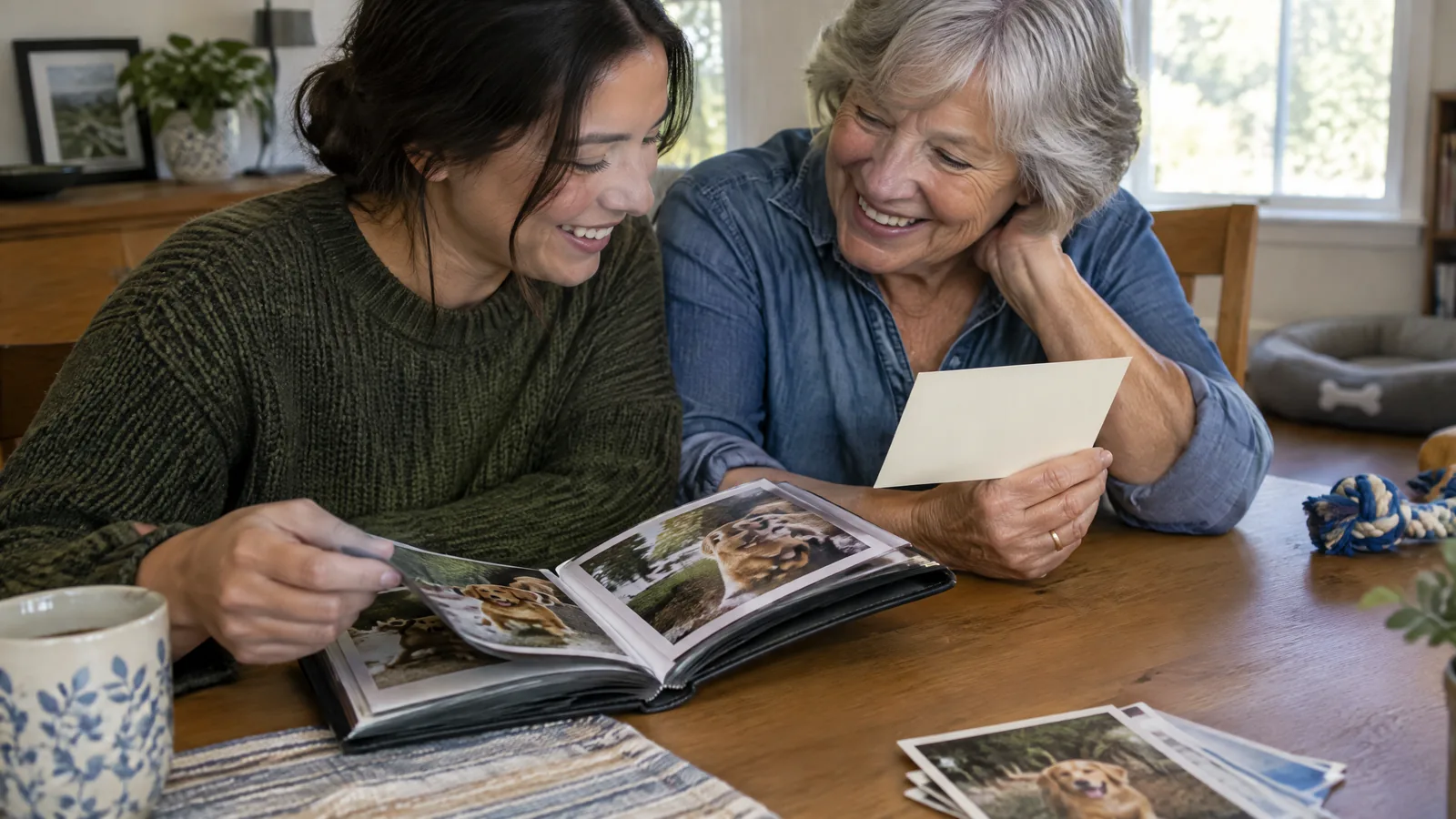
Some phrases gather meaning through repetition: the voice that says them, the pause before them, the kitchen or doorway where they tend to appear. Remembering those details can be a way of noticing family history, while leaving room for each person to hold the words differently.
A family phrase may be only a few words, but it can arrive with a whole setting attached. There may be the particular lift at the end, a pause before the last word, or the familiar moment when someone says it while passing a mug across the table. Perhaps it belongs to a relative, a chosen-family gathering, or a household where a companion animal was part of everyday life. The words themselves need not sound remarkable to anyone outside that circle. Their meaning may gather slowly from who said them, when they were repeated, and the ordinary scenes around them. Not every household has a phrase like this, and not everyone in a family will recognize the same one. Still, such small pieces of language can offer a gentle way to look at how shared life is carried in sound and detail.
Sometimes a phrase seems to hold more than its literal meaning. It might mark the end of a familiar routine, soften an awkward pause, or signal that a meal is ready. A person might remember the speaker’s accent or the way the words changed over the years; another might remember the room, the hour, or who was sitting nearby. When a companion animal is part of the memory, the phrase may be connected with a daily rhythm—without proving anything about what the animal understood, intended, or felt. The human meanings can be real and varied while remaining human interpretations. One relative may hear affection in the words, while another recalls humor, habit, or a complicated time. Those differences need not cancel one another out. A family archive, even a very small one, does not have to resolve every version into a single official account.
There is a modest, practical fact behind the idea of preserving voices: public projects have invited people to record one another’s stories in sound. That context does not mean a recording preserves memory perfectly, or that making one creates a particular emotional result. It simply shows that listening to a person’s voice can be one way of keeping an account of their words. A phrase may also be remembered without any recording at all: written in a notebook, described in a letter, or brought up in conversation. Each form catches something different. A written note can hold the spelling and the scene as someone recalls it; a recording may preserve pace and tone; a shared conversation may let several people add or gently dispute details. Memories can shift, and recollections can differ. A record can be a snapshot of what someone remembers at a particular moment, not a final ruling on how an event happened.
If a familiar expression comes to mind, it may be enough simply to notice its small particulars: who tended to say it, where it was heard, whether it was spoken quietly or called from another room. A prompt such as “What do you remember about hearing those words?” can leave space for the answer to be brief, expansive, uncertain, or absent. No one has to participate, and a family need not share private speech, photographs, or recordings beyond the people who are comfortable with that choice. Some stories belong to blended or chosen families; some are held across languages, and some relationships are distant or strained. A phrase can bring warmth for one person and a more mixed memory for another. The little words do not have to stand for an entire relationship. They can remain what they are: a small, particular part of a life together, remembered in different voices and with room for quiet.
Continue reading
Related articles.
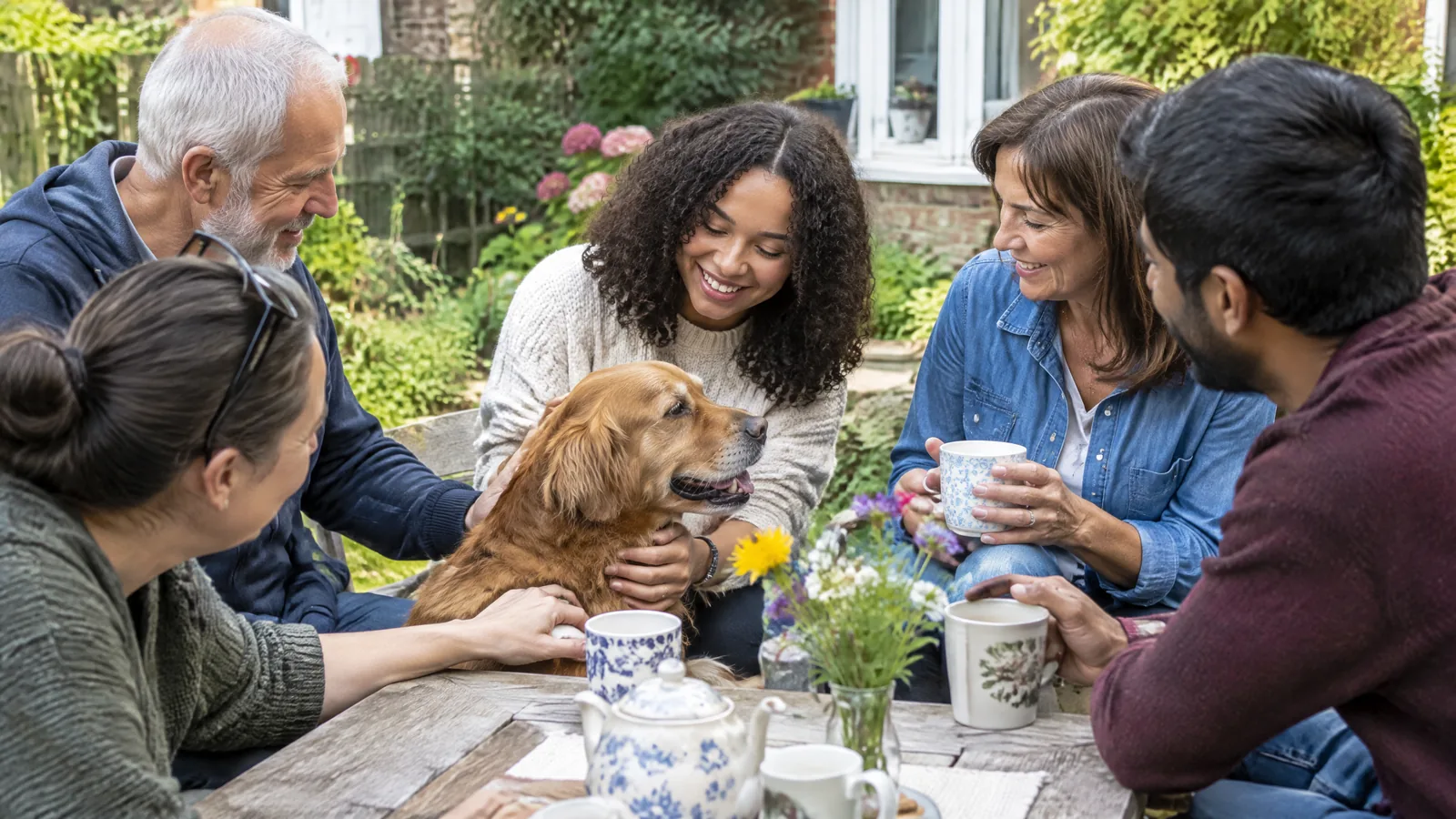
Shared stories & family life · 5 November 2025
The Circle of Care: Remembering Everyone Who Loved a Companion
A companion’s place in a family story is often shared. Remembering them can include the many people, and the ordinary moments, that made that story together.
Read this article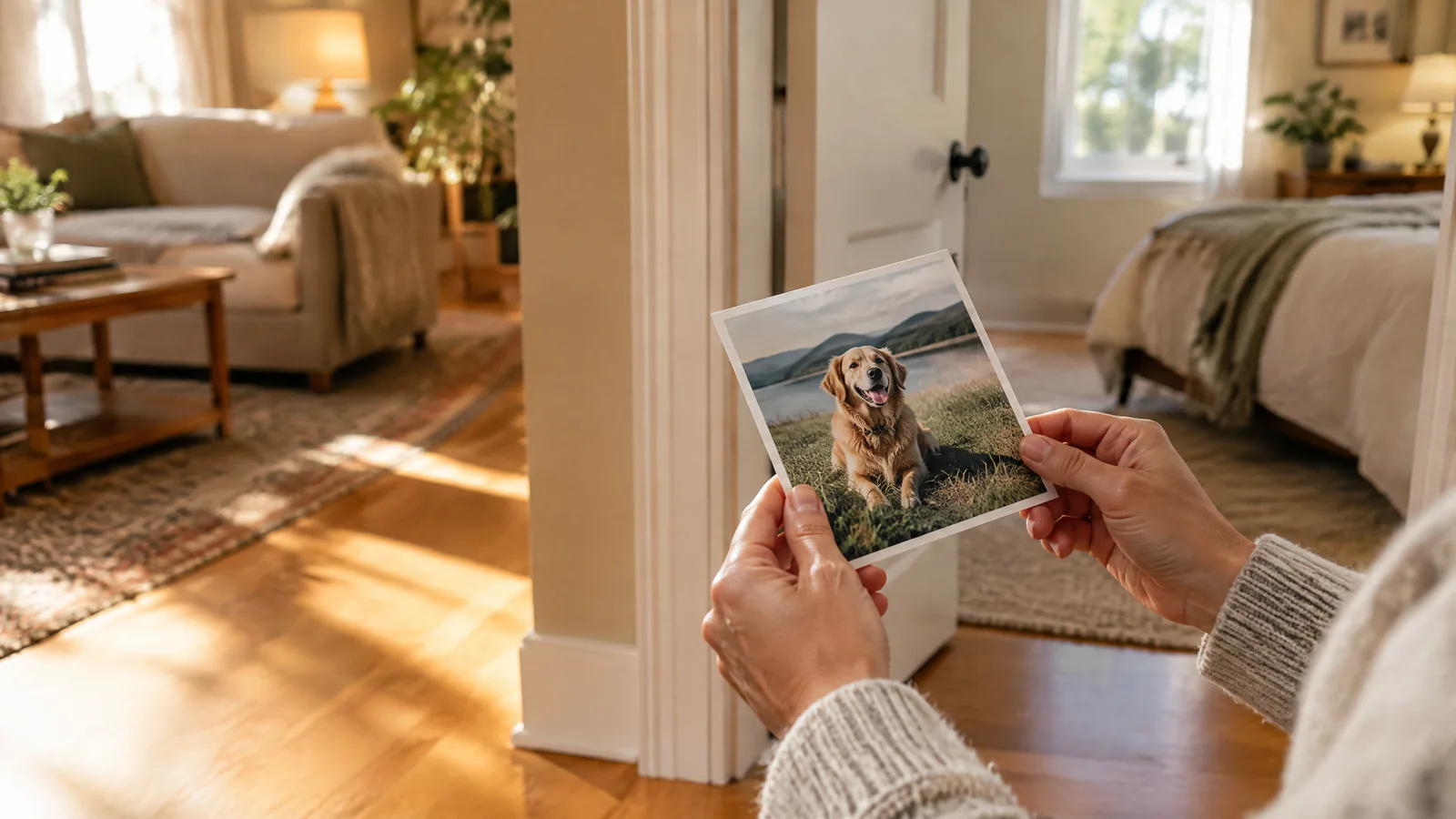
Shared stories & family life · 3 November 2025
The Photograph That Opens the Door to a Story
A familiar photograph can offer a shared place to begin, while leaving room for different memories, new observations, and silence.
Read this article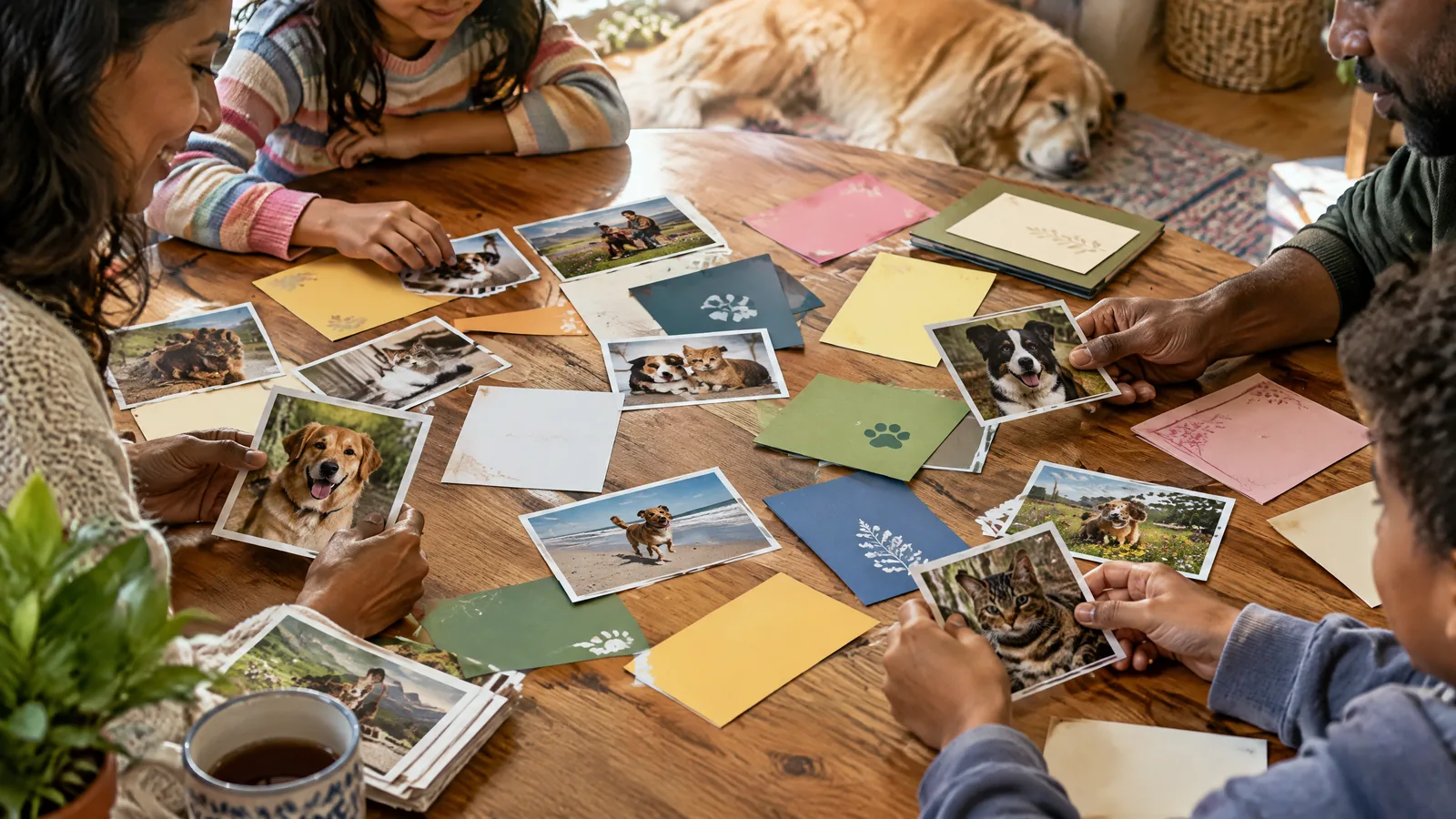
Shared stories & family life · 31 October 2025
The Many Languages of a Beloved Companion’s Story
A reflection on the many ways a family can remember a beloved companion, in words shared, translated, or left gently unspoken.
Read this articleA place for their story
Remember a life, one link at a time.
Explore Paw & Memory at the address below, or scan the QR code to open the memorial starting point in your browser.
Explore memorials Scan or visitpawmemory.live/