
Paw & Memory Journal · Connection, culture & community
The Photograph That Found a Place in the Neighbourhood
A photograph on a shared noticeboard can offer a quiet form of acknowledgement, while leaving each person free to choose what to share and what to keep private.
3 December 2025
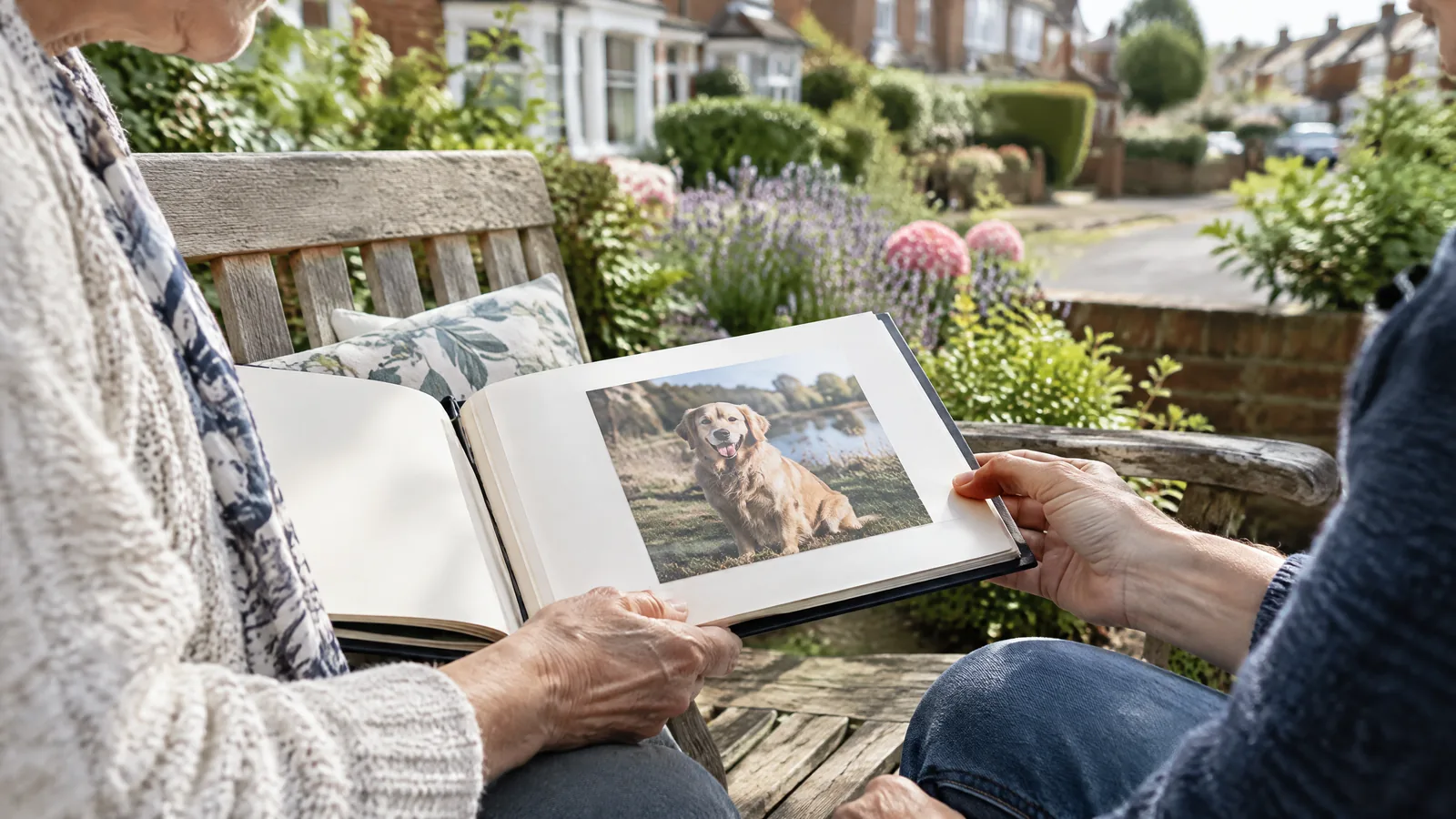
A remembered companion need not become a public story to matter. Still, when someone chooses to share a photograph, a modest noticeboard may make room for acknowledgement—without prescribing how neighbours should respond or what remembrance must mean.
A community noticeboard is an ordinary piece of shared space: a place for announcements, invitations, lost keys, and small pieces of local news. If someone chooses to pin up a photograph of a companion who has died, the board may hold that image among the everyday messages for a while. Nothing about the paper or the pin makes the story public by itself; the choice belongs first to the person sharing it. For some, the photograph might be a simple way to acknowledge that this companion had a place in their life. For others, remembrance may feel too private to display, or may take a form that neighbours never see. Neither choice needs defending. The noticeboard is not a measure of affection, and the absence of a picture does not make a bond less real. It is simply one possible setting in which a private memory might meet a shared world, if the person who holds it wishes.
A photograph can seem self-explanatory, but it rarely tells the whole story. A caption, if one is wanted, can offer only the context its owner chooses: perhaps a name, perhaps a few words, perhaps no details at all. A person might prefer to describe the companion as a beloved presence, a family member, a working partner, or in language that belongs to them alone. There is no need to settle on a phrase that fits everyone. Before an image is displayed or passed along, permission matters: the person sharing it should have the right to do so, and identifiable people pictured in it should not be treated as incidental. Keeping names, locations, dates, and other personal details off a public display can also preserve a boundary. These choices are not a demand for explanation. They are ways of letting the person decide how much of a story enters common view, and where that story stops.
Neighbours may respond in different ways. One person might pause to look; another might offer a brief note; someone else might notice the picture without saying anything. A passer-by may not know what words would feel welcome, may come from a different tradition of remembrance, or may simply continue on with the day. Silence need not be read as disregard, and a written message need not be expected. The person who posted the photograph may welcome conversation, prefer a quiet nod, or choose not to discuss it. Those preferences can shift, and they need not be announced to everyone. In some remembrance resources, reflecting on shared memories and what one might celebrate is offered as one possible approach. That modest idea does not make public sharing necessary, nor does it promise a particular response. A photograph on a board can be acknowledged without becoming an invitation to ask for details, offer conclusions, or turn someone’s private experience into a neighbourhood lesson.
If a community display is meant to be shared, its form can shape who is able to encounter it. A board may be hard to reach or read for some neighbours; a digital or spoken alternative may suit others, while some people will prefer no display at all. Making room for more than one way to take part does not require a grand announcement. It can simply mean remembering that a single wall, language, or format cannot speak to everyone. The board might carry several small stories, or none for a time; it need not become a permanent memorial or a gathering place. What matters in this reflection is not a prescribed ritual, but the care around choice: permission for the image, context offered on the owner’s terms, and privacy kept where it is wanted. A companion’s photograph may sit quietly among notices, visible to some and passed by by others. The person who loved that companion remains free to decide what the image means, how long it stays, and whether it belongs there at all.
Continue reading
Related articles.

Connection, culture & community · 22 December 2025
The Stories We Return To: Remembering a Companion in Our Own Time
A companion’s story can remain woven through ordinary days, shared places and the memories people choose to revisit—or leave resting for a while.
Read this article
Connection, culture & community · 19 December 2025
A Place to Keep the Story: Remembering Quietly, Sharing Carefully
A reflection on keeping an animal’s story meaningful and findable while choosing carefully who may see it.
Read this article
Connection, culture & community · 17 December 2025
The Places We Carried Home: Remembering a Pet Across Borders
Across moves, languages, and changing homes, a pet’s place in a household story can offer a gentle way to remember what traveled—and what changed.
Read this articleA place for their story
Remember a life, one link at a time.
Explore Paw & Memory at the address below, or scan the QR code to open the memorial starting point in your browser.
Explore memorials Scan or visitpawmemory.live/