
Paw & Memory Journal · Photographs, records & digital legacy
The Place We Remember: Keeping a Family Photograph’s Date and Story
A photograph can hold more than an image: its date, place, and the family memories that gather around it.
5 September 2025
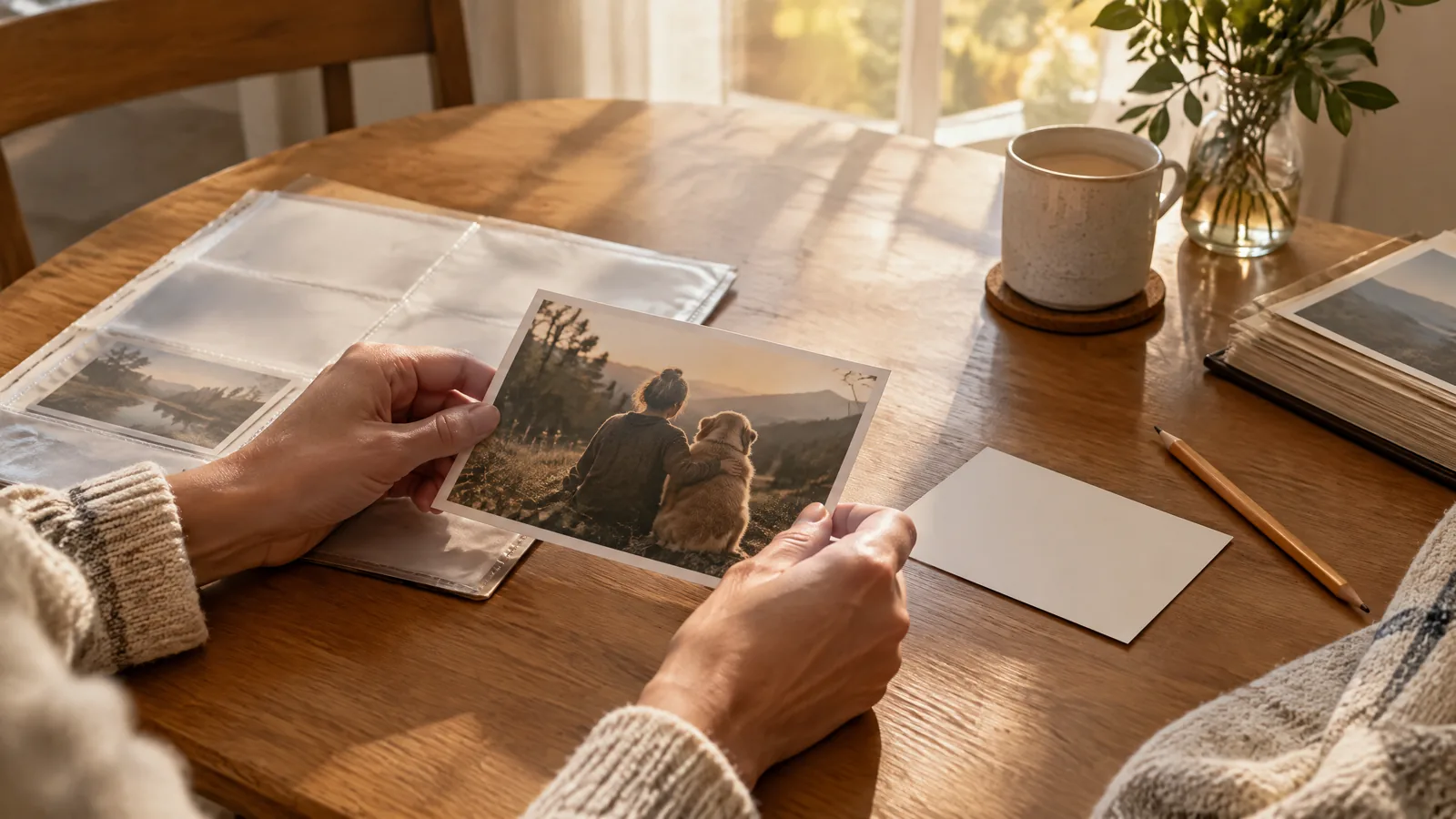
A family photograph may outlast the details people remember about it. A quiet caption can keep known facts close, leave room for uncertainty, and make a pet’s place in the family story easier to find again.
A photograph can preserve the shape of a moment while letting some of its details drift. Years later, a face may still be recognizable, and a beloved dog or cat may remain unmistakably part of the scene, while the date, place, or occasion becomes harder to recall. A small caption can keep some of that context close to the image. It need not turn a family photograph into a perfect historical record. Rather, it can make room for what is known, what is remembered less precisely, and what may remain a mystery. That modest distinction matters: family memory does not have to be complete to be worth keeping.
When details are available, a caption might note a date, an identity, a location, or the circumstances surrounding the photograph. These are ordinary pieces of information, but together they can help someone encounter the image as more than a collection of faces. A date may place it within a particular season of family life; a place may connect it to a home, garden, or visit; a few words about the occasion may explain why everyone gathered. The Library of Congress’s guidance on family photographs supports this narrow idea of captioning: known dates, identities, locations, and circumstances can be recorded alongside an image. The caption is most useful when it is honest about its limits. “Around 1998,” “possibly at Aunt Lena’s house,” or “place not remembered” can carry more care than a guess presented as fact.
A photograph’s digital details may seem to offer certainty, yet a timestamp or location tag can refer to a scan, a later copy, or a device setting rather than the original moment. Such information may be part of the image’s history without settling when or where the picture was taken. Family members may remember different parts of the same scene, too. One person may recall the garden; another may remember who was visiting; someone else may not recognize the occasion at all. Those contributions can sit alongside one another without forcing a single version. A caption can distinguish a confirmed detail from a relative’s recollection, an approximate date from a precise one, and an open question from an answer. In that way, uncertainty is not a flaw to conceal but part of the record as it exists.
The original photograph and its story need not be kept in exactly the same form. A careful digital copy can travel more easily among relatives, while a caption kept with that copy helps the image remain connected to its context. The original can remain intact, accompanied by a separate note or suitable enclosure; questions about fragile or unusual materials belong with specialized archival guidance rather than a one-size-fits-all rule. Sharing also has its own boundaries. A family may choose to ask before naming living people, posting recognizable faces, or revealing a private location, and a photograph can remain meaningful without being made public. No file, service, or storage arrangement can promise permanence by itself, so the life of a digital copy depends on continued attention over time. Still, even a simple record can make a pet’s presence easier to find in the family story: not as an ornament at the edge of the frame, but as part of the scene the family chose to keep.
Continue reading
Related articles.
Photographs, records & digital legacy · 19 September 2025
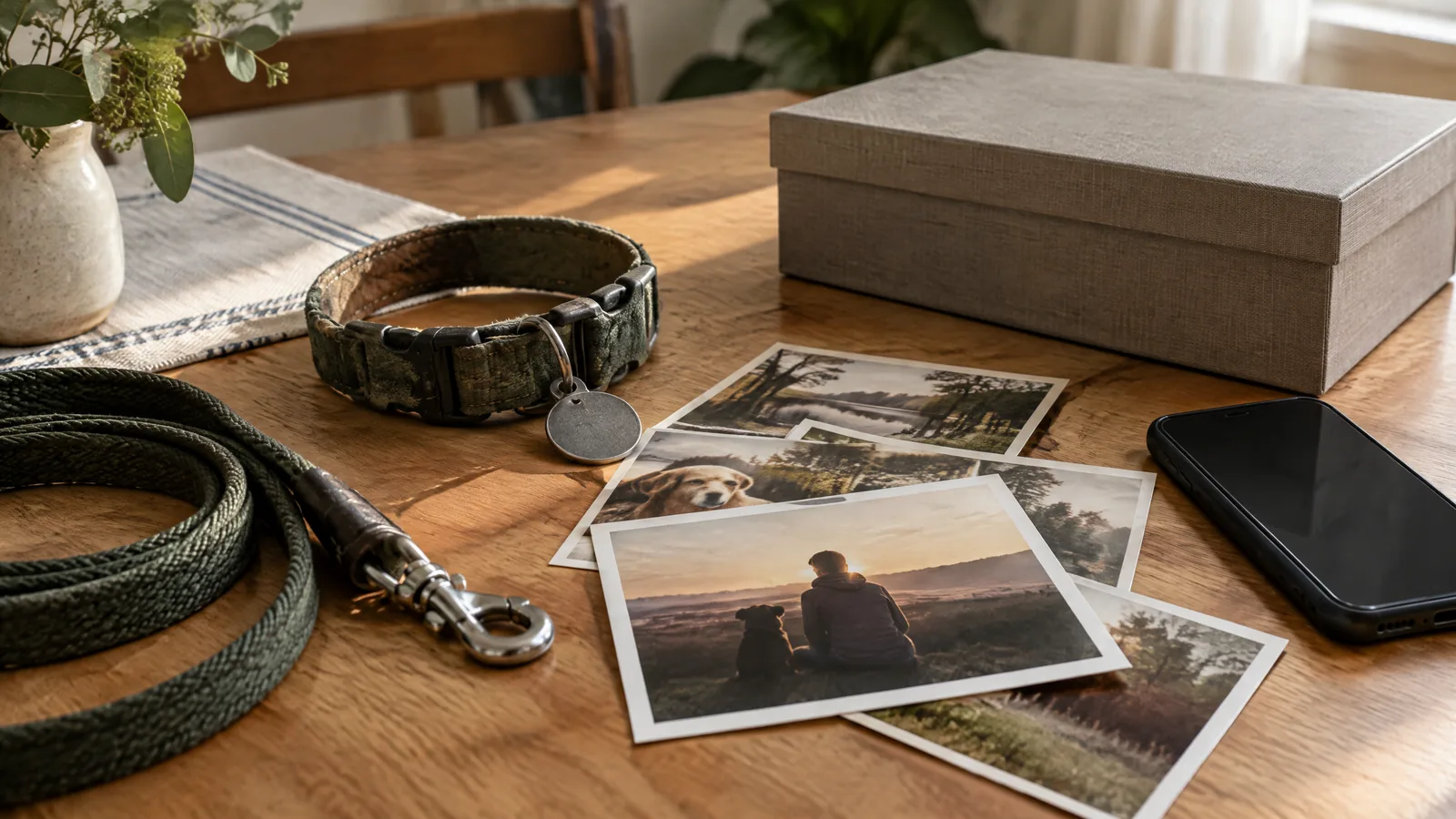
The Small Things We Keep: Making a Family Archive of a Loved Pet
A collar, a tag, a lead, and a handful of photographs may hold different places in a family’s story.
Read this article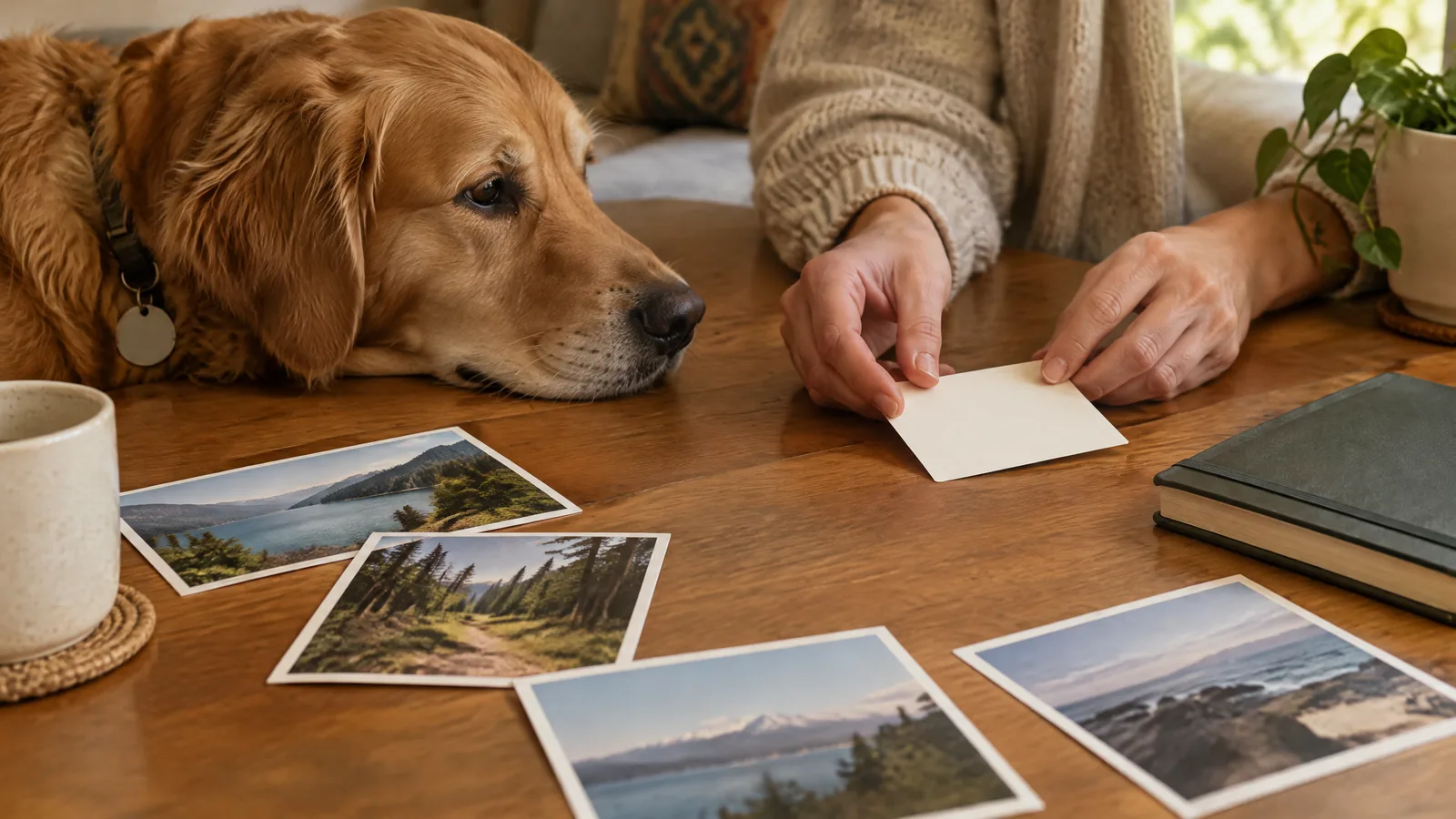
Photographs, records & digital legacy · 17 September 2025
The Small Records That Help Tell a Companion’s Story
A name, identifier, date, or change of keeper can offer a quiet thread through photographs and recollections, while remaining only one small part of a companion’s life.
Read this article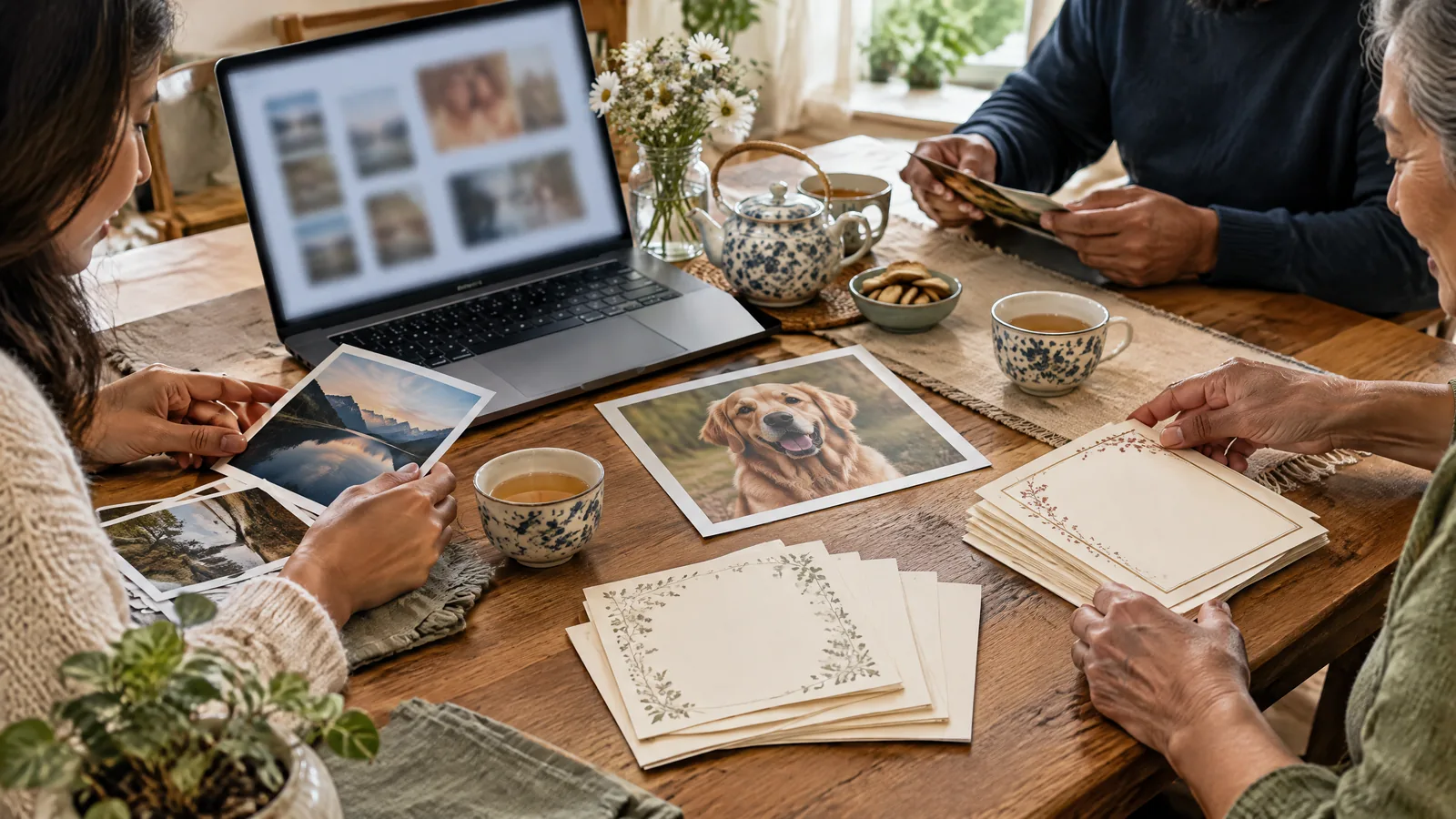
Photographs, records & digital legacy · 15 September 2025
A Memory Everyone Can Read: Making a Multilingual Pet Memorial Page Feel Like Home
A source-led reflection on keeping a memorial page understandable for a family in more than one language, and the ordinary details that can hold a companion’s story.
Read this articleA place for their story
Remember a life, one link at a time.
Explore Paw & Memory at the address below, or scan the QR code to open the memorial starting point in your browser.
Explore memorials Scan or visitpawmemory.live/