
Paw & Memory Journal · Connection, culture & community
The Seat They Still Hold in Our Family Story
A family milestone can hold many kinds of memory. Whether a companion’s story is spoken, recorded, or kept private is a choice shaped by the people gathered.
10 December 2025
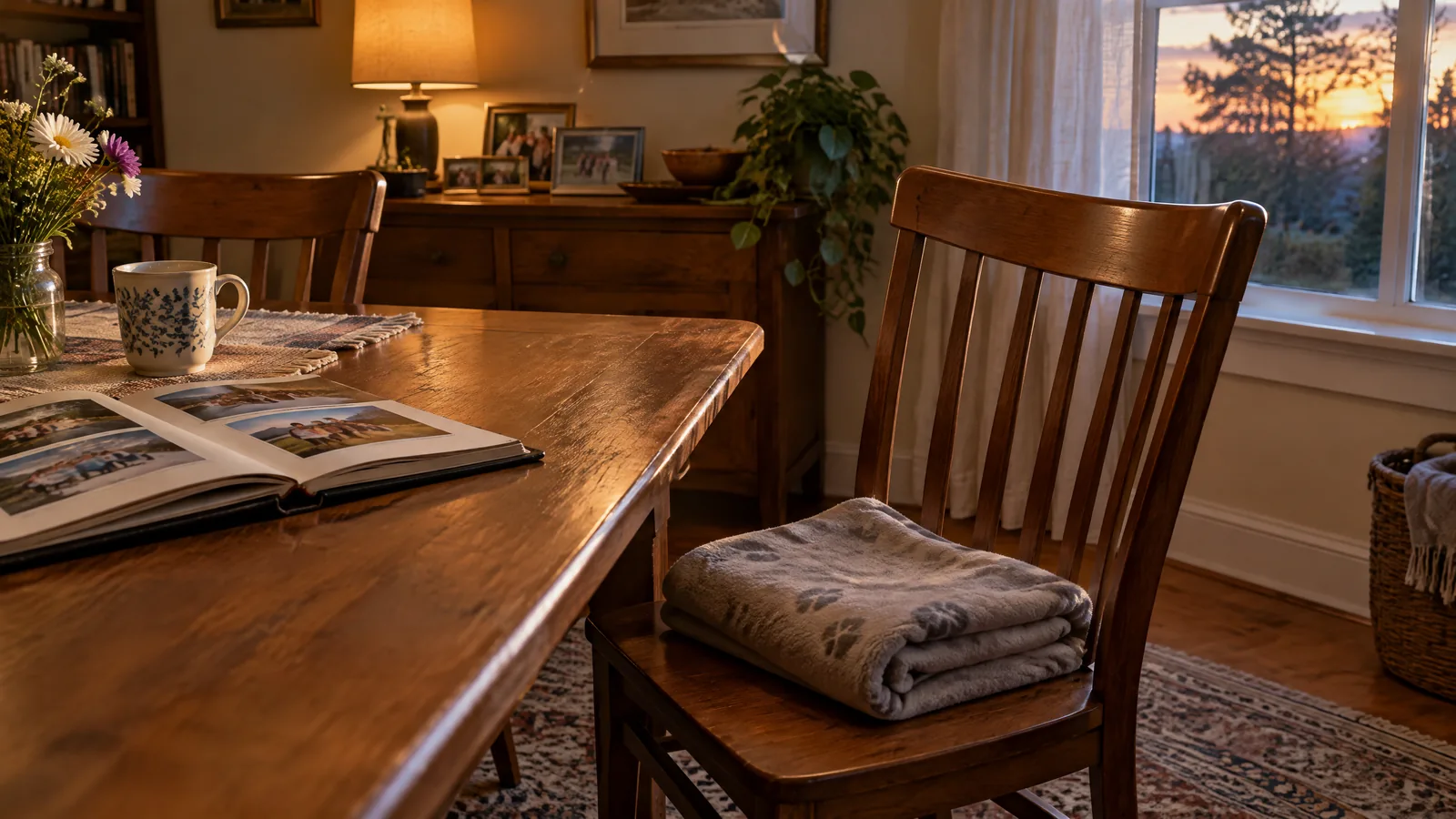
A companion may have a place in a family’s shared story, but there is no single right way to make room for it. At a wedding, graduation, reunion, move, or other turning point, remembrance can be spoken, pictured, quietly held, or left aside.
A milestone gathers people around a change: a wedding, a graduation, a move, a reunion, a naming ceremony, or another moment that marks time. In the room, family stories often travel alongside practical details and plans for what comes next. A companion animal may be part of that shared history. Some families experience a pet as an important presence in everyday life, a place also recognized in writing about children and pets. But that broad truth cannot tell us whether a particular family wants the animal mentioned at a particular gathering. The companion may be living, absent, rehomed, missing, or no longer alive; each circumstance has its own meanings, and not everyone present will relate to it in the same way. A milestone does not become more complete by including a pet story, and leaving the subject unspoken does not make the family’s history less real.
When people do choose to make room for a companion’s story, the form can be modest and varied. Someone might tell a brief, documented memory while guests are talking, place a photograph among other keepsakes, include the animal’s name in a program, or allow a quiet pause. Another person may carry an inward memory that no one else needs to see. These possibilities need not become a formal tribute or a new family custom. A photograph may be unavailable, a name may feel too private, and speaking may not suit the event or the people attending. Even a small detail can hold different significance for different relatives, while a choice that feels right to one person may feel uncomfortable to another. The meaning belongs neither to a prescribed object nor to a particular performance; it can remain personal, shared, or somewhere between the two.
Family history is not only a record of major public events. It also takes shape through the stories people choose to tell, the details they preserve, and the versions that remain incomplete. The Library of Congress offers resources for preserving family stories, reflecting the broader value many people place on keeping memories available to others and to the future. That idea can include companion animals when family members choose, without suggesting that recording a story will create any particular emotional result. There is also a distinction between remembering what is known and imagining what cannot be known. A recollection might describe a familiar presence at past gatherings or a specific, verified event; speaking as though the animal were narrating the milestone would be invention, not documentation. Families can keep those modes separate, and they can leave uncertainties untouched rather than filling them in.
Because a milestone belongs to a gathering of people with different histories, inclusion is not simply a matter of adding a photograph or a sentence. Some relatives may welcome the mention; others may have complicated associations, little connection to the animal, or reasons to prefer a focus elsewhere. A quiet check-in about whether and how the story belongs can make space for those differences without requiring anyone to explain or participate. Children, older relatives, partners, and guests need not share one response, and no one should be assigned the role of representing the family’s feelings. Cultural traditions, religious practices, access to keepsakes, and the shape of a household also affect what remembrance looks like. Sometimes the companion’s name finds a place in the day; sometimes the story stays with one person, or the family turns toward other parts of its shared life. The place a companion holds in a family story can be real without being announced, and the choice to,
Continue reading
Related articles.

Connection, culture & community · 22 December 2025
The Stories We Return To: Remembering a Companion in Our Own Time
A companion’s story can remain woven through ordinary days, shared places and the memories people choose to revisit—or leave resting for a while.
Read this article
Connection, culture & community · 19 December 2025
A Place to Keep the Story: Remembering Quietly, Sharing Carefully
A reflection on keeping an animal’s story meaningful and findable while choosing carefully who may see it.
Read this article
Connection, culture & community · 17 December 2025
The Places We Carried Home: Remembering a Pet Across Borders
Across moves, languages, and changing homes, a pet’s place in a household story can offer a gentle way to remember what traveled—and what changed.
Read this articleA place for their story
Remember a life, one link at a time.
Explore Paw & Memory at the address below, or scan the QR code to open the memorial starting point in your browser.
Explore memorials Scan or visitpawmemory.live/