
Paw & Memory Journal · Photographs, records & digital legacy
The Smallest Picture in the Family Archive
A child’s drawing can become one small piece of a companion animal’s place in a family story, carrying marks and memories whose meaning may change over time.
22 August 2025
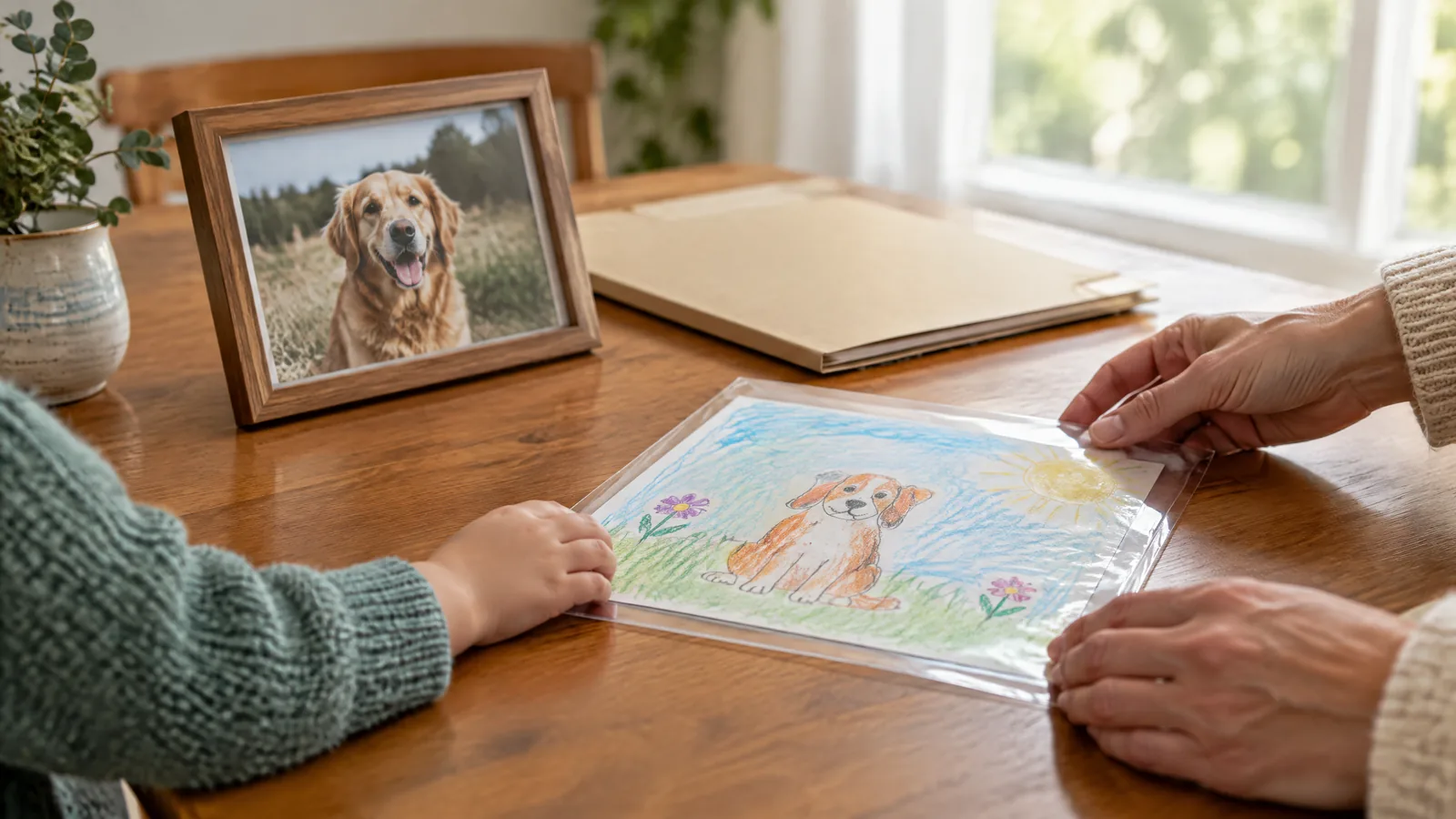
Among photographs and written records, a child’s drawing may hold an everyday view of a companion animal within the family. Whether to keep it, share it, or leave it private is a choice shaped by the child’s wishes and the family’s own story.
A family archive is often imagined as a row of photographs, a box of letters, or a folder of official records. Yet a child’s drawing can belong among those things, too. Its place there need not depend on polish or on whether an adult can tell exactly what every mark represents. A page might show a familiar animal in bold color, a shape that stood for a favorite place, or simply a few lines made during an ordinary afternoon. The paper holds evidence of a moment in family life: what was noticed, what was nearby, and what a child chose to put on the page. In guidance about family archives, children’s pictures and mementos are recognized as things a family may choose to keep. That small acknowledgment makes room for artwork in the archive without assigning it a special power or deciding what it must mean. It can simply be part of the family’s record.
The drawing may become more layered with time. A date written on the back, if the family chooses to add one, can place it alongside a season or a chapter of shared life. A few words remembered by an adult might help explain who made it or what was happening around it. But no description can settle its meaning once and for all, and leaving the page without a caption is also a valid choice. The drawing may matter differently to different people, or its meaning may shift for the child who made it. Families may also meet separation and death in different ways, and some children may want to express remembrance creatively while others may not want to make, revisit, or keep a keepsake. There is no single picture a family needs to produce and no required feeling for the paper to represent. Its value can rest in the family’s own associations, including ordinary details that might otherwise be hard to recall.
If adults consider keeping or sharing a drawing, the child’s privacy and participation belong in the conversation. A page can feel personal even when it was made at home, and an adult’s possession of the paper does not by itself tell us that a child wants it circulated. Names, school details, locations, dates, and other identifying marks may make a picture more revealing than intended. A family might choose to keep the original private, make a copy for relatives, or share only a version that does not identify the child. It may also be appropriate to ask the child, in a way that leaves room for no, whether the drawing should be kept or shown. These are choices, not archival rules. A keepsake need not become a public tribute to count as part of a family story; it can remain folded into a private folder, or a family can decide not to retain it at all.
A family that does keep the page may find it useful to place it with related photographs or notes, so its context is easier to recognize later. A digital copy can make it easier to revisit or share with chosen people, while the original may call for a simple, clean place away from everyday handling. Neither a paper copy nor a digital file is permanent by nature: files can become difficult to open, storage can change, and fragile pages can be damaged. A brief, non-identifying note about what the drawing depicts, written with the child’s agreement where appropriate, may help someone understand why it was saved without exposing details the family would rather keep private. There is no need to turn a page into a project or to preserve every object associated with a companion. The smallest picture in the archive may be the one a family returns to; it may also remain an unremarkable sheet among many. Either way, the story belongs to the people who shared it.
Continue reading
Related articles.
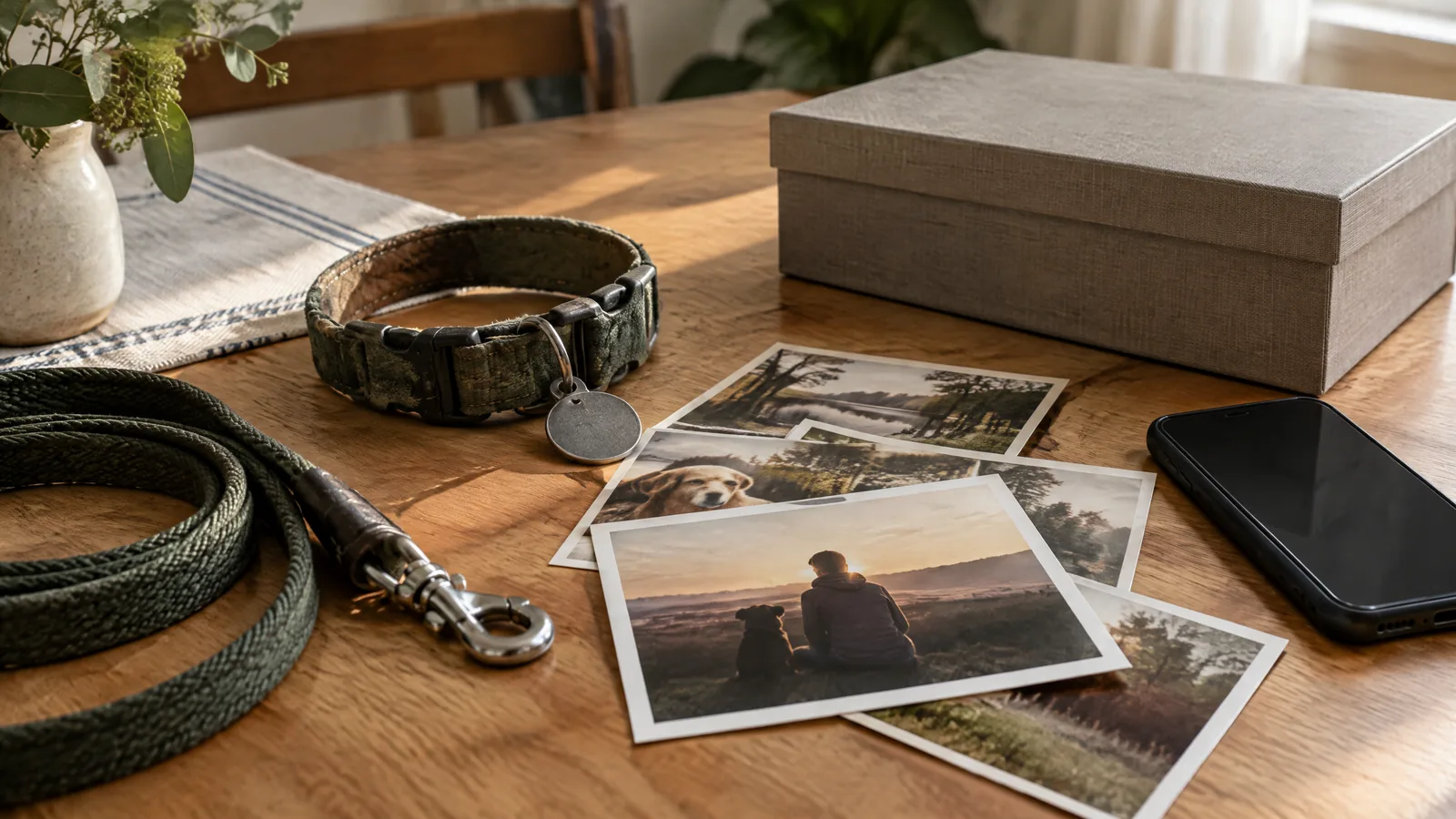
Photographs, records & digital legacy · 19 September 2025
The Small Things We Keep: Making a Family Archive of a Loved Pet
A collar, a tag, a lead, and a handful of photographs may hold different places in a family’s story.
Read this article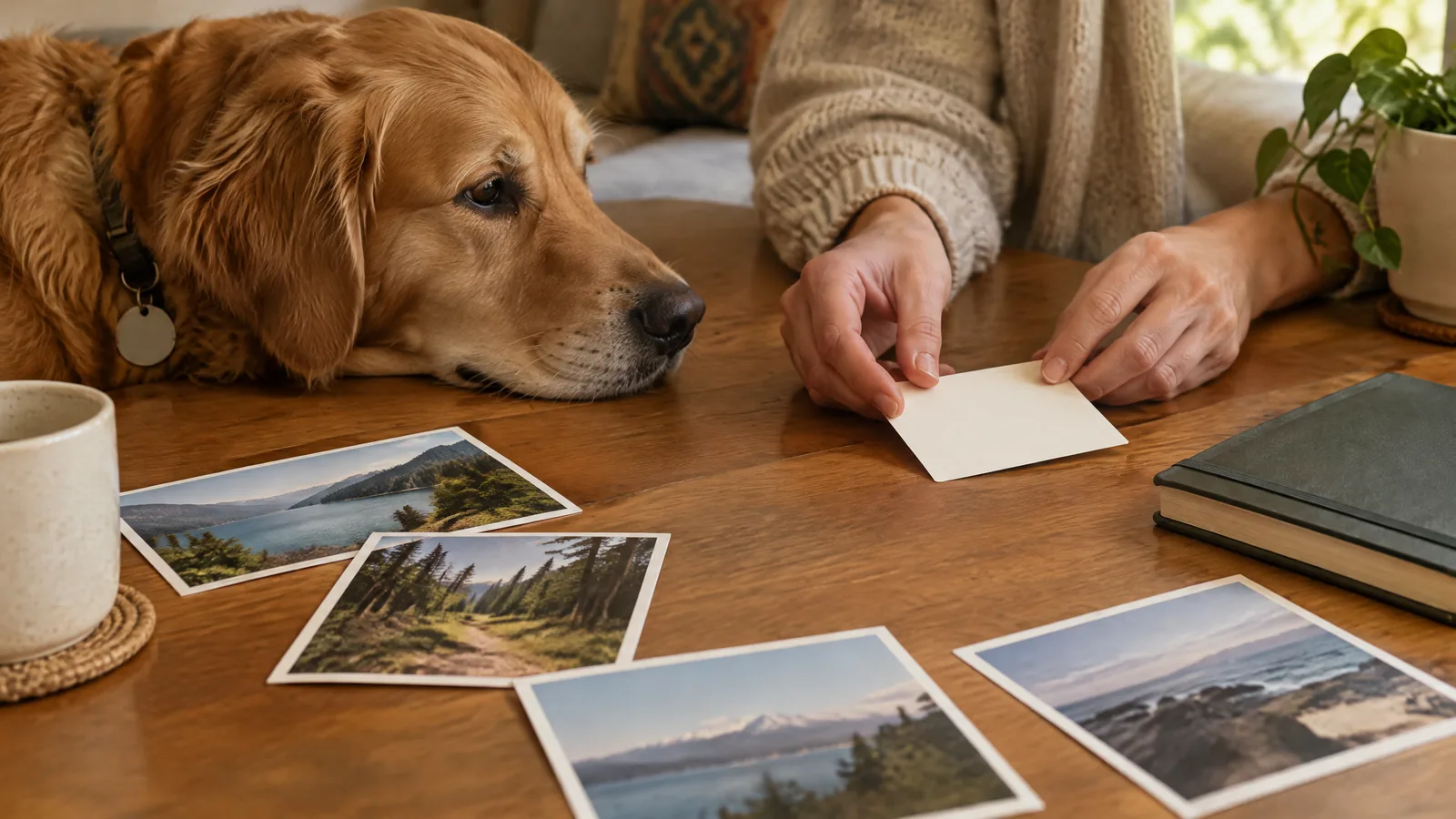
Photographs, records & digital legacy · 17 September 2025
The Small Records That Help Tell a Companion’s Story
A name, identifier, date, or change of keeper can offer a quiet thread through photographs and recollections, while remaining only one small part of a companion’s life.
Read this article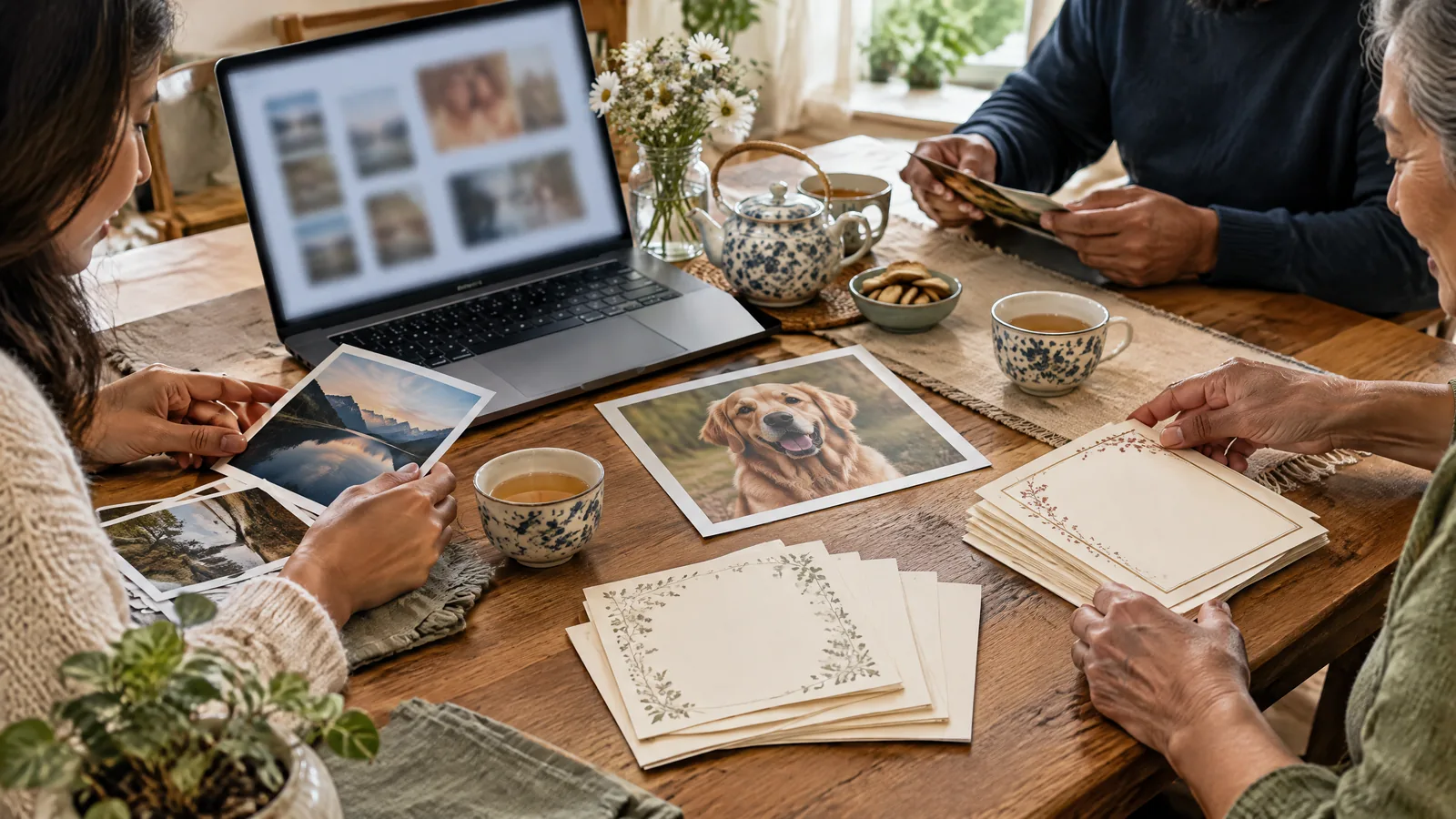
Photographs, records & digital legacy · 15 September 2025
A Memory Everyone Can Read: Making a Multilingual Pet Memorial Page Feel Like Home
A source-led reflection on keeping a memorial page understandable for a family in more than one language, and the ordinary details that can hold a companion’s story.
Read this articleA place for their story
Remember a life, one link at a time.
Explore Paw & Memory at the address below, or scan the QR code to open the memorial starting point in your browser.
Explore memorials Scan or visitpawmemory.live/