
Paw & Memory Journal · Shared stories & family life
The Smile They Left Behind: Finding Room for Humour in a Pet’s Memory
A gentle reflection on the small, familiar stories that may sit beside sadness—and on why every family gets to choose what feels right to remember.
26 September 2025
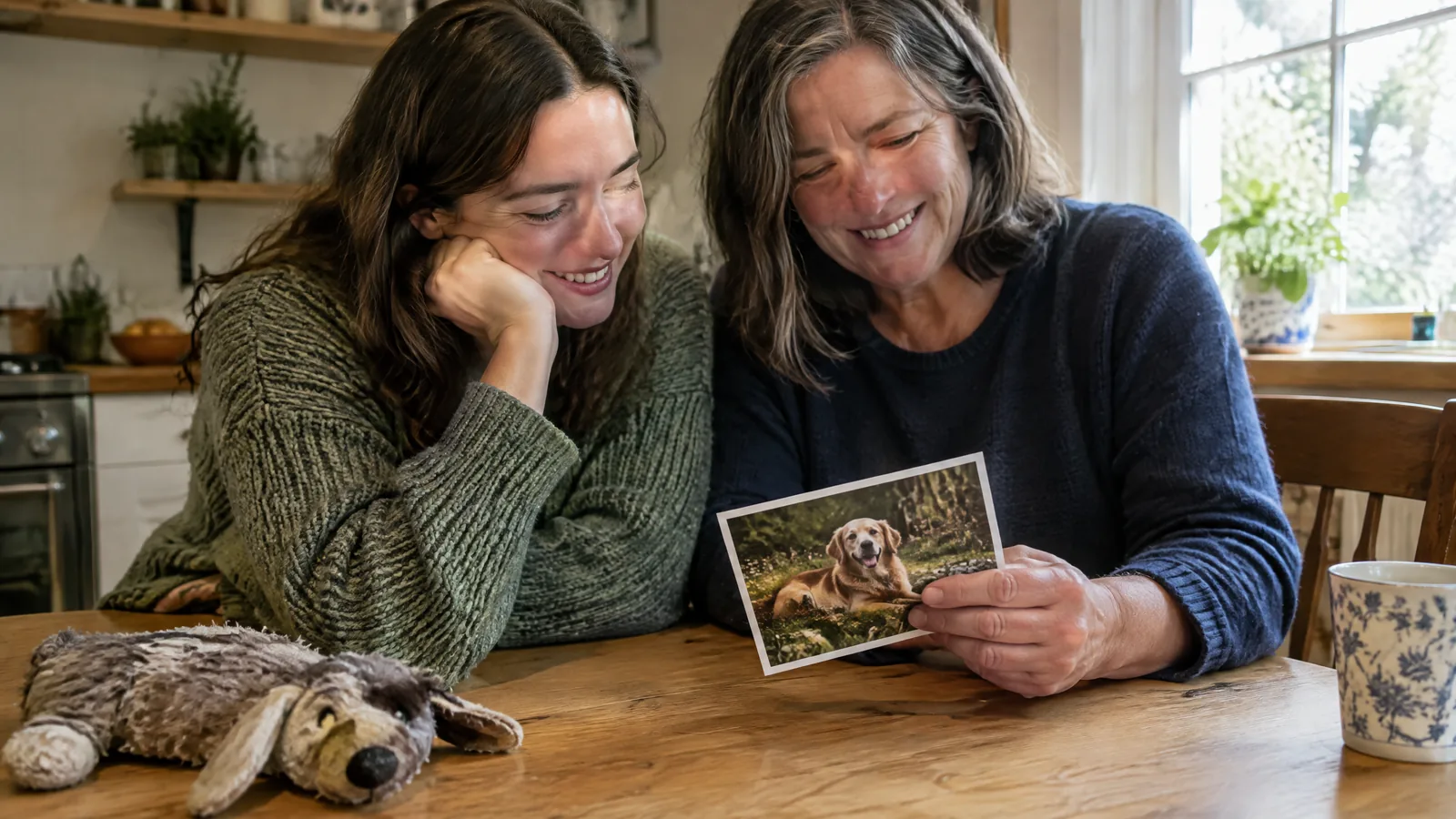
A beloved pet’s everyday quirks can become part of a family’s remembrance, sometimes bringing a smile and sometimes a fresh ache. Humour need not be expected, shared, or used to soften grief; it can simply be one thread in a more complicated story of love and loss.
A family remembering a pet may find that the stories arriving first are not solemn ones. Perhaps there is the familiar image of a cat occupying the one empty chair, or a dog appearing in the background of every kitchen gathering. Such ordinary quirks can become part of how a household speaks about a life shared. Remembering them with a smile may feel loving to some people, while the same memory may bring tears, or feel too tender to revisit, for others. None of those responses has to stand for the whole relationship. Humour can belong in remembrance without becoming its purpose, and sadness can remain present without cancelling a moment of warmth. A smile is not a measure of how much someone misses an animal, just as tears do not mean a happy memory has been lost.
There is a small, carefully bounded point in writing about human bereavement: one account of a remembrance gathering describes laughter and tears existing together as people showed love for someone who had died. That example concerns human loss, and it cannot tell us what a person grieving a pet will feel or what form of remembrance will suit them. Still, it offers a modest reminder that a gathering need not be only one thing. For some families, a harmless anecdote may sit naturally beside quiet reflection. For others, remembering may be private, tearful, prayerful, or wordless; some may not wish to make a shared ritual at all. A pet’s place in a family is particular, and so is each person’s way of carrying that bond. No single mood or practice needs to be treated as the proper one.
When a light-hearted story is welcome, its tone matters. The gentlest anecdotes tend to keep the affection in view: a familiar habit, an endearing insistence, or the way a pet seemed to turn an everyday moment into a family reference. The point is not to make the animal into a punchline, or to ask anyone to feel cheerful. It is to remember a particular life with warmth and respect. Stories about death, illness, accidents, physical decline, or painful decisions can land very differently, especially when grief is close; they need not be part of a humorous remembrance. Even an affectionate memory can feel wrong for the room, the day, or the person hearing it. Pausing, changing the subject, or keeping a story to oneself can be as considerate as sharing it. Careful humour leaves space for someone else’s quiet without asking them to explain it.
Families also differ in who gets to tell a story and where it belongs. A memory shared among people who know its context may feel intimate; the same detail posted publicly could reveal more about a child, relative, or pet than someone else wanted shared. A memory book, a conversation at home, a private note, or no keepsake at all can each be a fitting choice, depending on the people involved. Children may have their own words and timing, and adults can leave room for those without requiring a funny story or a particular reaction. There is no need to make remembrance entertaining, balanced, or consistent from one day to another. Some days a familiar quirk may bring a smile; on others it may simply underline the absence. Both can be part of loving memory. The stories that remain yours need not prove that grief has passed or that you have found the right way through it. They can be small, imperfect, and shared only when the moment and the audience feel right.
Continue reading
Related articles.
Shared stories & family life · 5 November 2025
The Circle of Care: Remembering Everyone Who Loved a Companion
A companion’s place in a family story is often shared. Remembering them can include the many people, and the ordinary moments, that made that story together.
Read this article
Shared stories & family life · 3 November 2025
The Photograph That Opens the Door to a Story
A familiar photograph can offer a shared place to begin, while leaving room for different memories, new observations, and silence.
Read this article
Shared stories & family life · 31 October 2025
The Many Languages of a Beloved Companion’s Story
A reflection on the many ways a family can remember a beloved companion, in words shared, translated, or left gently unspoken.
Read this articleA place for their story
Remember a life, one link at a time.
Explore Paw & Memory at the address below, or scan the QR code to open the memorial starting point in your browser.
Explore memorials Scan or visitpawmemory.live/