
Paw & Memory Journal · Shared stories & family life
The Stories We Keep: Remembering a Beloved Companion With a Child
A companion’s death can leave a quiet space in family life. Honest words and shared memories may give a child room to understand the news in their own way.
1 October 2025
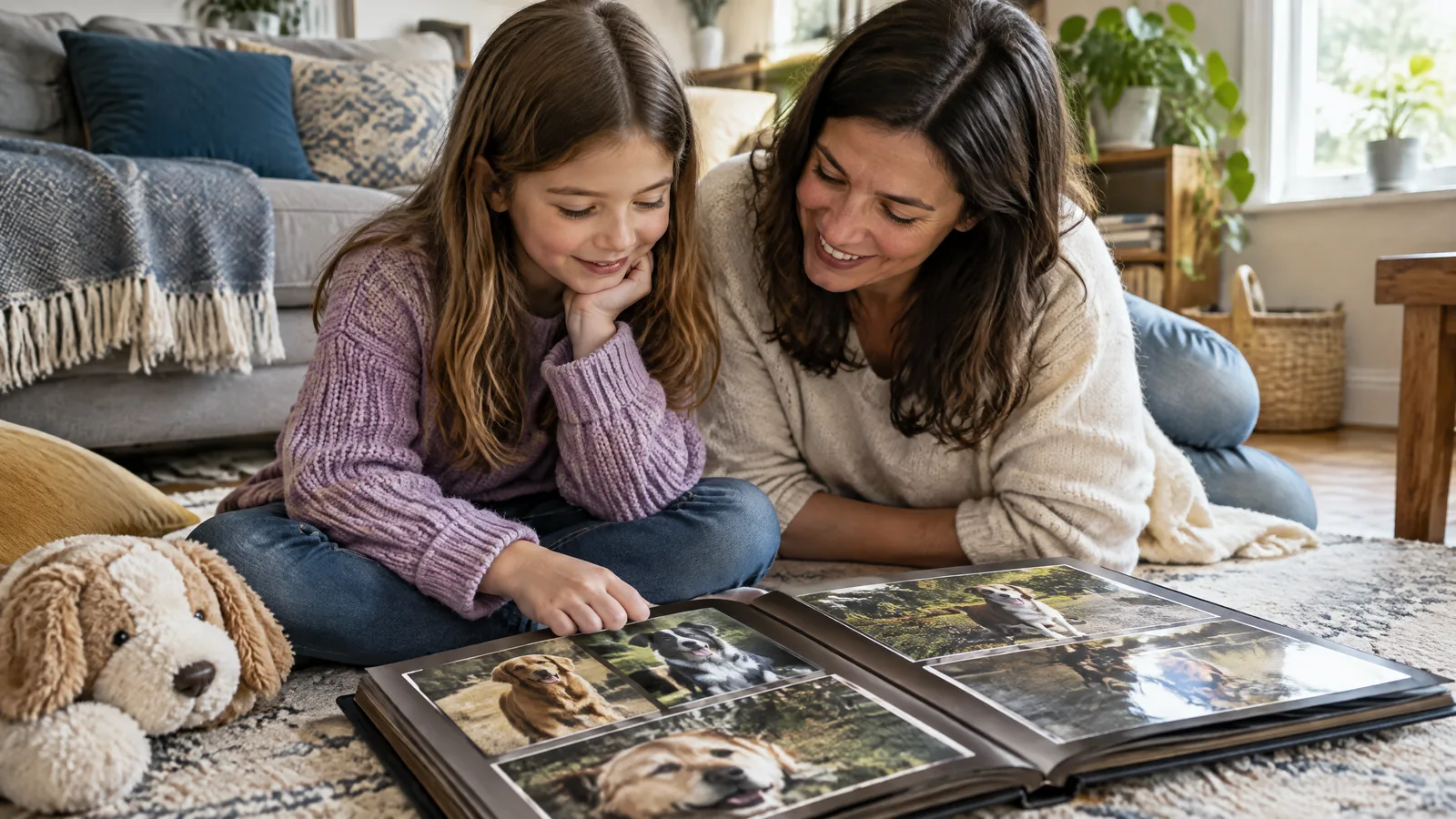
When a beloved animal dies, children may ask direct questions, return to the subject later, or say little at first. Clear, gentle language and ordinary memories can make space for a family to keep talking without expecting grief to look one particular way.
When a companion dies, the familiar shape of a household can change in ways a child may notice before anyone finds the right words. An empty place by the door, a quiet feeding spot, or the absence of a daily walk can make the news feel present again. There is no single way a child must respond: questions, silence, tears, play, or a return to ordinary routines may all appear, and feelings may shift from one moment to another. Adults may be grieving too, while trying to speak clearly and offer reassurance. A gentle conversation need not explain everything at once. It can begin with the simple truth that the animal has died, expressed in language the child can understand. Blue Cross notes that direct wording can avoid confusion that some euphemisms may cause younger children. Saying what happened plainly, without graphic detail, may leave less room for a child to imagine something frightening or misunderstand what death means.
The amount of detail can follow the child’s questions rather than a fixed script. Some children may ask what “died” means, whether the animal will come home, or why daily routines have changed; others may not ask anything then. A calm, honest answer can be brief, with space to return to the conversation later. If the circumstances are complicated, adults can still separate what they know from what they do not know, and choose words that fit their family’s beliefs and the child’s understanding. Softening the truth with phrases such as “gone to sleep” can leave a younger child unsure whether sleep itself is dangerous, or whether the companion might return. Plain language does not have to sound cold. It can sit alongside warmth: the animal was loved, their death is real, and the family can remember the life they shared. If a child asks the same question again, it may simply be part of how they revisit a difficult change; a repeated question need not mean the earlier answer was wrong.
Listening can matter as much as explaining. A child may want to talk about what they miss, or may prefer to share a memory without discussing death directly. They might bring up a funny habit, a favorite place to sit, the sound of paws on the floor, or a small ritual that belonged to the two of them. Adults can name the companion’s qualities and ordinary moments, while leaving room for the child’s version of the story. A memory may be joyful and painful at once; there is no need to steer it toward one feeling. Children in the same family may remember different things or react differently, and adults may have their own responses too. Making room for that variety can help the conversation feel open rather than like a test with a right answer. If an adult does not know how to respond to a question, it is possible to say so honestly and stay present without inventing certainty.
Remembering may take many forms, and none is required. A child might choose a photograph, draw a picture, write a letter, tell a favorite story, or join a quiet family ritual; another may not want to make anything, or may change their mind. These possibilities are not a timetable or a measure of how much someone cared. The relationship can remain part of family life through stories that arise naturally: the companion’s distinctive greeting, the place they liked to curl up, or the ways ordinary days felt different with them there. A photograph may prompt conversation one afternoon and feel too tender another. That variation does not need correcting. Nor does remembering mean the child must set aside sadness or feel ready for a new animal; a different companion would not replace the one who died. What a family keeps may be less a finished tribute than an unfinished, shared story—one that can be returned to in the child’s own words, at a pace that belongs to no one else.
Continue reading
Related articles.
Shared stories & family life · 5 November 2025
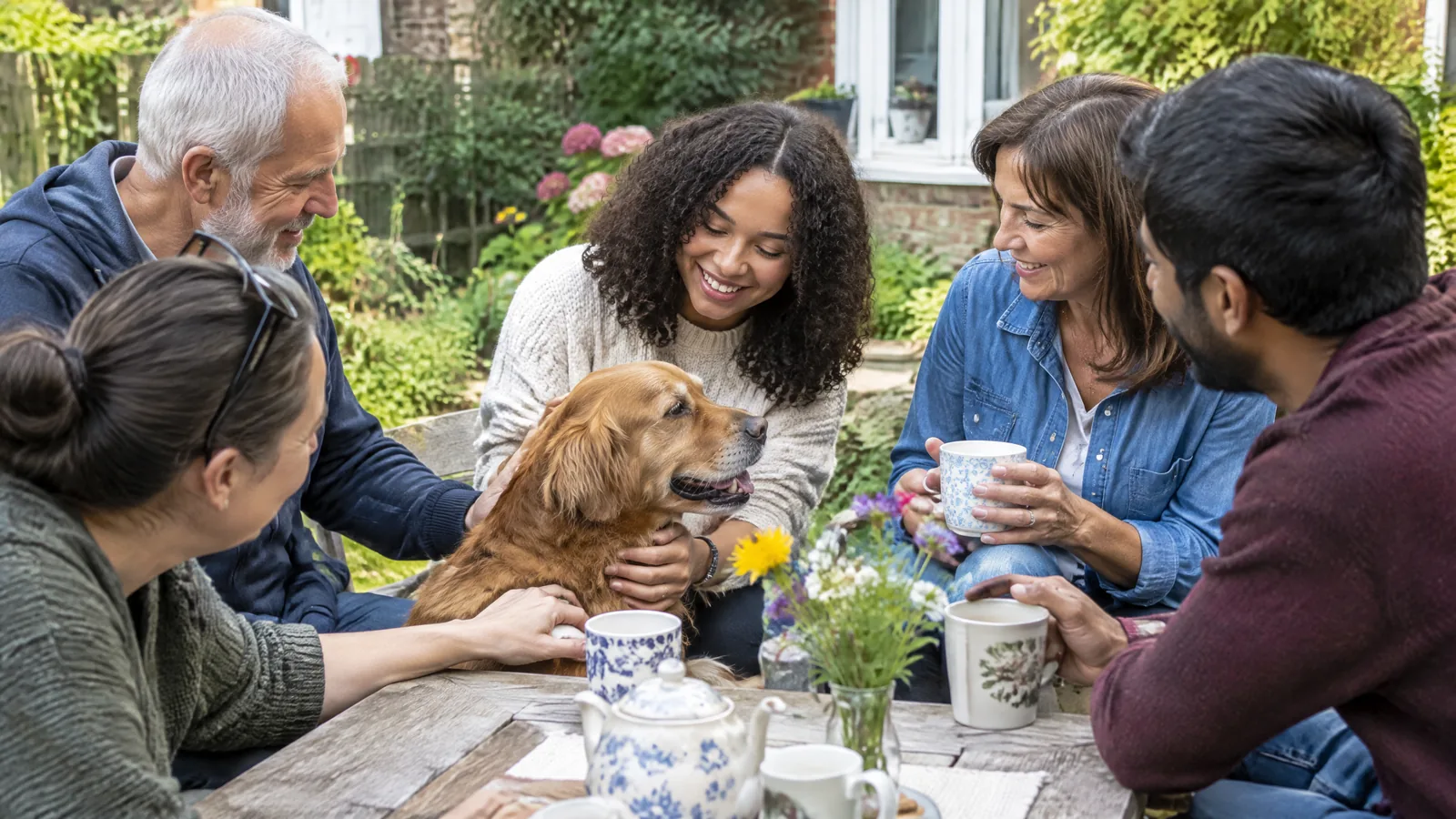
The Circle of Care: Remembering Everyone Who Loved a Companion
A companion’s place in a family story is often shared. Remembering them can include the many people, and the ordinary moments, that made that story together.
Read this article
Shared stories & family life · 3 November 2025
The Photograph That Opens the Door to a Story
A familiar photograph can offer a shared place to begin, while leaving room for different memories, new observations, and silence.
Read this article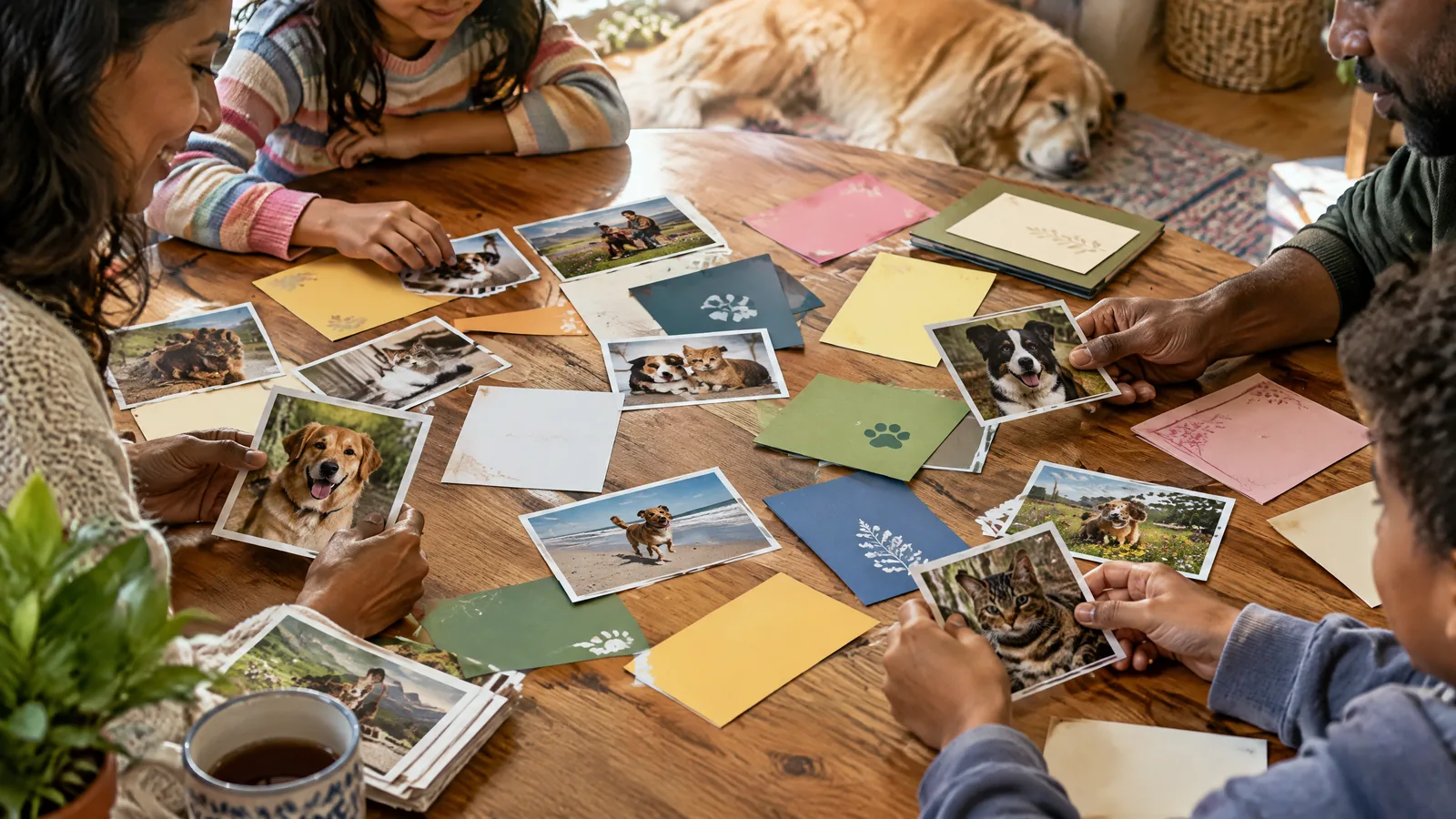
Shared stories & family life · 31 October 2025
The Many Languages of a Beloved Companion’s Story
A reflection on the many ways a family can remember a beloved companion, in words shared, translated, or left gently unspoken.
Read this articleA place for their story
Remember a life, one link at a time.
Explore Paw & Memory at the address below, or scan the QR code to open the memorial starting point in your browser.
Explore memorials Scan or visitpawmemory.live/