
Paw & Memory Journal · Shared stories & family life
Where Our Pets Belong in the Family Story
A pet’s place in a family story can be meaningful without being formal, public, or the same for everyone.
24 October 2025
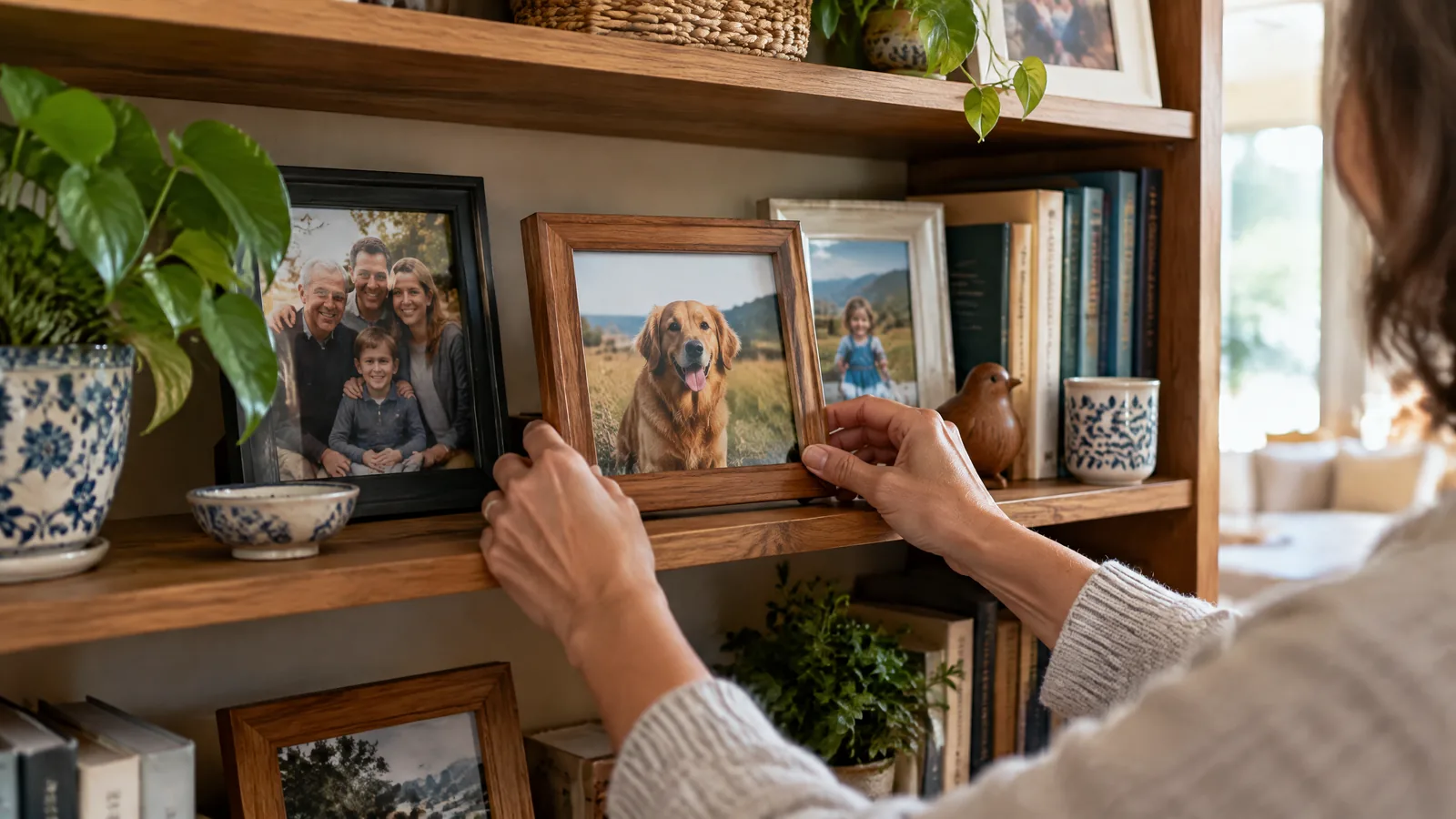
Pets may appear in the stories families tell about ordinary routines, changing homes, celebrations, and loss. Their place in a wider history can be chosen with care, alongside human stories and without requiring everyone to remember in the same way.
A family story is rarely made only of milestones. It also gathers around repeated routes, familiar rooms, meals, jokes, and small interruptions that become part of how a household remembers a time. A pet may belong in those recollections: curled near a particular chair, present during a move, or woven into the rhythm of mornings and holidays. Including an animal in this account need not make the pet a genealogical ancestor, nor give its story the same shape as a person’s. It can simply acknowledge that the household’s life unfolded with the animal there. Families differ in how they name that place. For some, a pet is plainly part of the family’s shared history; for others, the connection is private, complicated, or not something they wish to record. There is no requirement to settle on one definition that fits every relative, culture, or generation.
Family-history conversations often begin with open questions about how things happened and what everyday life was like. In its family-genealogy material, the Library of Congress makes room for pets within the kind of household anecdote that might prompt such a conversation—for example, a dog complicating a holiday meal. That narrow point offers a useful opening: an animal may appear naturally in a remembered scene, without being recast as a formal ancestor or treated as the center of the family record. One person may remember a pet’s place beneath the table; another may recall the room, the people gathered there, or a change in family circumstances. The details can sit beside one another without needing to resolve into a single authoritative version. Even a small recollection may illuminate an era or relationship, while leaving room for uncertainty about what happened, who remembers it, and what matters to each person now.
Everyday objects and records can also hold a place in family memory, though preservation need not become a project with rules or a finished product. A photograph, a name mentioned in a letter, or an ordinary object kept for reasons no one can fully explain may offer a thread back to a shared time. Other households may have no surviving images or keepsakes, may have lost them during a move, or may prefer not to return to particular memories. Absence of an artifact does not make an animal’s place less real to those who remember it. Blue Cross’s child-focused remembrance suggestions include drawing, writing, and sharing memories; these are examples of optional ways to mark a bond, not a universal formula for children or adults. People in one family can choose differently, including choosing not to formalize or share a memory. A story can remain spoken, private, unfinished, or simply part of what someone carries.
Respectful family remembering also leaves space for histories that do not sit neatly together. A pet may have joined a family through adoption, rehoming, or another circumstance relatives describe differently; the record need not flatten those differences or expose private details. Some family members may welcome a pet’s story beside human histories, while others may want a boundary around what is shared publicly. Both responses can be acknowledged without ranking losses or suggesting that one kind of remembrance displaces another. Children, like adults, may remember in ways that change over time, and no single conversation or keepsake has to represent everyone’s experience. Perhaps the most truthful place for a pet’s story is modest: a name in a caption, a remembered routine, a passing detail in an account of a holiday, or no written record at all. What matters is not that every family preserve the story in the same form, but that the form chosen does not claim more than the family is
Continue reading
Related articles.
Shared stories & family life · 5 November 2025
The Circle of Care: Remembering Everyone Who Loved a Companion
A companion’s place in a family story is often shared. Remembering them can include the many people, and the ordinary moments, that made that story together.
Read this article
Shared stories & family life · 3 November 2025
The Photograph That Opens the Door to a Story
A familiar photograph can offer a shared place to begin, while leaving room for different memories, new observations, and silence.
Read this article
Shared stories & family life · 31 October 2025
The Many Languages of a Beloved Companion’s Story
A reflection on the many ways a family can remember a beloved companion, in words shared, translated, or left gently unspoken.
Read this articleA place for their story
Remember a life, one link at a time.
Explore Paw & Memory at the address below, or scan the QR code to open the memorial starting point in your browser.
Explore memorials Scan or visitpawmemory.live/