
Paw & Memory Journal · Everyday companionship & place
Where the Day Gathers: The Small Kitchen Rituals We Share with Animals
A kitchen is made of repeated gestures as much as walls and cupboards. In many households, an animal’s quiet presence becomes part of that familiar domestic rhythm, though every home makes its own patterns.
21 July 2025
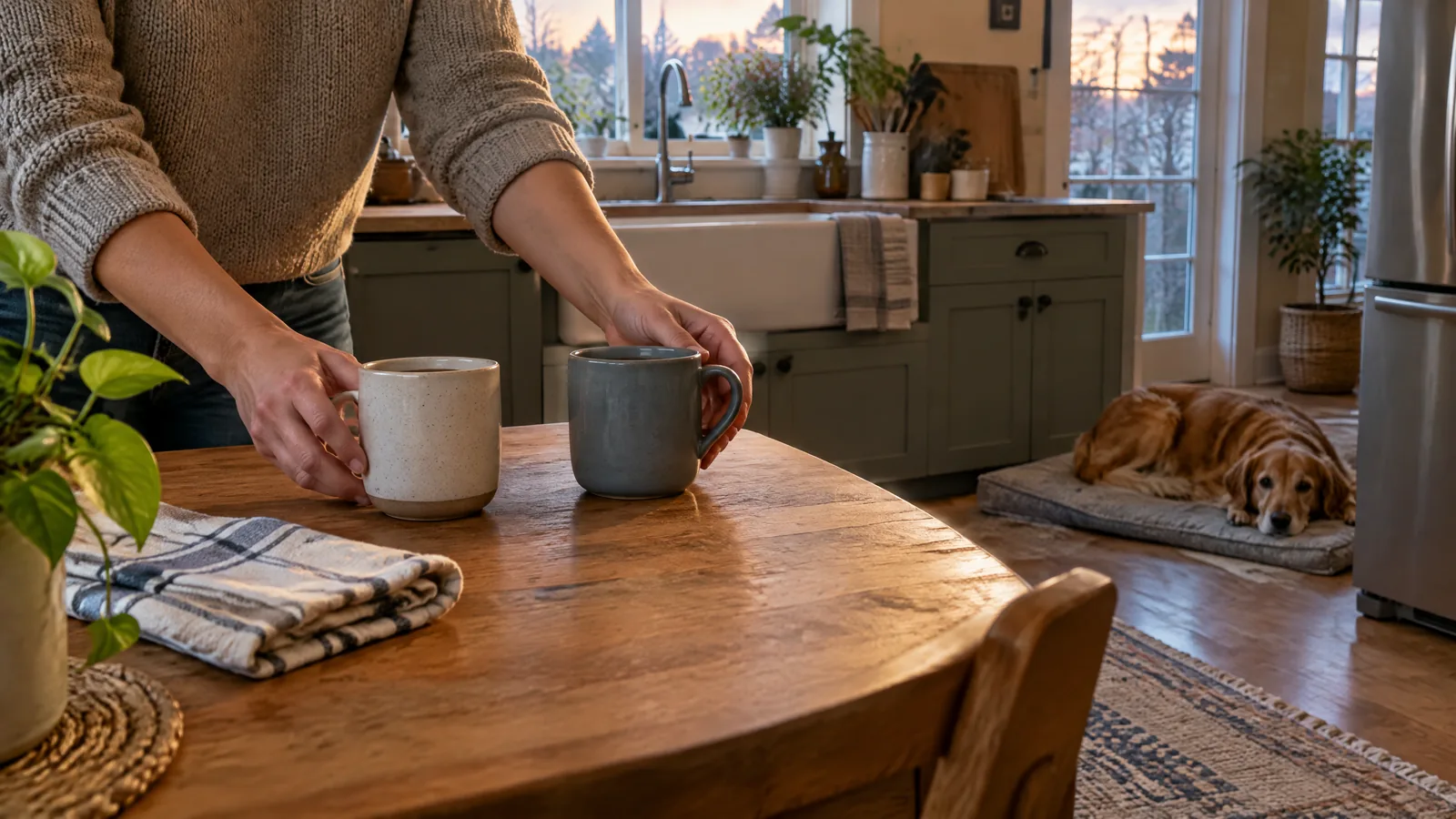
Washing a cup, folding a towel, pausing at a doorway: small kitchen rituals can become part of a household’s sense of place. Companion animals may share that landscape in different ways, not as symbols in a perfect home but as familiar presences woven into ordinary time.
A kitchen is rarely only a room for preparing food. It can be a passage between the day’s different demands: a place to rinse a cup, set down a bag, stand quietly while water warms, or notice that evening light has shifted across the counter. The gestures may be small enough to disappear into habit. Yet repetition gives them a kind of shape. A mug returns to the same shelf; a towel is folded or left where it was; footsteps cross the floor at familiar hours. In some households, an animal is nearby for part of this ordinary sequence, resting at a distance, moving through the doorway, or simply belonging to the wider scene. In others, the animal’s rhythms unfold elsewhere. Neither arrangement says how close a bond must be. The kitchen’s meaning is made from the lives that actually happen there, not from an ideal picture of domestic togetherness.
Domestic objects have a way of holding more than their practical purpose. A dish, a kettle, a worn work surface, or a chair pulled close to the table can gather associations because it has been present across many ordinary days. Museum collections devoted to home life preserve objects like these as evidence of lived experience: materials shaped by use, taste, circumstance, work, and changing household arrangements. They do not tell one universal story of home. A cup might be treasured, replaceable, shared, or absent from a household altogether. That variety matters when thinking about kitchens and animals, too. There is no single correct scene of companionship. A rented room, a shared kitchen, a small kitchenette, a busy family home, or a household where the kitchen is rarely used can each hold its own habits. Domestic life is not measured by how orderly it looks, how much cooking takes place, or whether everyone gathers in one room.
Selected public testimonies about pet bereavement have described ordinary routines and quiet companionship as part of what makes a house feel like home. Such accounts are individual voices offered in a particular context, not a measure of how everyone experiences attachment or loss. Still, they draw attention to a tender feature of shared life: familiarity often resides in details that might seem unremarkable from the outside. The soft sound of movement in a neighboring room, a pause while someone washes up, or the accustomed presence of an animal near a threshold can become woven into a person’s memory of a place. The kitchen may enter that memory without being the center of a dramatic event. It is simply where a day’s repetitions occurred. For some people, remembering may bring warmth; for others, sadness, ambivalence, or little particular feeling. The meanings can coexist or change, and no single response is required.
To call the kitchen part of an emotional geography is not to claim that every animal seeks its company, or that every household’s routines are shared in the same way. It is to notice how place is built through small returns: a light switched on, a cup set down, a familiar route through a doorway, the quiet presence of another living being somewhere in the household. Those patterns may be lively or hushed, food-centered or not, chosen or shaped by necessity. Some kitchens are sites of care and gathering; others are workspaces, corridors, or rooms a person prefers to leave quickly. An animal may be visible in these moments, or absent from them. The ordinary ritual still belongs to the people who live it. And when an animal does become part of that everyday landscape, the connection need not be staged or explained. It can remain as simple, particular, and changeable as the room itself.
Continue reading
Related articles.
Everyday companionship & place · 4 August 2025
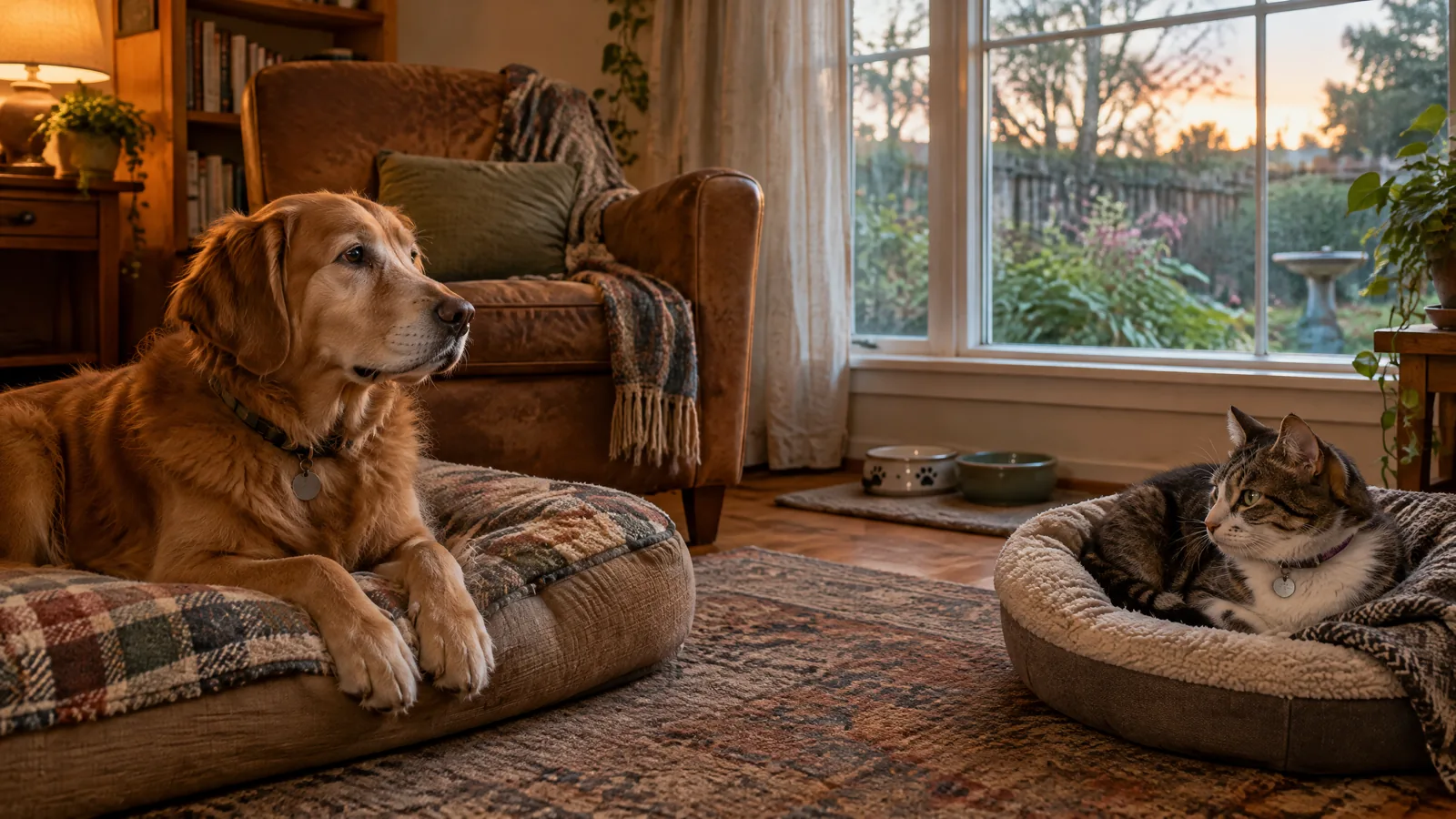
The House Remembers Them Both
A quiet reflection on two distinct companions, the rooms they share, and the everyday scenes through which a home gathers meaning.
Read this article
Everyday companionship & place · 1 August 2025
The Weather We Walk Through Together
A familiar path can look different with every change in light, weather and season—and companionship can make those small differences easier to notice.
Read this article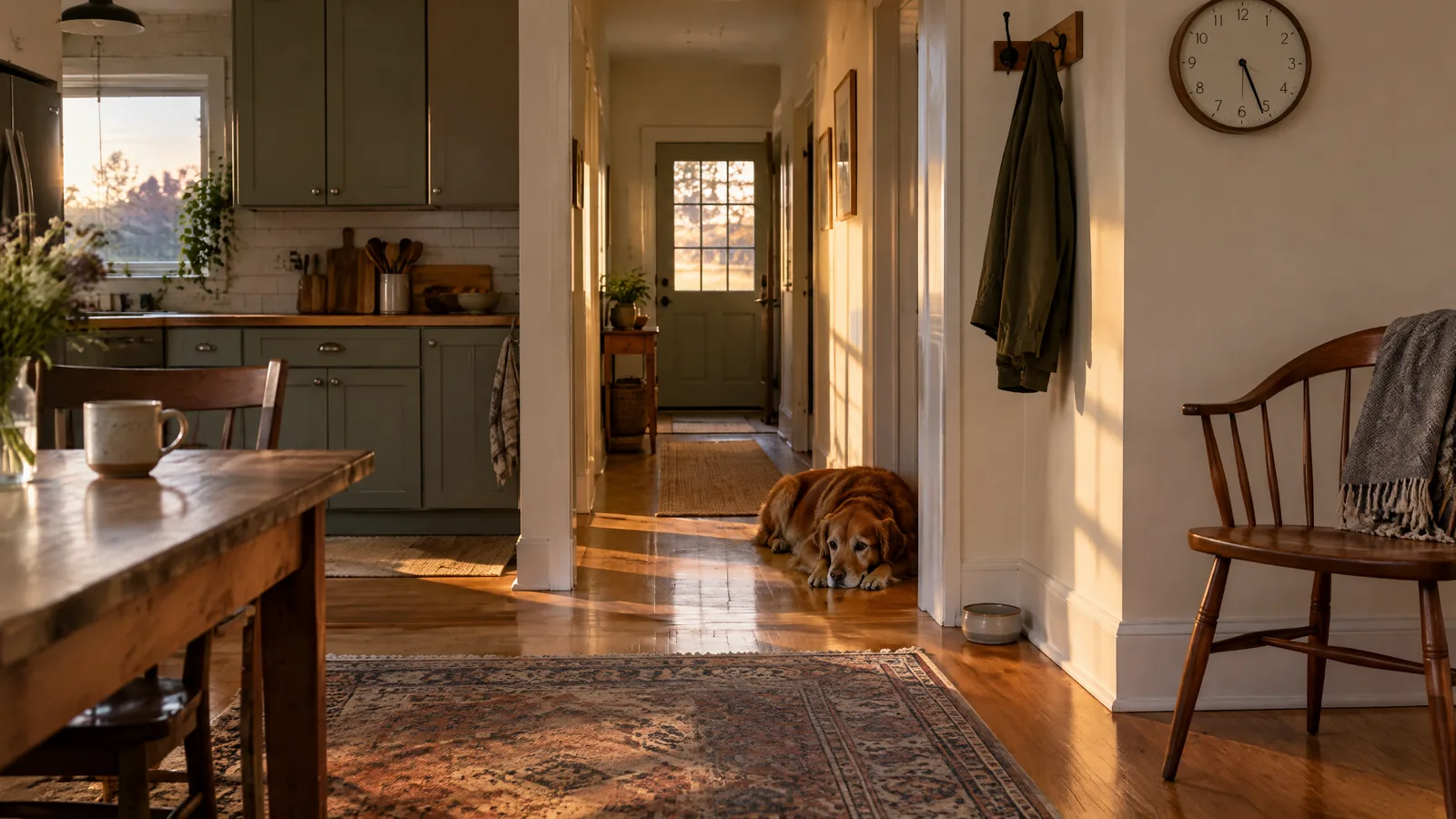
Everyday companionship & place · 30 July 2025
The Quiet Keeper of Our Ordinary Hours
A remembrance of the small, familiar moments that made a home’s daily rhythm feel shared.
Read this articleA place for their story
Remember a life, one link at a time.
Explore Paw & Memory at the address below, or scan the QR code to open the memorial starting point in your browser.
Explore memorials Scan or visitpawmemory.live/