
Paw & Memory Journal · Behavior, Training & Enrichment
A Gentler Language for Litter-Box Changes
Litter-box changes sit at the meeting point of feline life and human expectations. A reflective look at the language of shared spaces, uncertainty, and care.
17 April 2026
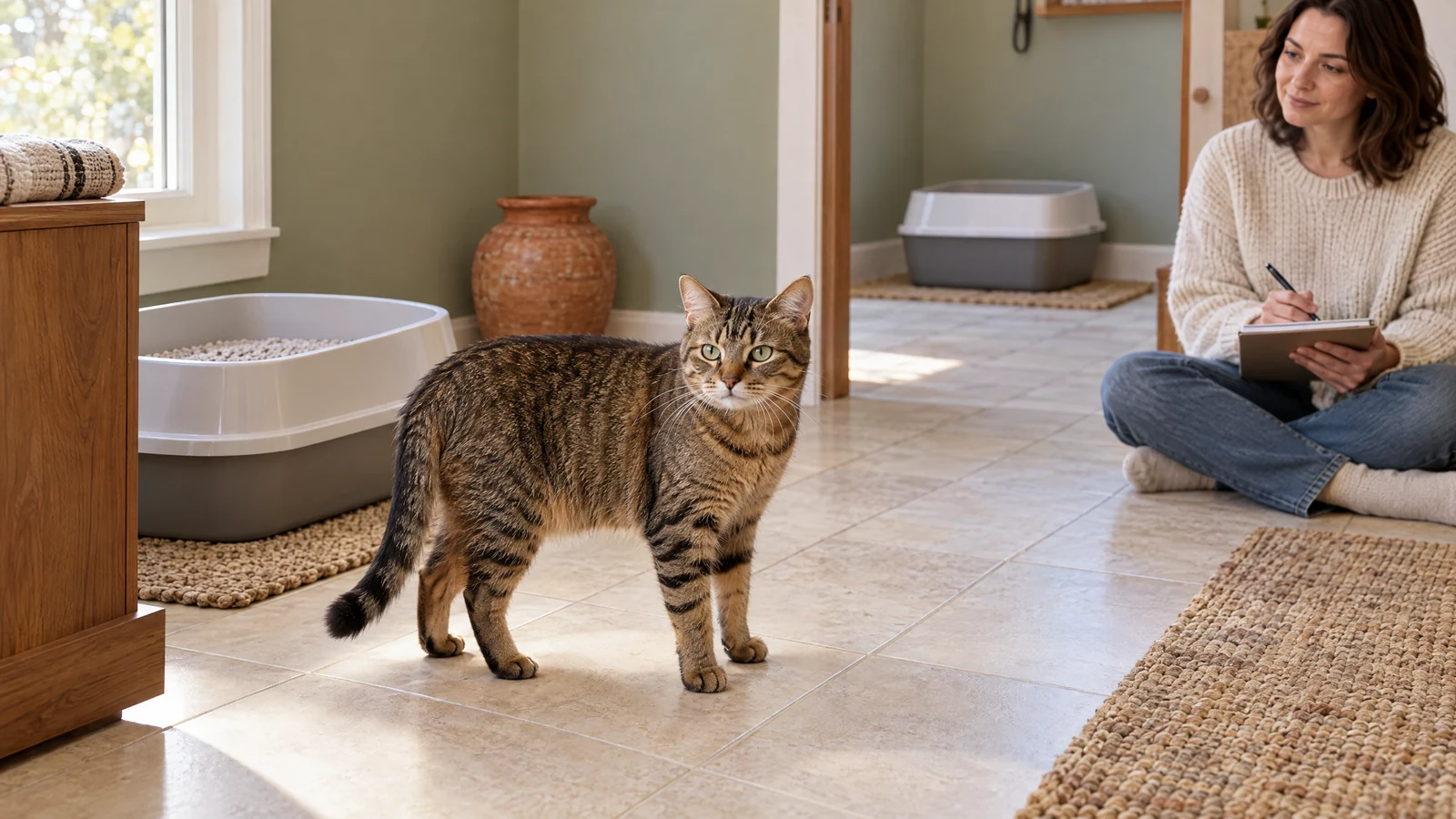
A litter box is an ordinary household object with a deeply personal place in conversations about cats. When its use changes, the subject invites a distinction between what is observable and what people assume it means.
The litter box occupies an unusual place in a home shared with a cat. It is both a practical object and part of the background of everyday life, often receiving little attention in conversation until something changes. Public educational writing about litter-box use brings this familiar subject into view through several broad lenses, including household space, feline behaviour, and questions that belong with a qualified veterinary professional. This is a subject with more than one dimension, rather than a simple story about a cat breaking a household rule.
Language matters in that conversation. Words such as accident, mess, and misbehaviour carry different assumptions, even when they refer to the same visible event. A description of urine or stool outside a tray names what is present; a claim about revenge assigns an intention. Those are different kinds of statements. The distinction between observation and interpretation is central to a thoughtful account of litter-box changes, without turning that account into an explanation for any individual cat.
The surrounding home also forms part of the subject. Educational discussions of litter boxes include their location, shape, contents, and place within a shared household. These topics describe the setting in which litter-box use occurs; they do not establish a universal arrangement or a particular cat’s reasons. A tray can be considered as an object in a room, as part of a human idea of cleanliness, and as one feature of the space inhabited by an animal. Holding those perspectives together leaves room for complexity without offering a household programme.
A reflection on litter-box changes can therefore remain useful without becoming a set of instructions. It can acknowledge the practical importance of the subject while resisting blame, certainty, and promises of a quick resolution. Individual questions belong with a qualified veterinary professional, beyond the scope of a general article. Within that scope, the quieter contribution is a more precise and humane vocabulary: one that separates what is seen from what is assumed, and leaves the cat’s experience open rather than writing a motive into it.
Continue reading
Related articles.
Behavior, Training & Enrichment · 8 May 2026
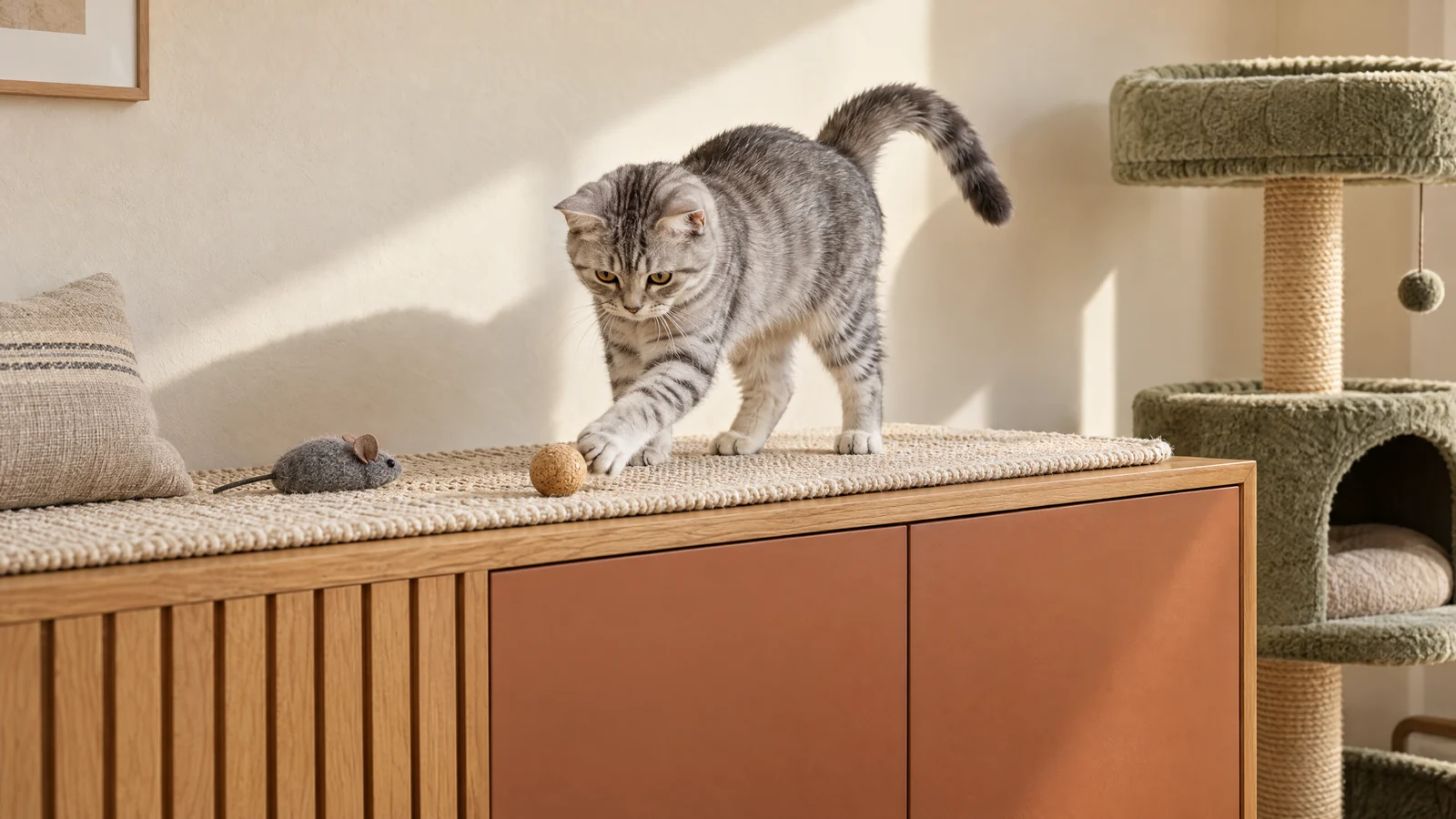
Cats, Tabletop Objects, and the Stories We Tell
A cat batting something from a table sits at the meeting point of feline curiosity and human expectations. The familiar question opens a wider conversation about play, attention, and the meanings people give to everyday behaviour.
Read this article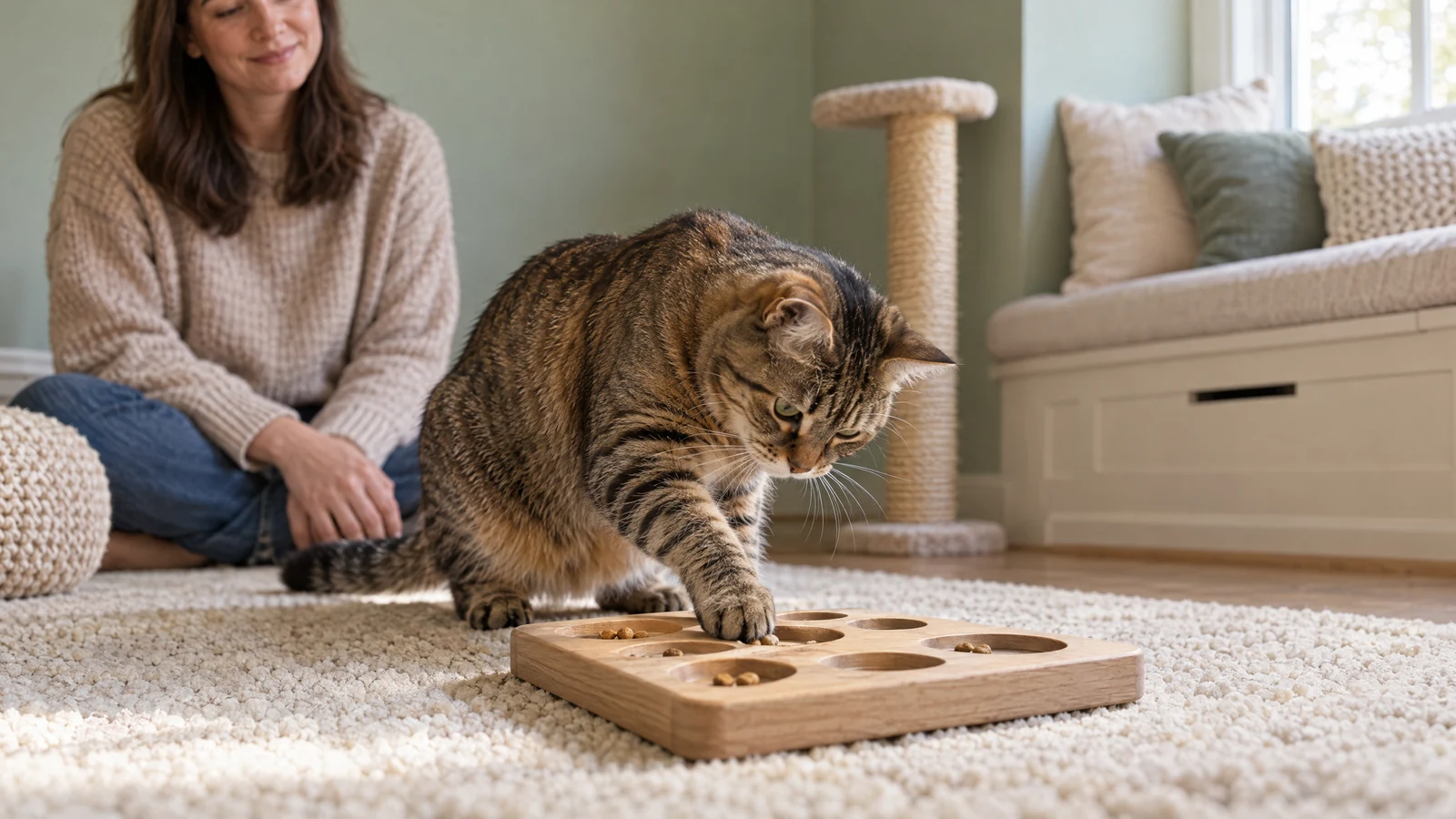
Behavior, Training & Enrichment · 6 May 2026
Cat Puzzle Toys and the Meaning of Play
A reflective look at cat puzzle toys, the language surrounding them, and the place of a single object within the larger idea of an indoor home.
Read this article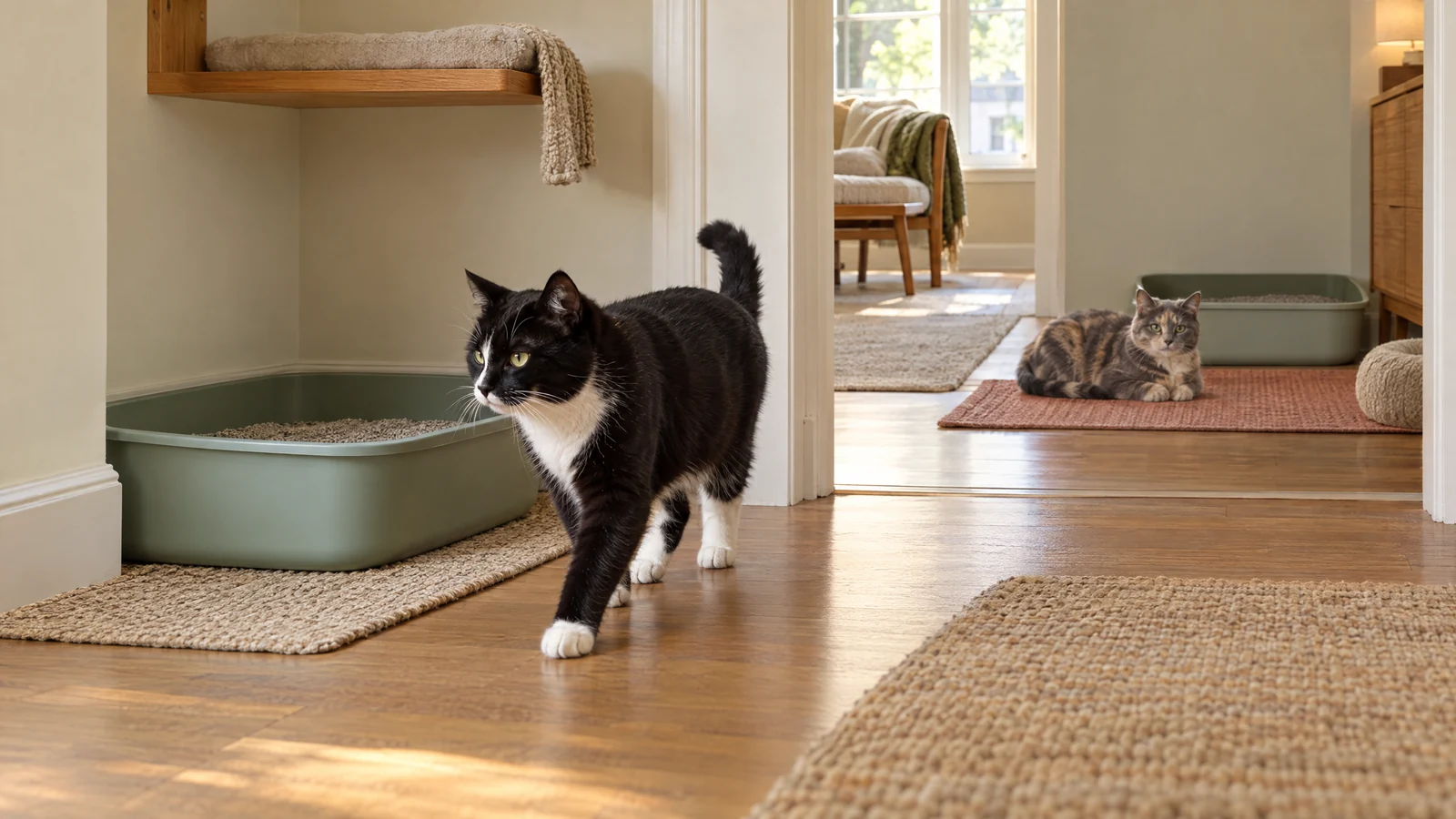
Behavior, Training & Enrichment · 4 May 2026
Litter Boxes and the Shared Geography of a Multi-Cat Home
A reflection on litter boxes as part of shared domestic space, where questions of number sit alongside the quieter subjects of location, privacy, and individuality.
Read this articleA place for their story
Remember a life, one link at a time.
Explore Paw & Memory at the address below, or scan the QR code to open the memorial starting point in your browser.
Explore memorials Scan or visitpawmemory.live/